
Broadway Tickets Without Paying Panic Prices
Buy Broadway tickets through official channels first, use TKTS and lotteries only when your dates flex, and pair the seat with pre-theater dinner west of Times Square—not a sidewalk pitch.


⚡ At a Glance Overview
Make the Decision Fast
Decide how important the exact show, date, and seat are before you pay; flexibility is what creates most of the legitimate savings options.
You want Broadway to be part of the trip but need a framework for advance purchase, same-day options, and seat-value tradeoffs.
Do not buy from urgency-driven or unclear resale listings without checking the seller, seat details, fees, and refund or exchange terms.
Why We Chose This
Visitors overpay when they buy urgency in Times Square instead of choosing a channel that fits their flexibility. This practical guide ranks official, TKTS, lottery, and resale paths by risk—not by hype—and ties the ticket to where dinner actually happens.
Editorial Notes & Caveats
Prices, lottery rules, TKTS inventory, and cast schedules change frequently. Verify every number on the show’s official site, Telecharge, or TKTS before you pay. This article does not list live seat maps, guarantee availability, or endorse a specific reseller. Sidewalk ticket sellers and unofficial booths in Times Square are high-risk; aggressive pitches near the red steps are not substitutes for official channels. Partial-view and standing-room seats are legitimate products—read the seat description before you confirm.
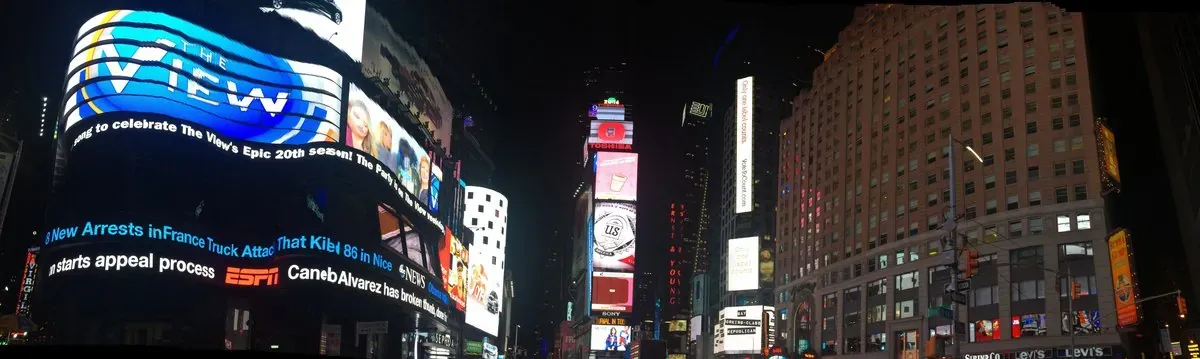
Broadway panic pricing is usually a timing mistake, not a mystery tariff. Visitors who walk into Times Square the afternoon of a Saturday show and buy from whoever waves a clipboard pay for urgency that official channels would have avoided weeks earlier—or for inventory that was never real. The calmer path is to decide whether Broadway belongs on this trip, pick one or two titles you will actually enjoy, then buy through a channel that matches how much risk you accept on price, seat location, and refund rules.
Start at the show’s own website or Telecharge for current list prices and performance calendar. That is the baseline everything else compares against. TKTS helps when you are flexible on title and date. Digital lotteries and rushes help when you can monitor apps and live with rejection. Licensed resale helps when the official site is sold out and you will pay more for certainty—but only through platforms that show seat locations and buyer protections, not through a stranger on Seventh Avenue.
The ticket is only half the evening. Curtain time locks pre-theater dinner on Ninth Avenue or Restaurant Row, and let-out crowds push after-show eating west—not into the neon core. Buy the seat with those geography constraints in mind, or you will trade a “deal” on orchestra row for a rushed meal and a stressful walk.
Official channels: box office, Telecharge, and the show site
Most Broadway houses sell through a small set of authorized paths: the production’s official website (often linking to Telecharge or another primary vendor), the theater box office, or group-sales desks for larger blocks. These channels show the performance date, seat section, and fees before you commit. They are where refund policies, exchange windows, and accessibility requests are spelled out in writing.
Telecharge and similar primary vendors are not “discount” sites—they are inventory pipes. Their advantage is transparency: you see the same sections the box office sells, with service fees disclosed at checkout. If a site cannot name the theater, performance time, and seat row before payment, treat it as unofficial regardless of how professional the layout looks.

Box office purchase still matters for some travelers: cash-averse visitors who want a human to confirm partial-view warnings, people buying day-of when digital inventory glitches, and anyone holding a voucher or gift certificate. Lines exist, but they are shorter than the myth suggests on many weekday matinees—still, do not count on box office rescue if you ignored weeks of online sales for a holiday weekend.
Group sales and membership programs (theater subscriptions, corporate blocks) sit outside most visitor paths. If you are invited into one, the decision is still the same: read the seat map, confirm the date, and do not assume “free ticket” means a great seat.
TKTS: when the booth helps and when it wastes your afternoon
TKTS operates official discount booths—notably the red steps in Times Square and the Lincoln Center location—with same-day and limited next-day inventory for many Broadway and Off-Broadway shows. Discount depth varies by title, day, and how much inventory producers release; it is not a flat half-price guarantee. Service fees still apply. Check tkts.com or the booth’s posted boards for what is actually available before you stand in line.
TKTS fits travelers who can accept show substitution: you want an evening musical but not a specific title, or you are willing to see a drama instead of the musical you pictured. It fails when you must see one show on one night—holiday weeks, a child’s only shot at a particular title, or a birthday tied to a star casting. In those cases, TKTS is a backup, not a strategy.
Line time is the hidden price. Weekend mornings and sunny tourist Saturdays can mean an hour or more standing before purchase, then you still need to eat and reach the theater. Weekday matinee lines are often shorter, but inventory is thinner. Pair TKTS with a time-boxed Times Square walk—not an afternoon camped on the steps unless browsing the board is your activity.
Lotteries, rush seats, and digital windows
Many productions now run digital lotteries or timed “rush” sales through official apps or show-specific links. Entry is usually free or low cost; winning means paying a fixed rush price for a limited seat pool—often rear mezzanine or standing room. Rejection is normal. Treat lotteries as a bonus path when you have phone access and flexibility, not as a substitute for buying a must-see show.
Rules differ per show: some lotteries open the morning of the performance, others several days ahead; some require in-person pickup within a short window after you win. Read the official instructions each time—copy-paste habits from last year’s hit musical will miss rule changes on a new production.
In-person rush lines at the box office still exist for a handful of shows but are less common than the app era. If you pursue them, arrive with realistic timing, dress for weather, and know that standing-room tickets mean standing for the full performance unless the house allows leaning at rail spots.
Secondary market: criteria instead of cheerleading
When primary inventory is gone, licensed resale platforms may list seats above or below the last official price depending on demand. The useful question is not “which site is best” but whether the listing shows seat location, seller type, and refund protection if the performance is canceled. Major platforms display row and section; vague “Orchestra” without a row number is a warning.
Paying more on resale can be rational when travel dates are fixed, the show is sold out officially, and the alternative is rewriting the trip. Paying more because you panicked in Times Square is not. Compare the resale total—including fees—to the official site first; sometimes resale is cheaper on soft Tuesday nights, sometimes it is double for a Saturday blockbuster.
Avoid sidewalk sellers, unmarked storefronts promising “today’s special,” and anyone who cannot show a ticket linked to your name and performance before you hand over cash. Costume characters and flyer hustlers near TKTS are not ticket authorities. If an offer sounds like half price for a “sold out” hit on a Saturday, assume fraud until proven on an authorized screen you control.
Gift cards and third-party “experience” bundles that wrap dinner and a show can be legitimate but often lock you into time slots and partner restaurants you did not choose. Read the bundle’s theater list and meal neighborhood before you buy—Restaurant Row convenience is not always quality.
Seating tradeoffs: orchestra, mezzanine, partial view, standing
Orchestra center is the default “good seat” for most musicals—sightlines to the stage floor and proximity to sound. Side orchestra seats can angle toward the proscenium; still fine for many shows but worse for dance-heavy numbers when you want to see the whole line.
Mezzanine front rows often beat rear orchestra for overview and price, especially in older houses where overhangs cut sightlines from mid-orchestra back. For big spectacles with aerial choreography, a centered mezzanine row can be the smarter money than a cheap orchestra seat behind a rail.
Balcony and rear mezzanine are legitimate choices when the goal is hearing the score live once, not scrutinizing costumes. Bring binoculars if you care about faces; accept that some lines will read as silhouettes.
Partial-view and side-box seats are sold openly at discounts—official vendors label them. They are not scams; they are angles. Buy them when the show is talk-heavy or you have seen the staging online and know the “missing” slice does not matter. Skip them for dance spectacles where the missing quadrant holds half the chorus.
Standing room is the lowest list price tier when offered. Legs and sightlines vary by house; some standing areas are behind railings with decent views, others are obstructed. Only choose standing when you are physically ready and not stacking a full museum day on the same calendar date.
Pair the ticket with dinner geography
A 7:00 or 8:00 curtain compresses dinner into a narrow band west of Times Square. Pre-theater dinner on Ninth Avenue or Restaurant Row needs a reservation timed to arrival—not to the moment you hope to leave the restaurant. The pre-theater dinner guide walks reservation math and walking distances from common theater doors.
After curtain, thousands exit onto Seventh Avenue at once. After-show eating on Ninth Avenue or south toward Bryant Park beats re-entering the tourist restaurant corridor. The after-show eating guide names formats that absorb a 10:30 PM kitchen without treating every seat as a two-hour banquet.
Hotels marketed as “Times Square” put you close to doors but deep in noise. Theater weeks often sleep better one avenue west or in Hell’s Kitchen while still walking to the house—where-to-stay logic helps match hotel line to your show nights before you buy tickets for a house far from your room.
When to skip Broadway on this trip
Skip buying when the trip is already over-scheduled with harbor ferries, a full museum day, and a bridge walk on the same calendar date as your hoped-for show. Broadway is an evening geography, not a one-hour slot. Skip when your group includes toddlers who cannot sit through a long musical, when budget cannot cover both a decent seat and dinner, or when the only available inventory is a partial view for a dance show you care about visually.
Skip the panic buy when you are two days into a four-day visit and “we should do Broadway” is nostalgia, not a plan. One strong Off-Broadway play, a jazz set in Harlem, or a long Hell’s Kitchen meal can deliver a better night than a bad mezzanine seat bought from stress.
Return visitors who already saw the blockbusters on prior trips should not default to whatever is loudest on the billboard. Pick a show you will talk about, or spend the evening in a neighborhood hub with actual pace.
A calm buying mini-plan
- Name one must-see title—or decide you are flexible on title and date.
- Check official site and Telecharge for your dates; note list price and remaining sections.
- If flexible, set a TKTS window with a line-time budget; otherwise skip the booth.
- Enter official lotteries only if you will monitor results and can pick up on time.
- Use resale only with row-level detail when primary is sold out and dates are fixed.
- Book pre-theater or after-show dinner west of Broadway before you celebrate the ticket.
- Arrive at the theater with buffer—not after a long Times Square detour.
Panic pricing is what happens when those steps collapse into one afternoon in the plaza. Official channels, dated research, and dinner geography bought together cost less than the clipboard price—and you keep the evening.
Before you lock the rest of a first Manhattan trip, use the booking-priority guide to decide whether Broadway is a must-see commitment or one of the things you can leave flexible.
Suggested Route & Mini Plan
- Pick must-see title or commit to flexible title/date.
- Check official site + Telecharge for your dates.
- Use TKTS only if flexible; set a line-time cap.
- Try official lottery/rush only with pickup time secured.
- Resale with row detail if primary sold out.
- Reserve pre-theater or after-show dinner west of Broadway.
- Arrive at the house with buffer—not after plaza detours.
Curated Alternatives
Off-Broadway or a concert instead of a marquee musical
A full Broadway evening is not the only theater option. Off-Broadway and Off-Off-Broadway houses often sell closer to curtain with lower list prices—but different show selection and smaller rooms.
Hell’s Kitchen dinner without a show ticket
If the trip is already packed, skip the ticket hunt and spend the evening on Ninth Avenue food without a fixed curtain. The after-show eating guide covers Hell’s Kitchen when you are not racing to a house door.
Skip Broadway this trip
Return visitors who saw Hamilton years ago may get more from a neighborhood night than another mezzanine seat. Pair hotel geography with where-to-stay logic before you chase a discount.
Frequently Asked Questions
Where is the safest place to buy Broadway tickets?
Start at the show’s official website or Telecharge for list prices and seat maps. TKTS booths help when you can swap titles or days. Licensed resale with row-level detail is a backup when primary inventory is gone—not sidewalk sellers in Times Square.
When is TKTS worth the line?
When you are flexible on show and performance day and can spend line time on a weekday or off-peak weekend window. Skip TKTS when you need one specific show on a Saturday holiday night—buy primary early instead.
What is the best Broadway seat for the money?
Often mezzanine center or front mezzanine for overview and value; orchestra center if you want proximity. Rear balcony works for score-first visits. Read partial-view labels before you confirm—official vendors disclose them.
How do I pair a Broadway ticket with dinner?
Plan pre-theater dinner on Ninth Avenue or Restaurant Row with a reservation timed to walking distance, not neon-plaza browsing. After curtain, eat west or south via the after-show eating guide—avoid Seventh Avenue chains right after let-out.
When should I skip Broadway this visit?
When the trip is already packed same-day, when only bad seats remain for a dance-heavy show, when young kids cannot sit the runtime, or when the ticket would erase dinner budget entirely. One strong neighborhood night beats a stress purchase.
Our recommendations are handpicked independently. No paid placement, no sponsored rankings. How we choose