
Neighborhood hub
Hell’s Kitchen When the Show Is Nearby
Hell’s Kitchen earns its place on a Manhattan trip when Broadway curtain time fixes your evening—not when you want a generic “best restaurants west of Midtown” crawl. This hub helps you decide whether the Ninth Avenue belt fits your show ticket, hotel, and walking tolerance, then sends you to the guides that handle clocks and corridors without duplicating a restaurant dump.
Reader question: Should I plan dinner and walking routes in Hell’s Kitchen for my Broadway night?
Who it fits
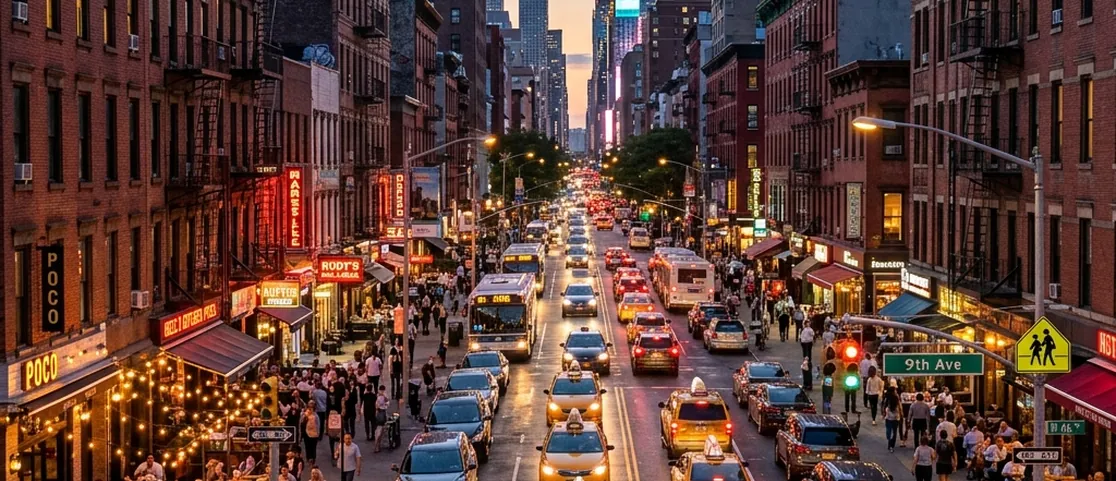
Theatergoers with west-side Broadway tickets between roughly 42nd and 54th Streets; travelers staying on Ninth Avenue or west of Eighth who want a short walk to dinner and house doors; visitors who already bought or are buying a show and need geography before reservation math.
Who should pick another area
Skip Hell’s Kitchen as your evening anchor when your theater sits east of Broadway and dinner west would double the crowd crossing; when you have no show and only want a quiet residential neighborhood; when your trip is downtown- or Village-first and a Midtown dinner is a detour you will resent. Pick Midtown East for east-side houses, the West Village for unhurried non-theater nights, or skip Broadway entirely this visit.
Thinking about staying in Hell's Kitchen?
Use the where-to-stay chooser to compare this neighborhood with other Manhattan bases using your trip anchor, noise tolerance, budget, kids, transport priority, and trip length. Then use How to Choose Where to Stay in Manhattan to check the exact hotel door, final payable room total, cancellation terms, and the route you will repeat most.
How much time is realistic
A show night is an evening block—not a half-hour neighborhood tour. Budget ninety minutes for pre-theater dinner plus a ten-to-fifteen-minute walk to the house, or a full post-curtain meal if you ate lightly before the show. Non-show visitors can walk Ninth Avenue for an hour at lunch, but that is a meal stop on a Midtown day, not a reason to index the neighborhood as a standalone attraction.
Hell’s Kitchen on a map is a wide label—locals often mean the food and bar strip west of Eighth Avenue, especially Ninth from about 42nd to 57th and Restaurant Row on West 46th. Broadway visitors care about that slice because it sits one avenue west of most house doors, with enough sit-down rooms to absorb a pre-curtain crowd without the Seventh Avenue theme-restaurant traps.
The neighborhood’s value is logistical clarity: west for food, east for seats, west again after let-out. Times Square is the sensory middle—useful for subway exits and a time-boxed walk-through, not as the place to hold a reservation clock. If your evening plan starts with “we will figure it out in the plaza,” Hell’s Kitchen geography will not save you; it rewards people who already know their curtain and house address.
What Hell’s Kitchen is good at—and what it is not
The durable strength is walkable pre-show and after-show meals for west-side Broadway. Ninth Avenue carries everyday bistros and long-running theater-district rooms; Restaurant Row concentrates prix-fixe belts timed to curtain. That is different from destination dining—you are not here for a three-hour tasting menu unless you have a late show and a reservation that already accounts for walking.
Hell’s Kitchen is not a sightseeing neighborhood in the Central Park or Village sense. There is no single mandatory landmark loop—only streets that work when a ticket locks your schedule. Daytime visitors sometimes eat here because their hotel is nearby; that is convenience, not a cultural checklist.
The west-side theater grid in plain terms
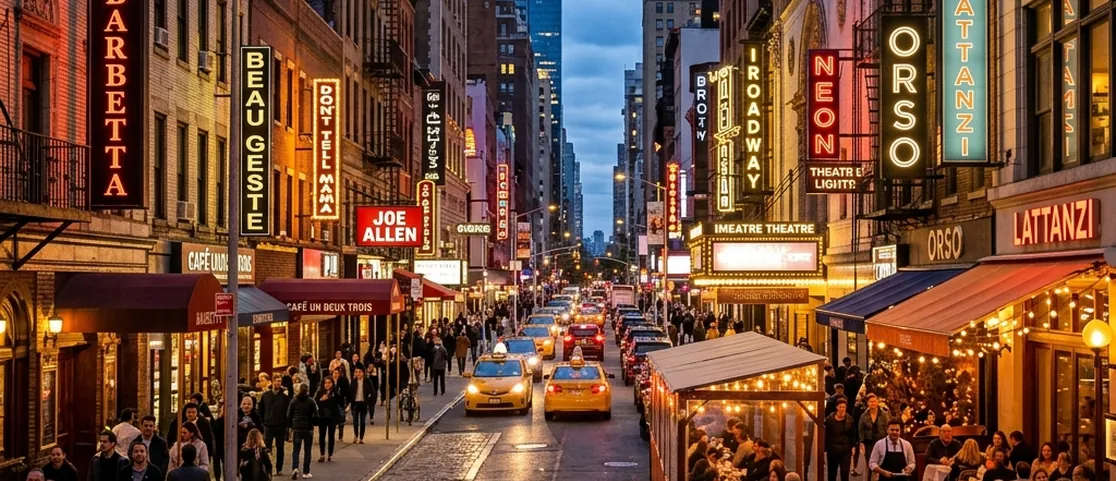
Seventh Avenue and the pedestrian plazas are billboard density, tour buses, and ticket hustlers. Eighth is still Midtown traffic but closer to normal. Cross to Ninth on 44th, 46th, or 49th and noise drops within two blocks—that transition is the whole reason the neighborhood works for show night.
Walking times matter more than map distance. From Ninth and 49th to a house on 44th near Eighth is often eight to fifteen minutes at theater pace with curbs and bathroom stops. Book dinner with that walk plus buffer, not with TKTS line time still on the clock.
When Hell’s Kitchen beats Times Square for dinner
- You hold a west-side ticket and want a sit-down meal without neon-corridor pricing.
- Your hotel is on Ninth or west of Eighth and you want one cross-street loop to the house.
- You need after-show kitchens west of Seventh when let-out crowds stack on Broadway.
- You already time-boxed the plaza on a non-show day and do not need billboards before curtain.
Times Square wins only as transit geography—subway to 42nd or 50th—then you should exit west for food. Sitting on Seventh because the lights are convenient is how show nights lose buffer and budget.
When Midtown East is the calmer choice
Houses east of Broadway or toward Third Avenue put Hell’s Kitchen behind you for dinner. Walking west for food then back east for curtain doubles crowd exposure. Midtown East’s after-work corridor can be calmer when your seat is closer to Grand Central than to Ninth Avenue.
The decision is house address first, neighborhood second. Buy or confirm the ticket, read the door location, then pick Ninth Avenue or east-side dinner—not whichever block looked lively on a map zoom.
How this hub differs from the meal guides
Three guides split the work. The neighborhood show-night piece walks routes between Ninth, Restaurant Row, and common theater doors—geography without a restaurant leaderboard. The pre-theater guide handles reservation math and prix-fixe cutoffs. The after-show guide handles kitchens after 10:00 PM and let-out sidewalk density.
The Broadway tickets guide sits upstream: channel choice and seat section before you reserve dinner. This hub assumes you are already in the theater-week mindset and need to know whether Hell’s Kitchen is the right belt—not how to score half-price seats in the plaza.
Hotels, sleep, and multi-show weekends
Marketing labels like “Times Square hotel” often mean Seventh or Eighth with siren noise. Hell’s Kitchen and west-of-Eighth rooms trade some billboard proximity for shorter food walks and less plaza foot traffic at midnight. Match hotel line to show nights via where-to-stay logic before you book a week in the neon core.
Two-show weekends punish bad geography. Sleeping west of Eighth and eating on Ninth reduces repeated cross-town shuttles; sleeping in the plaza and dining on Seventh multiplies fatigue you pay on the second night.
What to read next on WhyManhattan
Start with the Hell’s Kitchen show-night guide for walking routes and the west-east-west loop. Open pre-theater dinner for reservation timing; open after-show eating for post-curtain formats. Use Broadway tickets when the seat is not yet confirmed. Time-box Times Square on a different afternoon if you need the checkbox—not on show night between dinner and doors.
The decision in one line
Choose Hell’s Kitchen when your west-side ticket makes Ninth Avenue or Restaurant Row the shortest honest path to dinner—and when you will walk those streets instead of camping in the plaza. Skip it when your house faces east, when you have no show, or when another neighborhood already owns your evening.
What this hub will not do
This hub is not a ranked list of every bistro on Ninth Avenue, a nightlife guide, or a Times Square photo walk. Pre-theater reservation timing and after-show kitchen hours live in their own guides. We do not scrape ticket prices or promise walk-in luck at 6:10 PM on a Saturday.
Practical caveats
Saturday pre-theater reservations fill early; sidewalk pitches near Times Square are not ticket authorities. Construction on Eighth Avenue and security lanes around the plazas shift walking routes—follow posted detours. Hotels on Seventh Avenue trade shorter billboard walks for horn noise; west on Ninth often sleeps better. Restaurant hours change; confirm same-day before you walk.
Hell’s Kitchen When You Have a Show to Catch
Hell’s Kitchen is the walkable pre-show and after-show belt west of Broadway—use Ninth Avenue and Restaurant Row when curtain locks your evening, not the Seventh Avenue neon strip.
Pre-Theater Dinner in Midtown: Timing, Distance, and Reservations
A practical guide to coordinating pre-theater dining in Midtown Manhattan. Learn how to calculate reservation times, choose the right neighborhood block, and avoid missing curtain.
Where to Eat After a Broadway Show
Where to eat after a Broadway show in Manhattan: Late-night Hell’s Kitchen bistros, Restaurant Row institutions, K-BBQ, ramen counters, and iconic cheesecake slices.
Broadway Tickets Without Paying Panic Prices
Buy Broadway tickets through official channels first, use TKTS and lotteries only when your dates flex, and pair the seat with pre-theater dinner west of Times Square—not a sidewalk pitch.
Our recommendations are handpicked independently. No paid placement, no sponsored rankings. How we choose