
Topic hub
First Time in Manhattan: What to Decide Before You Walk
A first Manhattan trip fails when you treat the borough like a landmark checklist. This hub helps you decide transit, hotel geography, and day shape before you spend foot mileage on the wrong grid.
Reader question: What should I decide before my first day in Manhattan?
Who it fits
First-time visitors who want a decision frame—not a “top ten attractions” list. You have two to four days and need to decide booking priority, hotel geography, airport/subway basics, walking load, arrival night, and one realistic day shape before adding optional landmarks.
Who should pick another plan
Skip this hub if you are a return visitor optimizing one niche (pre-theater dinner, stroller logistics, a single museum). You already know your grid; open the specific neighborhood or practical guide instead.
How much time is realistic
Spend thirty to sixty minutes before travel on the decisions here—what to book, hotel geography, airport route, OMNY/subway basics, walking load, and one realistic day shape. That prep saves hours of backtracking once you land.
Most first-trip advice jumps straight to icons—Statue, Empire State, Times Square—without asking how you will move, sleep, and recover. Manhattan is walkable but not compact in the way maps suggest. The borough spans dozens of distinct grids; treating it as one neighborhood is how visitors end up on three subways before lunch, already tired.
WhyManhattan’s first-visit frame is sequential: logistics first, geography second, landmarks third. That order feels slower on the couch and faster on the sidewalk. You are not trying to “see everything”—you are trying to avoid the wrong everything.
Decide what actually needs booking
Before transit and landmark detail, decide which parts of the trip deserve a hard commitment. The booking guide separates trip-defining reservations from timed-but-substitutable attractions and the ordinary parts of Manhattan that are better left flexible. That choice should happen before you fill the calendar with tickets.
Keep the first evening smaller than the trip
If arrival day has already used the group’s attention, do not force a ceremonial first-night itinerary. The first-evening guide starts the clock only after bags are down and uses hotel geography, energy and tomorrow morning to choose between stopping, eating nearby, or taking one short walk.
Budget the walking load before you add pins
A map can hide how much of the day happens on your feet. The walking-load guide treats five-to-fifteen-minute walking windows, museum standing, station circulation, weather, and the evening return as one energy budget. Use it before a second neighborhood looks “close enough” to add.
Decide movement before landmarks
Your first decision is how you enter and move. Airport transfer choice sets tone: rail-heavy routes can reduce cost but add transfers and station circulation; taxi or rideshare can reduce transfers but costs more and depends on traffic. Read the airport guide for JFK, LaGuardia, and Newark tradeoffs before you land—not at the curb with luggage.
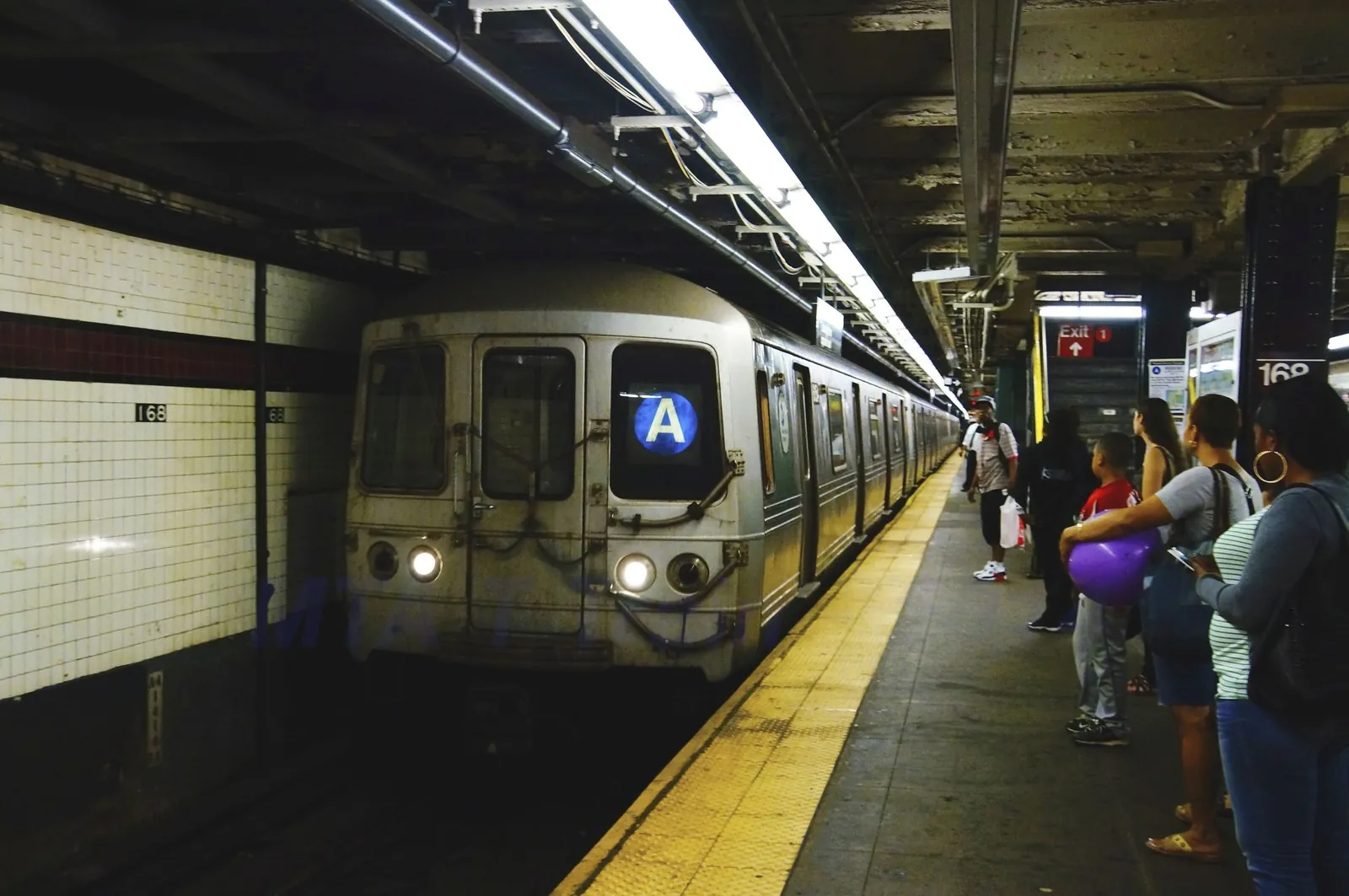
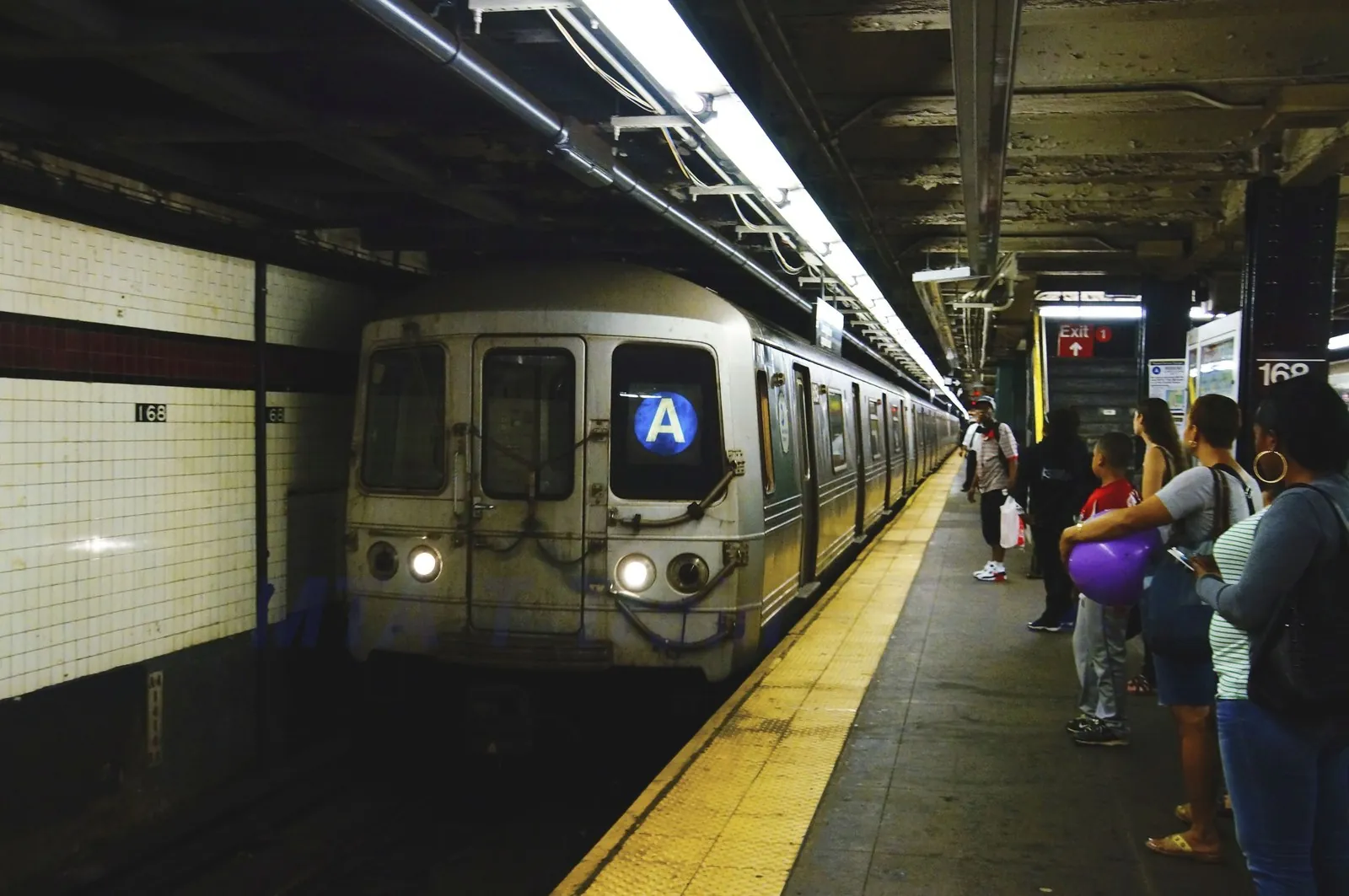
Subway literacy is the second decision. Manhattan’s numbered grid and lettered lines confuse once; they stay manageable if you learn one corridor before you ride everywhere. Our first-time subway piece covers OMNY/tap payment, express vs local, and the mistakes that strand visitors on the wrong platform.
Do not optimize every ride on Day One. Pick the line that serves your hotel and your first anchor—often the 1/2/3, N/Q/R/W, or 4/5/6—and ignore the rest until tomorrow. Uptown vs downtown matters more than which app color looks prettiest.
Decide where you sleep on the map
Hotel neighborhood matters more than star count for first visits. Sleeping in Midtown can reduce some journeys but increase street noise; Financial District can feel calmer at night but lengthen some uptown days; Upper West Side often suits park-and-museum family rhythms; SoHo suits walkers who accept rougher historic paving. The where-to-stay guide matches trip type to geography—use it before a small nightly discount locks you into repeated daily friction.
Pick one day shape, not every icon
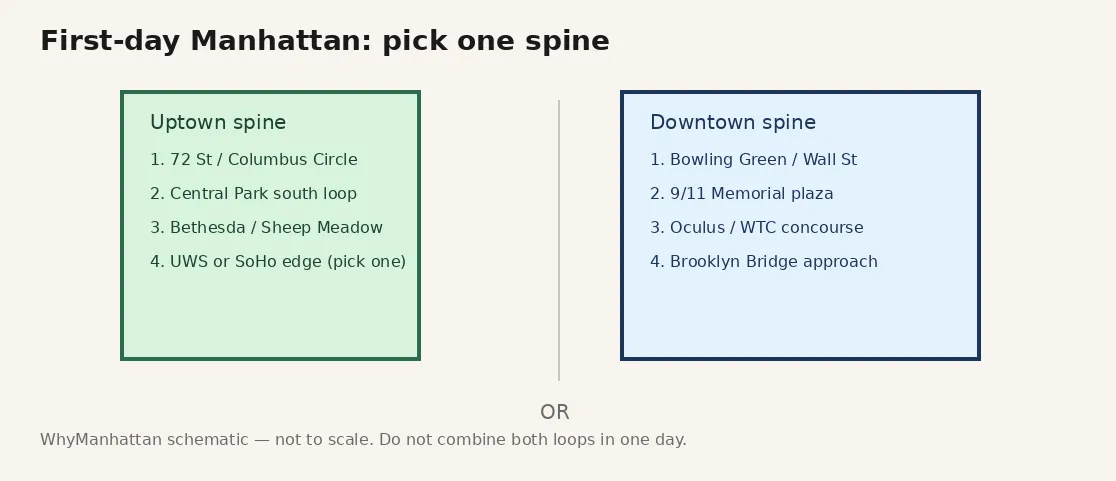
The failure mode is Day One: every famous name. A better first day picks one spine—downtown harbor, Central Park plus one neighborhood, or a budget route—and leaves the rest for Day Two. The one-day first-visit guide forces that choice; SoHo works when cast-iron and walking are the goal; Lower Manhattan when harbor history anchors the trip.
If someone sends you a list of twenty pins, cut it to three and delete the rest guilt-free. Observation decks, boat cruises, and bridge walks each deserve their own half day—not the same afternoon as a museum and a Broadway matinee.
- Decide first: airport in, subway basics, hotel neighborhood.
- Then pick: one neighborhood or one downtown/upown spine for Day One.
- Keep backups: rainy-day indoor plan and one budget meal route.
- Defer: observation decks, every bridge, and “also SoHo AND Central Park AND Brooklyn.”
Multi-day trips need explicit sequencing. The three-day without-backtracking guide assigns downtown, park-plus-museum, and one village or Harlem day—protect one geography per calendar day and accept that Brooklyn is often a separate trip, not an afternoon add-on.
Weather and money are part of the plan
Rain is not a ruined day if you chose museums and indoor passages in advance. The rainy-day guide sequences Midtown and Chelsea shelters without pretending every indoor option fits every traveler.
Budget is not shame—it is routing. A full budget day still feels special when free harbor views and one intentional meal anchor the hours. Pair that guide with affordable downtown eats if your first day lands south of Canal.
First visits often overspend on convenience—tickets bought at the door, lunch in tourist plazas, rideshare hops that subway would cover in twelve minutes. Deciding one backup budget route before you land prevents panic spending when energy drops.
Neighborhood hubs come after the frame
Once logistics and day shape are set, neighborhood hubs help you choose SoHo vs West Village vs Lower Manhattan—not as a ranking, but as pacing. They assume you already decided to spend a half day somewhere; they do not replace subway or stay decisions.
What to read next on WhyManhattan
Open subway and airport guides before travel. Book hotel geography with the stay guide. Choose SoHo first-timers when retail architecture fits Day One. Keep rainy and budget pieces as weather and wallet backups—not as replacements for deciding your spine first.
The decision in one line
Before you walk, decide how you arrive, where you sleep, and one realistic day shape—with subway literacy and a weather backup ready. Landmarks come after those choices, not instead of them.

What this hub will not do
This hub is not a top-ten attractions list, a ranked restaurant table, or an hour-by-hour first-day itinerary. WM-061 is the single-day spine; WM-062 is the three-day geography map without backtracking.
Practical caveats
Manhattan rewards early starts and explicit cuts. Subway service changes happen—check current MTA service before you promise timed tickets. Hotel neighborhood labels can hide a meaningful walk to the station you will actually use. Budget and rainy-day plans are backups, not afterthoughts.

What to Book Before Your First Manhattan Trip
Book the hotel and truly scarce must-dos first, reserve timed attractions only after the geography works, and leave ordinary transit, meals, and substitutable stops flexible.

How to Choose Where to Stay in Manhattan
A practical local guide to choosing a hotel base in Manhattan. Compare key neighborhoods on transit line access, room square footage, noise levels, and true costs.
Getting from JFK, LaGuardia, or Newark to Manhattan: A Decision Guide
A practical decision guide comparing transit options from JFK, LaGuardia, and Newark to Manhattan based on party size, luggage, arrival time, and total cost.
The Manhattan Subway for First-Time Visitors: A Practical Guide
A practical, first-time visitor guide to riding the New York City subway: how OMNY tap-to-pay works, avoiding local vs. express mistakes, reading signs, and riding safely.
How Much Walking Should You Expect in Manhattan?
Plan Manhattan walking by time, energy, station overhead, and geography—not a fake daily step target. Learn when to walk, when to use transit, and how to compress an overloaded day.

Your First Evening in Manhattan After a Long Flight
After a long flight, plan the first Manhattan evening from the hotel-ready time—not landing time. Choose food, one nearby walk, or nothing at all without damaging tomorrow.

One Day in Manhattan If It Is Your First Visit
Pick one first-day spine—Central Park plus one neighborhood, or Lower Manhattan to the bridge—and refuse the checklist that crosses the island twice.

Three Days in Manhattan Without Backtracking
Assign downtown, park-plus-museum, and one village or Harlem day—three geographies, explicit cuts, and room for a Broadway night without cross-island rescues.

SoHo for First-Time Visitors: What to Do, Skip, and Plan
A practical first-visit plan for SoHo: when to arrive, which streets reveal the cast-iron district, what deserves time, what to skip, and how to build a realistic half-day.

What to Do in Manhattan on a Rainy Day
A practical editorial guide to spending a rainy day in Manhattan: neighborhood indoor clusters, museum timing, covered food halls, and dry subway routes.
Manhattan on a Budget: A Full Day That Still Feels Special
How to spend a full, memorable day in Manhattan for $40 to $70 total by pairing high-reward free public spaces with iconic budget eats.
Our recommendations are handpicked independently. No paid placement, no sponsored rankings. How we choose