
How Much Times Square Do You Actually Need
Time-box Times Square to a short walk-through—then exit west for food, shows, or quieter streets. The square is a corridor, not an evening plan.

⚡ At a Glance Overview
Make the Decision Fast
For many first trips, Times Square works best as a short intentional stop tied to Broadway or Midtown rather than as a full-day destination.
You want the lights, scale, and first-trip spectacle but still need room for neighborhoods with a different Manhattan rhythm.
Do not stay longer because a checklist says you should; leave once you have seen what you came for unless theater, shopping, or an event keeps you there.
Why We Chose This
First-timers over-invest hours in the neon core while better theater, food, and pacing sit one avenue west. This intent guide names the minimum visit and the exit streets that make the square useful instead of exhausting.
Editorial Notes & Caveats
Street performers, costumed characters, and ticket sellers operate in a high-solicitation environment. Children can be overwhelmed; keep a short leash on both walking and wallet. Pedestrian plazas and construction closures change foot traffic—follow official detours. This article does not rank observation decks in the square; deck decisions belong in the published observation-deck comparison guide.
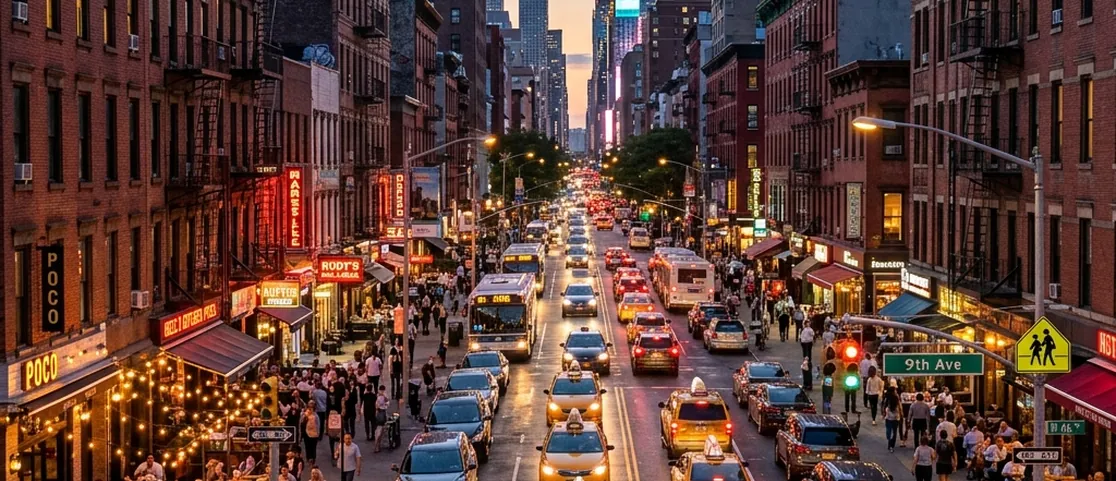
Times Square is not a neighborhood—it is a bright intersection of Broadway and Seventh Avenue where billboards, tour buses, and pedestrian plazas compress into a sensory funnel. First-time visitors fear missing it; return visitors often wish they had spent the hour elsewhere. Both reactions are valid. The useful question is not “should I go?” but “how many minutes does this trip deserve—and what am I trying to prove by staying longer?”
For most travelers, the honest answer is a single bounded walk-through: twenty to forty-five minutes to see the scale of the signs, take one photo, and exit on a side street before crowd fatigue sets in. Treating Times Square as an evening destination—dinner, shopping, wandering until you are numb—is how first days lose energy better spent on a park, a harbor walk, or a theater district meal west of the lights.
Locals cross the plazas as a commute corridor between subway lines, offices, and theaters. Visitors who mirror that movement—pass through, do not camp—have a better time than visitors who treat the lights as a museum you must study from every angle.
What Times Square is—and what it is not
Geographically, “Times Square” spans roughly 42nd to 47th Streets where Broadway crosses Seventh Avenue, with pedestrian islands and TKTS steps as familiar landmarks. It is not all of Midtown, not Rockefeller Center, not the Empire State Building, and not Bryant Park—though tourists often blur them because maps zoom out.
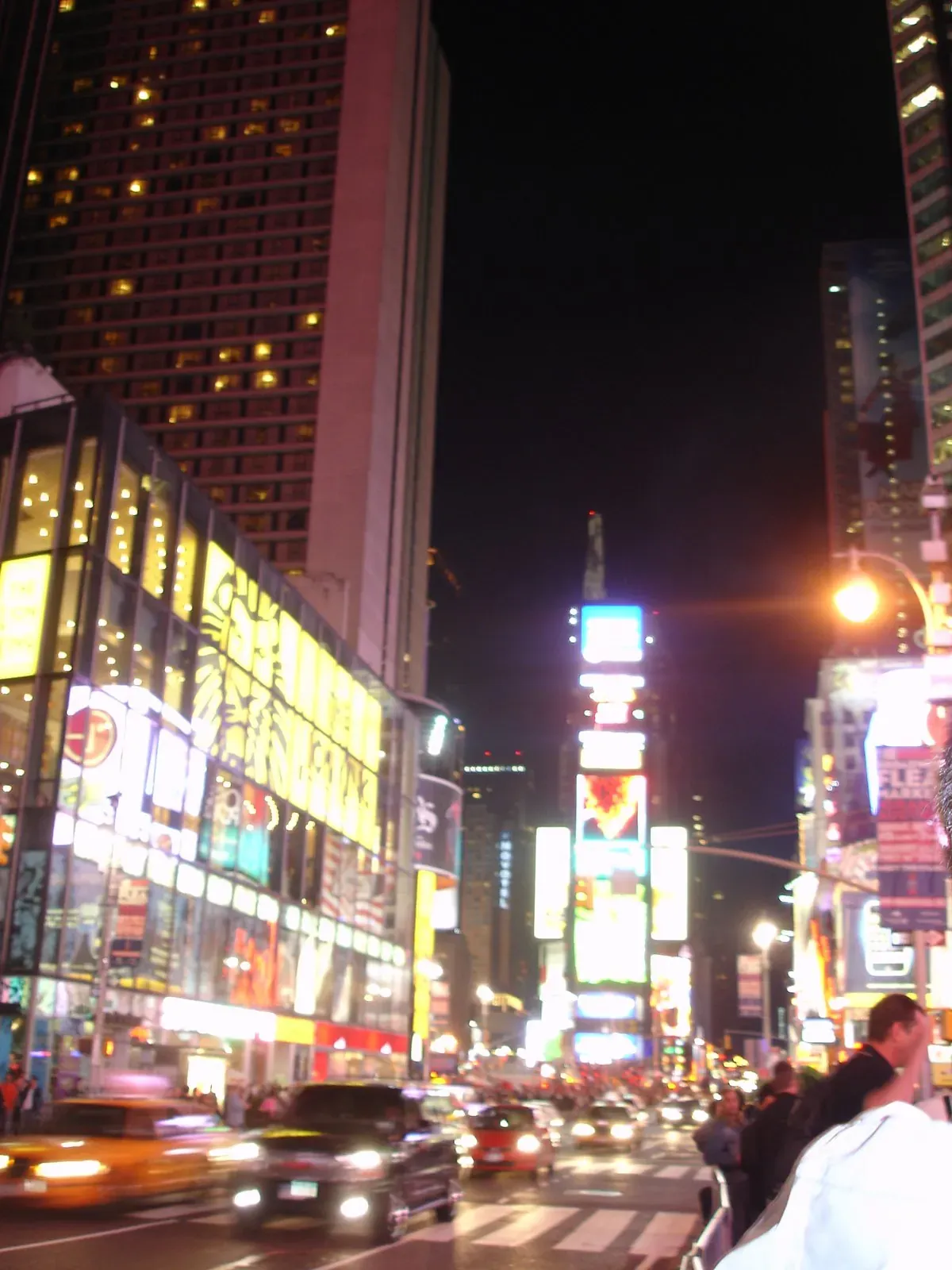
It is also not a required proof of visiting New York. You can have a excellent first trip with a single walk-through at dusk and never return. The first-visit topic hub frames logistics before landmarks; this piece time-boxes one famous pin so it does not eat a whole day.
How much time you actually need
- Twenty minutes: walk north or south through the core, one photo, leave on Ninth or Eighth Avenue.
- Forty-five minutes: add TKTS steps look (without buying unless you already planned rush tickets), one plaza bench, exit west.
- Ninety minutes or more: only if you have a fixed show, a meeting, or a reservation—you are not “doing Times Square,” you are waiting near it.
- Skip a dedicated return visit on trip two unless someone in your group insists.
If you are counting hours, you are already over budget. The square rewards brevity: see the scale, acknowledge the chaos, move on with a destination that has seats, bathrooms, and food that is not priced for captive foot traffic.
Evening looks different from afternoon. At night the signs are the point—but so are crowds leaving shows, tour buses idling, and lines for photo spots. A dusk walk-through satisfies the “I saw it lit up” goal; staying until midnight without a show is rarely worth the fatigue you pay tomorrow.
A bounded walk-through mini-plan
Start at 42nd Street and Seventh Avenue (Times Square–42nd Street subway hub) or walk in from Bryant Park if you are already midtown. Walk north along the pedestrian plazas on Broadway or Seventh—pick one side, not both in zigzags. Pause once for photos at the red steps or a clear sightline to the billboards.
Exit west on 44th or 45th Street toward Ninth Avenue, or south toward Bryant Park and Sixth Avenue. The exit matters: Hell’s Kitchen begins west of Eighth; Restaurant Row sits on 46th between Eighth and Ninth. That side-street transition is how you leave tourist density without a subway ride.
TKTS red steps are a legitimate landmark if you are already buying same-day tickets from the official booth—not as a mandatory photo stop that adds twenty minutes of standing. If you are not shopping for rush seats, walk past and save the knees.
The real costs: crowds, soliciting, kids, and wallets
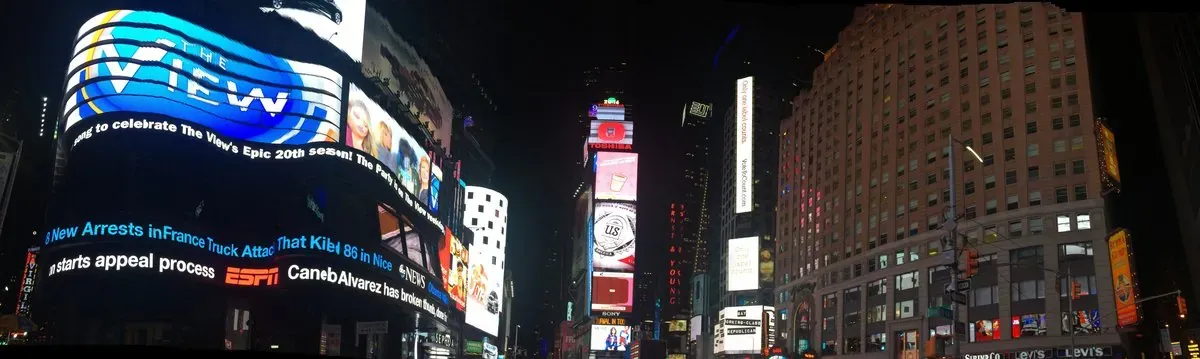
Crowds are the main tax. Weekends, show let-out, and holiday weeks stack shoulder-to-shoulder walking on narrow corners. Strollers and wheelchairs can move, but the experience is stressful when everyone stops for photos at once. Kids may love the lights once and melt ten minutes later—plan a bathroom and snack west of Broadway, not in the plaza.
Soliciting is constant: costumed characters expect tips for photos, CD sellers, comedy club flyers, and unofficial “ticket” pitches. A firm “no thanks” and keep walking is the standard New York response. Do not hand a phone to a stranger for a photo unless you accept the tip negotiation that follows.
Restaurant hawkers and “free” comedy tickets are designed for visitors who stopped moving. Keep your route west or south; say no once and do not debate. Kids should learn the rule before you enter the plaza so you are not negotiating in the middle of a crowd.
Phone battery dies faster here—bright screens, map checking, and photo bursts. Relying on a random café outlet is weak; the phone-charging guide lists better backups before you enter the crush. Wallet traps include sit-down chains on Seventh Avenue, “deals” that are not, and dessert stops that are fine as souvenirs but poor as dinner.
Costumed characters and street games are legal friction, not entertainment you owe money to. Set expectations with your group before you arrive: one photo if you want it, with cash ready; otherwise keep walking. Disputes in the middle of the plaza ruin the short visit you planned.
Theater night is not the same as a tourist checkbox
If you have a Broadway ticket, Times Square is transit geography—not the evening’s purpose. Pre-theater dinner belongs on Ninth Avenue or Restaurant Row via the pre-theater guide; after-show eating belongs west or south via the after-show guide. Buy tickets through official channels or the Broadway tickets guide—not from aggressive sidewalk sellers in the square—and protect curtain time by eating away from the neon corridor.
Arrive for the show with buffer, not with a plan to “explore Times Square” for an hour beforehand. Security lines, bathroom lines, and souvenir shop detours eat the buffer fast. Walk the square on a different day—or for twenty minutes before matinee if you must—so show night stays about the theater, not the billboards.
Hotels marketed as “Times Square” put you in the middle of siren noise and late-night foot traffic. Theater access is real, but sleep quality and restaurant quality often improve one or two avenues west or in Hell’s Kitchen—still a short walk to the house doors.
When to skip it entirely
Skip a dedicated visit if you are on a tight first-day downtown spine, if rain makes outdoor plazas miserable, if your group already hit sensory overload, or if you are a return visitor with no nostalgia hook. Skip staying in a Times Square hotel for “convenience”—the where-to-stay guide explains noise and transit tradeoffs; convenience on a map is often expensive sleep.
Recovery days should avoid the square entirely; the recovery-day guide names quieter grids. Romantic evenings rarely improve with LED noise—the romantic day routes stay downtown or in village streets for a reason.
Observation decks and chain restaurants in the immediate blocks market “views” and “only in New York” meals. If skyline is the goal, free harbor edges and bridge approaches often already gave you scale; if food is the goal, Ninth Avenue wins on nearly every metric that is not billboard proximity.
Rain, alternatives, and where to go instead
Rain does not make Times Square magical—it makes wet plazas and umbrella collisions. The rainy-day plan offers indoor sequencing through Midtown and Chelsea without pretending billboards are shelter. If weather is ugly, shorten to a drive-by view from a taxi or subway exit and spend the hour indoors elsewhere.
Summer heat turns the plazas into reflective ovens; winter wind whips between canyons. Shoulder-season late afternoon is the least worst outdoor window—not because it is pleasant, but because you can fulfill the checkbox faster. Indoor alternatives beat standing in weather you resent.
Better uses of the same hour: Bryant Park’s edges, the NYPL Stephen A. Schwarzman Building steps (exterior and free exhibits), a Hell’s Kitchen lunch west of the lights, or a museum block you booked on purpose. Each has a destination beyond brightness.
Three-day and first-day plans elsewhere on the site treat Times Square as optional or as a single cut—not as a default evening. If your itinerary already has downtown harbor stone or Central Park lawns, do not add a second midtown hero block the same day; the square will still be there for a twenty-minute walk another afternoon.
The candid summary: walk through once, photograph once, exit on a side street, eat and sit somewhere with a door. Times Square is a corridor you survive with a time box—not a neighborhood you settle into. Return visitors can skip the repeat without guilt; first-timers can check the box in half an hour and spend the rest of Manhattan on something that gives back more than wattage.
If you leave remembering one rule—exit west—that memory will save you more money and patience than any single photo. The square did its job when you saw the scale; Manhattan does its job when you spend the next hour somewhere you can hear yourself think.
Before you give MoMA a first-trip attraction slot, use the MoMA first-trip fit guide if MoMA is the real Midtown anchor and Times Square should remain a short stop around it.
Suggested Route & Mini Plan
- Subway to Times Square–42nd Street or walk in from Bryant Park.
- Walk north once through the pedestrian plazas; one photo stop.
- Exit west on 44th–46th toward Ninth Avenue or Restaurant Row.
- Eat and sit off Seventh Avenue—pre-theater or after-show guides if you have a show.
- Do not extend into a second hour without a reservation or ticket.
Curated Alternatives
Pre-theater dinner and after-show eating
A show ticket changes the geography—you need Hell’s Kitchen or Ninth Avenue for dinner, not neon time in the plaza. Use pre-theater and after-show guides when curtain time is fixed.
Rainy-day Manhattan plan
Rain and sensory overload push you indoors west or south of the billboard canyon. The rainy-day plan sequences shelters without treating Times Square as the main event.
Skip Times Square; pick a neighborhood day shape
Return visitors who already walked the corridor once can skip entirely and spend Midtown hours on museums, Bryant Park edges, or a neighborhood hub with actual pace.
Frequently Asked Questions
How long should a first visit to Times Square take?
Twenty to forty-five minutes for a first look: walk the core, one photo, exit toward Eighth or Ninth Avenue. More time rarely improves the experience unless you have a show or reservation nearby.
Is Times Square OK with kids?
Possible, but stressful at show let-out and on weekends. Keep visits short, hold hands with kids, skip costumed photo ops unless you budget tips, and exit west for food and bathrooms.
Where should I eat near Times Square without tourist traps?
Walk two or three blocks west to Ninth Avenue (Hell’s Kitchen) or use Restaurant Row on 46th Street. Do not default to Seventh Avenue chains right after curtain.
Can I skip Times Square on a first trip?
No for a dedicated sightseeing block if downtown or uptown already owns your day. Yes as a brief walk-through or as geography around a theater ticket—not as both a full afternoon and a show night.
What about buying Broadway tickets in Times Square?
Use the Broadway tickets guide for channel choice—official site, TKTS, lottery, or licensed resale with row detail. Never buy from aggressive sidewalk sellers or unmarked booths in the plaza; verify performance and seat on a screen you control.
Our recommendations are handpicked independently. No paid placement, no sponsored rankings. How we choose