
How to Choose Where to Stay in Manhattan
A practical local guide to choosing a hotel base in Manhattan. Compare key neighborhoods on transit line access, room square footage, noise levels, and true costs.

⚡ At a Glance Overview
Make the Decision Fast
Choose the base by the trips you will repeat, your nighttime tolerance, and the final payable room terms—not by neighborhood fame alone.
You are comparing several Manhattan hotel areas and care about daily transit friction as much as the room itself.
Do not default to Times Square or a familiar hotel brand without checking the exact block, station walk, room category, and final total.
Why We Chose This
The hotel itself matters, but the location decision is easier when you start with fixed trip anchors, nighttime tolerance, the transport you will repeat, and the final payable room terms. This guide chooses a base rather than ranking hotel brands.
Editorial Notes & Caveats
Hotel fees, room layouts, check-in rules, cancellation terms, and nightly rates change by property and date. Compare the final bookable total, confirm the exact room category, and check the walking route to the station before committing to a non-refundable stay.
Neighborhood Comparison at a Glance
Start with the trip pattern, not the hotel brand. These are editorial fit signals—not hotel scores—and the exact block, station, room, and nightly rate still need a final check.
A central base when your days mix Midtown, Chelsea, Union Square, and downtown.
Prioritize residential evenings and easy Central Park access over late-night density.
Choose the exact block carefully when late-night street noise would affect sleep.
Strong when downtown anchors matter more than repeated Central Park or uptown trips.
| Neighborhood | First trip | Family | Nightlife | Quiet | Transit pattern | Central Park | Downtown | Airport friction | Walking character |
|---|---|---|---|---|---|---|---|---|---|
| Flatiron / NoMad | Excellent | Good | Good | Good | Strong central connections; verify the exact station near the hotel. | Good | Strong | Moderate; west/east-side location changes the easiest rail connection. | Central and efficient for mixing Midtown South, Chelsea, Gramercy, and Union Square. |
| Upper West Side | Strong | Excellent | Limited | Excellent | Good north-south access; repeated downtown trips add distance. | Excellent | Limited | Moderate–higher; most arrivals add an uptown leg after reaching Manhattan. | Residential blocks, Central Park, Riverside Park, and a calmer evening rhythm. |
| SoHo | Good | Good | Strong | Limited | Useful downtown lines, but the best station depends heavily on the exact block. | Limited | Excellent | Moderate; rail arrivals often need a final subway or taxi leg. | Dense shopping, dining, cast-iron streets, and easy access to adjacent downtown neighborhoods. |
| Tribeca | Good | Strong | Good | Strong | Good downtown access; check the hotel-to-station walk before assuming convenience. | Limited | Excellent | Moderate–higher; usually a final downtown connection after the main airport leg. | Broader downtown streets, Hudson access, and a quieter base than nearby nightlife zones. |
| Lower East Side | Good | Limited | Excellent | Limited | Good when the hotel is near the right line; crosstown movement can add friction. | Limited | Excellent | Higher; airport rail usually leaves a final subway, bus, or taxi connection. | Food, bars, and late-night energy close together; block-level noise matters. |
| Financial District | Good | Strong | Limited | Strong | Many downtown lines, but repeated Midtown/uptown days create longer rides. | Limited | Excellent | Moderate; route quality changes by airport and the hotel’s exact downtown station. | Best for Lower Manhattan anchors, waterfront access, and a quieter post-work evening feel. |
| Midtown East | Strong | Good | Good | Good | Strong for Grand Central-area trips and east-side movement; west-side days may need crosstown time. | Good | Good | Moderate; JFK rail can be practical when Grand Central is convenient to the hotel. | Efficient for Midtown landmarks and business trips, with less tourist intensity than Times Square blocks. |
“Low friction” is not universal: JFK, LaGuardia, and Newark use different connections. Before booking, compare your exact hotel block with our airport-to-Manhattan decision guide and re-check current service for your arrival day. Nightly price is intentionally excluded because it changes by date, property, room category, fees, and cancellation terms.
Choosing where to stay in Manhattan is the single most consequential decision of your New York trip.
Manhattan is compact on a map, but neighborhood character, nighttime noise, room layout, and transit friction can vary sharply from block to block.
First-time visitors frequently make the mistake of default-booking a hotel in Times Square, only to find themselves trapped in perpetual sidewalk gridlock, noise, and overpriced chain dining. By matching your stay to the right neighborhood hub, you can enjoy a far more seamless, comfortable New York experience.
1. Flatiron & NoMad: The Best Central Base
For first-time visitors, business travelers, and couples seeking the optimal balance of central location and local atmosphere, Midtown South (Flatiron and NoMad) is the premier base.

NoMad and nearby Midtown South can connect Madison Square Park, Chelsea, Gramercy, Midtown offices, and theater geography without making every day start from the brightest part of Times Square.
A hotel near a useful transit junction can reduce repeated transfers and make taxi use optional rather than structural. Verify the exact station entrance and the route to your own anchors instead of counting line logos on a map.
2. Upper West Side: Quiet Streets for Families
If your travel party includes children, seniors, or travelers sensitive to street noise, the Upper West Side provides a peaceful residential sanctuary.
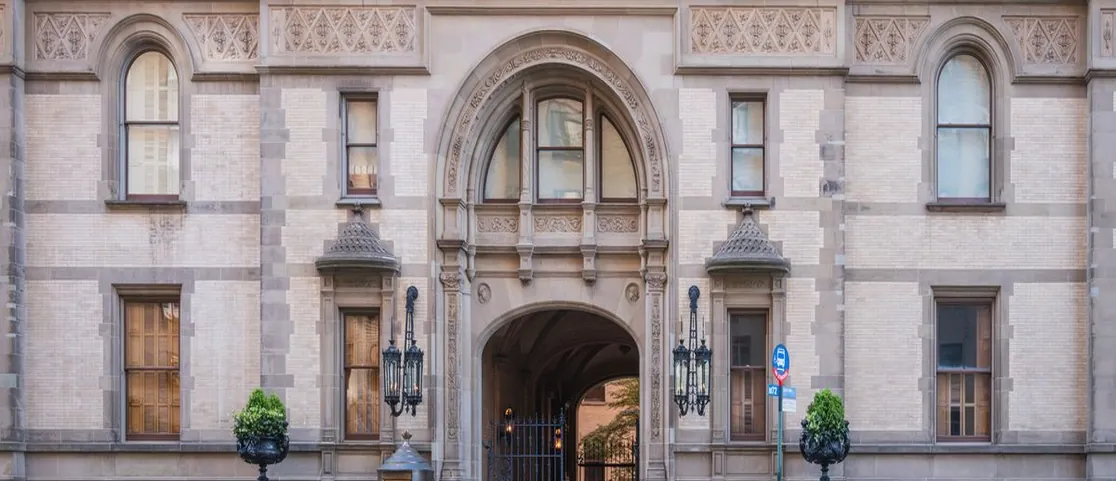
Bordered by Central Park to the East and Riverside Park to the West, the neighborhood features tree-lined brownstone blocks, wide sidewalks, and step-free access to the American Museum of Natural History.
The west-side subway spine can make Midtown straightforward from the Upper West Side while preserving a more residential evening rhythm. Check the exact station and whether local or express service matches the trips you will repeat.
3. SoHo, Tribeca & LES: Boutique Style & Nightlife
For fashion-focused travelers, food lovers, and evening explorers, Lower Manhattan offers New York’s most compelling hotel properties.

SoHo and Tribeca host renowned design-forward boutique hotels (*The Crosby Street Hotel*, *The Greenwich Hotel*), featuring historic cast-iron views, cobblestone walks, and world-class dining right outside your lobby door.
The Lower East Side (*The Ludlow*, *PUBLIC Hotel*) caters to vibrant nightlife seekers, though rooms facing lower floors can be noisy on Friday and Saturday nights.
4. Financial District: Extra Space & Value
Travelers looking for larger room square footage or better price-to-quality ratios should evaluate the Financial District (FiDi) and Battery Park City.

Financial District and Battery Park City can offer newer hotel stock and room layouts that are worth comparing when luggage, work space, or family circulation matters. Do not infer room size from the neighborhood; verify the exact category before booking.
FiDi can price differently from Midtown on particular dates, but there is no durable weekend discount to assume. Compare the final payable total for your stay and weigh any savings against repeated uptown journeys.
5. Essential Rules Before Booking
Before non-refundable booking, always check three crucial operational factors:
**Compare the final payable total**: Mandatory property, facility, or destination fees vary by hotel and date. Read the booking breakdown and compare the amount you will actually pay rather than the headline room rate.
**Prioritize the route you will repeat**: A hotel with a simple walk to the station that serves your real anchors can beat a more central-looking room that requires an awkward transfer or crosstown correction every day.
**Check the exact room category**: Room names are not standardized. If luggage, a stroller, two workspaces, or extra beds matter, verify the listed dimensions, bed layout, and photos for the category you are actually buying.
Start with the trip anchors, not the neighborhood reputation
A useful hotel base is the place that makes your repeated journeys boring. Before looking at room photos, write down the two or three places that will control the trip: a Broadway theater, an office, a museum-heavy Upper East Side day, a downtown wedding, or a family routine around Central Park. The best base usually minimizes the journeys you will make twice, not the one landmark you are most excited to see once.
This is why “central” is an incomplete description. A hotel can look central on a Manhattan map and still create awkward crosstown travel every morning. Conversely, a base that looks farther north or south can be easier if it sits on the line that serves your actual anchors. Count transfers, avenue crossings, and late-night returns. A simple direct journey can be more useful than a shorter-looking trip that requires a crowded transfer and a long walk with bags.
Use a four-part test before comparing room rates
First, test the arrival and departure day. A hotel that is pleasant for sightseeing can be irritating when you are carrying luggage from Penn Station, Grand Central, or an airport connection. Second, test the evening return. If most nights end near Broadway, Koreatown, or downtown restaurants, inspect the late-night return leg, not only the daytime journey.
Third, test the room against the people using it. A small room can be perfectly workable for one light-packing traveler and miserable for two adults with large suitcases or a family managing a stroller. Fourth, test the block itself. Avenue-facing rooms, nightlife corridors, loading zones, and emergency routes can matter more to sleep than the neighborhood name on the booking page. The useful question is not “Is this area quiet?” but “What will happen outside this exact room when we are trying to sleep?”
Match the base to the shape of the trip
For a first visit built around Midtown, Central Park, and one downtown day, Midtown South or another strong transit junction often reduces friction. For families who expect park time, museum time, and earlier nights, the Upper West Side can trade a little distance for calmer blocks and a more forgiving daily rhythm. For travelers whose trip is mostly downtown food, shopping, and evenings, forcing a Midtown base can create unnecessary backtracking.
Financial District stays can work especially well when the trip includes harbor sights, Lower Manhattan, or a quiet room priority. The tradeoff is that some streets feel businesslike after office hours and many classic Midtown or Upper Manhattan days start with a longer ride. SoHo and Tribeca make more sense when the neighborhood itself is part of the trip; paying for that address is harder to justify if you will leave it immediately every morning.
Know when Times Square is the practical answer
Times Square is not automatically a bad hotel base. It can be rational for a short theater-heavy trip, a traveler who values direct subway options over neighborhood calm, or someone who expects to return to the room between a matinee and an evening show. The problem is treating it as the universal first-timer default. Sidewalk crowding, bright streets, tour-group traffic, and chain-heavy dining can make the area tiring for travelers who want residential evenings.
If you choose it, judge the specific block and room rather than the marketing label. A hotel a few blocks west of the brightest plazas can behave very differently from one directly on the pedestrian core. If you reject it, do so because another base better matches your trip—not because a list told you that “locals never stay there.”
Run a final booking audit before you pay
Compare the total price that is actually payable, not the large number shown in the first search result. Check mandatory property fees, cancellation terms, bed type, room size, and whether the quoted room is the category shown in the photos. If breakfast, a credit, or another amenity is bundled into a fee, decide whether you would buy that benefit on purpose. A fee is not automatically a bad deal, but an unwanted benefit should not be allowed to disguise the real nightly cost.
Then open a walking map and trace the hotel door to the station entrance you expect to use most. Look for the correct avenue side, major intersections, stairs or elevator needs, and how the route feels with luggage. Finally, keep one alternative neighborhood in reserve. If the preferred area becomes unusually expensive for your dates, switching the base is often smarter than dropping to a visibly worse property just to preserve the neighborhood name.
When a Manhattan hotel is not the best value
Staying outside Manhattan can be rational when the savings are meaningful after transport time is included and the hotel sits beside a direct route to the parts of Manhattan you will actually visit. It is less attractive when the lower room rate creates a long transfer every morning, makes late-night returns awkward, or forces the group to carry shopping and children through an extra connection.
Compare door-to-door time, not borough names. A well-positioned hotel outside Manhattan can beat a poorly positioned Manhattan room, while a cheap room that adds substantial daily friction is not truly cheap. The decision belongs in the same framework: repeated journeys, nighttime return, luggage, and the people using the room.
Before you lock the rest of a first Manhattan trip, use the booking-priority guide after choosing hotel geography and before stacking timed attractions around it.
Before you plan the first Manhattan evening, use the first-evening guide to turn hotel geography into a low-friction arrival-night plan.
Suggested Route & Mini Plan
1. Identify the two or three trip anchors you will return to most often.
2. Trace the hotel door to the station or walking corridor you expect to use repeatedly; count transfers, avenue crossings, and late-night returns.
3. Compare the final payable total, mandatory property fees, cancellation terms, bed type, and exact room category before paying.
4. Inspect the exact block and room orientation when noise matters; a neighborhood label cannot tell you what will happen outside that window at night.
Curated Alternatives
Long Island City (Queens) for Budget Midtown Access
If Manhattan room totals exceed your budget, a Long Island City hotel beside a direct transit route can be worth comparing—especially when the repeated journey to your Manhattan anchors stays simple.
Brooklyn Heights & DUMBO for Skyline Views
If you prioritize historic brownstone streets, waterfront parks, and panoramic Manhattan skyline views over living directly inside Manhattan.
Frequently Asked Questions
Is Times Square a good place to stay for first-timers?
Sometimes. Times Square can be practical for a short theater-heavy trip or travelers who value transit options over neighborhood calm. Judge the exact block and room; choose another base when sidewalk intensity, bright streets, or late-night noise work against the trip you actually planned.
Which Manhattan neighborhood has the largest hotel rooms?
Do not assume a neighborhood guarantees a larger room. Financial District and Battery Park City can have newer hotel stock, but room categories vary property by property. Compare the exact square footage or floor plan for the room you are actually booking.
Where should families stay in Manhattan?
The Upper West Side and Battery Park City offer quiet residential streets, direct park access, wide sidewalks, and easy subway lines.
Our recommendations are handpicked independently. No paid placement, no sponsored rankings. How we choose