
Fall Coffee-and-Walk Routes in Manhattan
Four practical autumn walking routes for Central Park and the West Village, with coffee anchors, crowd tradeoffs, terrain notes, and a no-guarantees foliage strategy.

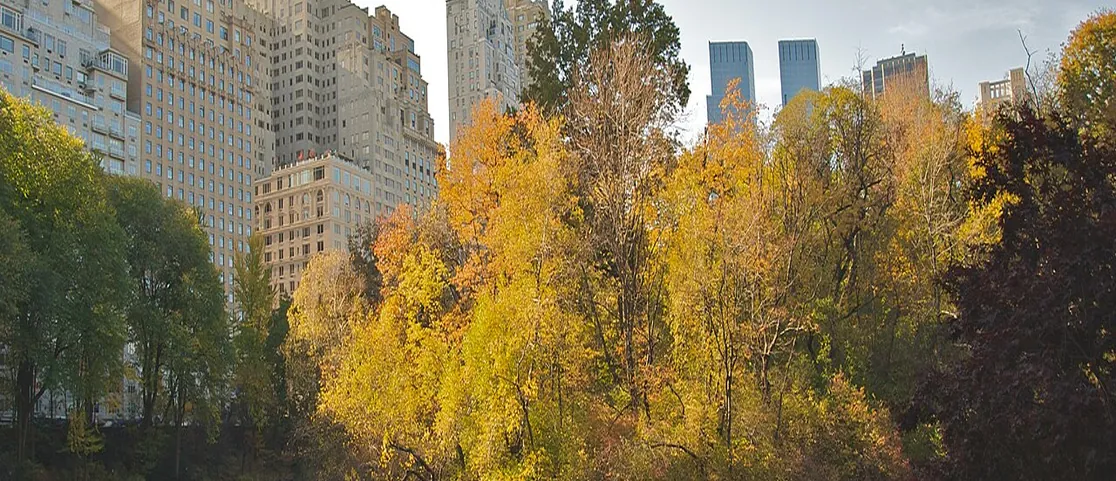
⚡ At a Glance Overview
Open the Route in Google Maps
These links map the guide’s walking skeleton. Re-check current closures, access rules, weather, and your group’s energy before following a route turn by turn.
Fall Route 1 — classic Central Park
The recognizable first-visit circuit. Leave early if Bethesda or Bow Bridge crowds stop being enjoyable.
- W 72nd St park entrance
- Strawberry Fields
- The Mall
- Bethesda Terrace
- Bow Bridge
Fall Route 2 — West Village to Hudson
Use this when brick, stoops, low autumn light, and neighborhood atmosphere matter more than dense foliage.
- Charles St & Greenwich St
- Perry St residential blocks
- St. Luke’s Place
- Pier 46 / Hudson River Park
Fall Route 3 — the Ramble
A woodland-first route. It is less predictable than the broad promenades and is not the step-free choice.
- W 72nd St park entrance
- Strawberry Fields
- Bow Bridge / Lake edge
- The Ramble
Fall Route 4 — the Pool + North Woods
A quieter north-end foliage route for repeat visitors. Daylight, footing, and restroom planning matter more here.
- W 100th St park entrance
- The Pool
- The Ravine
- North Woods
Google Maps is an external service. A mapped line is a navigation aid, not a guarantee that every path, elevator, park entrance, or venue is open when you arrive.
Why We Chose This
These four routes cover four different fall decisions: classic Central Park landmarks, West Village streets, a woodland loop, and a quieter north-end foliage walk. Coffee is an anchor, not a reason to cross town.
Editorial Notes & Caveats
Foliage timing shifts with weather and tree species. Wet leaves can make slopes and stone paths slick; the Ramble and north-end routes are less suitable when traction, step-free routing, or fast restroom access is the priority.
Fall in Manhattan is best treated as a timing problem, not a date on the calendar. Central Park’s trees do not all turn together, and the Park can change later than areas farther north in New York. The useful move is to choose a route that still works if the leaves are early, late, or patchy, then check the Central Park Conservancy foliage tracker close to the day you go.
Coffee helps because these walks are better when they begin with a small anchor and no reservation pressure. It should not dictate the geography. A ten-minute café detour is fine; a forty-minute subway ride for a famous drink usually defeats the point of a relaxed fall walk.
The four routes below solve different problems. Route 1 is the classic Central Park first-timer circuit. Route 2 is for brownstones and neighborhood atmosphere. Route 3 trades landmarks for woodland. Route 4 goes north for a quieter foliage-first walk. Pick one. Two full fall walks in the same day usually turn a good shoulder-season plan into mileage for its own sake.
Choose the route before you choose the coffee
Choose Route 1 if this is your first Central Park visit and you want recognizable landmarks. Choose Route 2 if the West Village itself is the point. Choose Route 3 if you want to feel inside the Park rather than moving between postcard stops. Choose Route 4 if you have already seen the south and middle of Central Park and would trade convenience for quieter color.
If rain has been steady, simplify. Wet leaves, sloped stone, roots, and narrow woodland paths are a bad combination when anyone in the group is tired, pushing wheels, or worried about footing. The Village route and the broad Central Park promenades are easier to shorten than a deep Ramble or North Woods loop.
Route 1: West 72nd Street to the Mall, Bethesda, and Bow Bridge
Coffee anchor: Solid State Coffee at 104 West 71st Street or Black Press Coffee on Columbus Avenue. Both keep the first decision close to the West 72nd Street park entrance. Check same-day hours if the café matters; otherwise buy whatever is open and start walking.
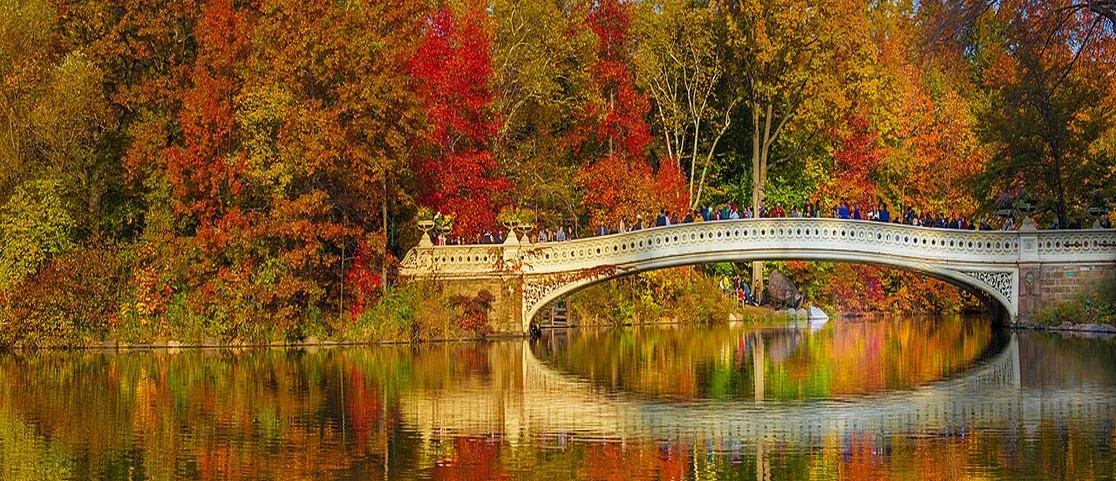
Enter at West 72nd Street and use Strawberry Fields as the first checkpoint. If the paths are already packed and your group wants a quieter walk, do not force the full highlight circuit. You can turn north or exit back to the Upper West Side. If the park still feels good, continue toward the Mall and Literary Walk.
The Mall is one of the strongest fall bets because its double row of American elms creates a long canopy rather than one isolated tree. It also works when color is uneven: the geometry of the promenade, benches, and changing canopy still gives the walk a purpose. There are no restrooms on the Mall itself, so do not arrive assuming every major landmark has facilities beside it.
From the Mall, continue toward Bethesda Terrace and the Lake. Bow Bridge is worth adding when the group still has energy and the bridge is not clogged with photo stops. If it is crowded, the correct fall decision is often to enjoy the Lake edge and leave rather than waiting for an empty bridge that may never appear.
Best for: first visits, classic Central Park scenery, easy early exits. Skip it when: you want solitude, the group dislikes crowds, or you have already done the Bethesda/Bow Bridge circuit on another day.
Route 2: West Village brownstones to the Hudson River edge
Coffee anchor: The Elk at 128 Charles Street for a west-side start, or Caffè Reggio at 119 MacDougal Street if you want the walk to begin closer to Washington Square and move west. These are different starts, not stops you need to collect on the same route.
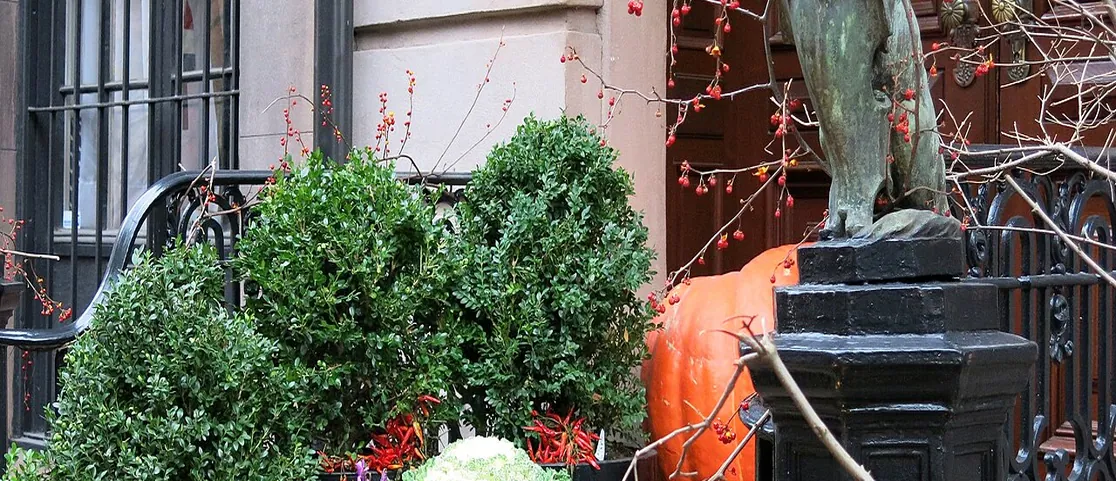
The West Village route is the safer choice when “fall” means low light, brick, stoops, and slower streets more than peak foliage. Start with Charles, Perry, or nearby residential blocks, then drift toward St. Luke’s Place and the Hudson side. The street pattern is irregular, so use one or two anchors rather than trying to trace a perfect grid.
This route remains useful before Central Park reaches strong color because the architecture carries the walk. Ginkgo and other street trees can add yellow, but the neighborhood should not be sold as a guaranteed leaf carpet on a specific week. Weather, pruning, wind, and species all change the effect.
End at the Hudson River Park edge only if wind and temperature still feel comfortable. The river can make a mild inland afternoon feel sharper. If the wind is unpleasant, finish with food or a café in the Village instead of walking west because the original plan said so.
Best for: couples, solo walkers, architecture, flexible coffee stops. Skip it when: your main goal is dense foliage or you need a route with long uninterrupted park paths.
Route 3: The Ramble when woodland matters more than landmarks
Coffee anchor: Solid State is a practical west-side start. Enter around West 72nd Street, reach the Lake, and then treat the Ramble as the destination instead of adding it after a full Bethesda/Bow Bridge circuit.
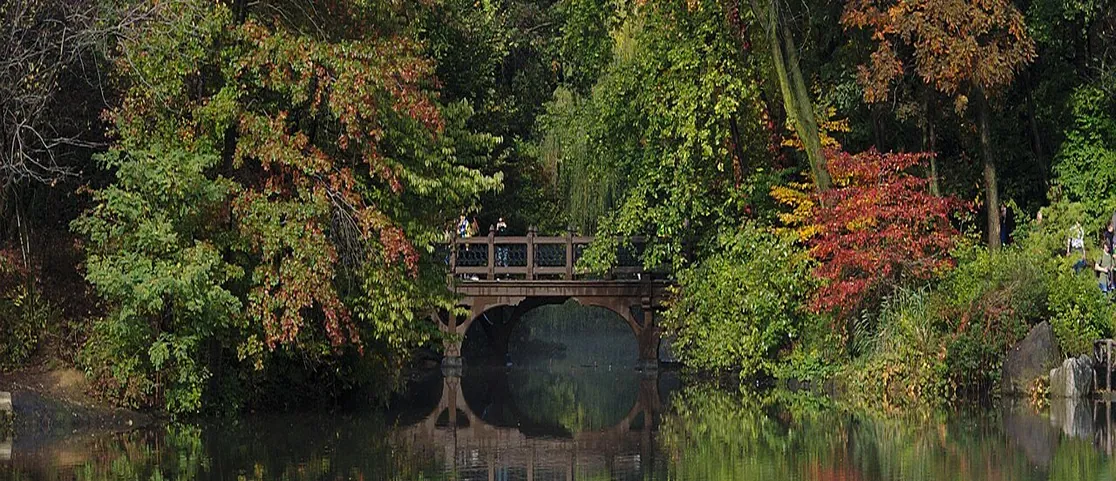
The Ramble is a 36-acre woodland landscape in the middle of Central Park, with winding paths, rock, bridges, and dense planting. That is its strength and its constraint. It feels less like a formal promenade than the Mall, but it is also easier to take a wrong turn or add distance without noticing.
Do not promise yourself one named bridge or one exact tree as the payoff. Enter for texture: canopy, water edges, changing elevation, and the contrast between woodland and skyline. This makes the route resilient when individual trees are early or late.
The Ramble has a year-round restroom, but the Central Park Conservancy notes that it is not wheelchair accessible. That matters more than the foliage. If step-free routing is required, use broad promenades and confirmed accessible facilities instead of improvising inside woodland paths.
Best for: repeat visitors, woodland texture, photographers who do not need a fixed landmark sequence. Skip it when: rain has made paths slick, someone needs predictable step-free routing, or the group wants a short linear walk.
Route 4: The Pool and North Woods for a quieter foliage-first walk
Coffee anchor: buy near Broadway or Amsterdam before entering around West 100th Street. Do not make a special coffee destination the reason for this route; the north-end landscape is the reason to come.
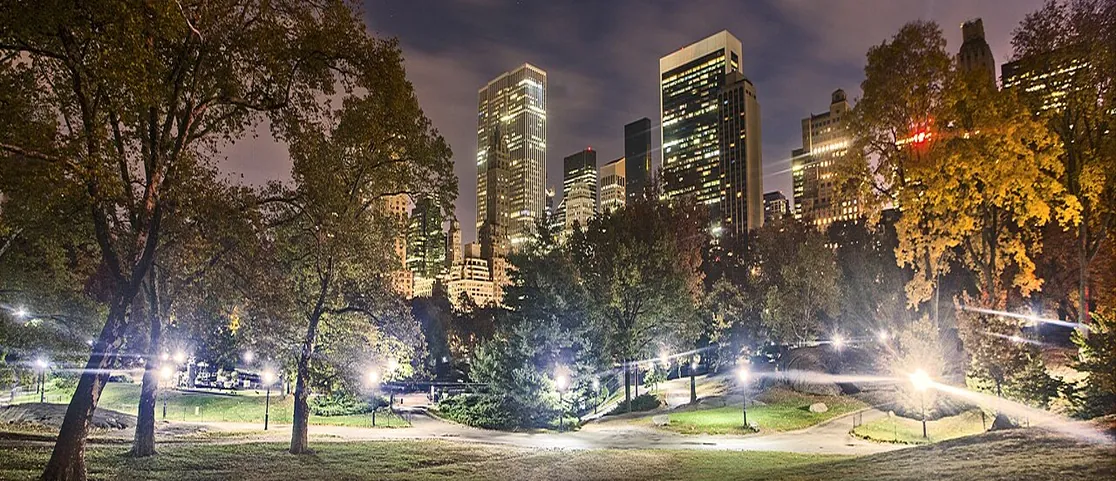
Start near the Pool on the west side around 100th Street. The Central Park Conservancy highlights the Pool as a strong fall-foliage area, with maples, sweetgums, and willows around the shoreline. From there, continue north only as far as time, traction, and energy allow.
The North Woods gives you denser tree cover and fewer headline landmarks than the south end. That is an advantage if you came for leaf color and a slower walk. It is a disadvantage if this is your only Central Park visit and you would regret missing Bethesda, the Mall, or the Lake.
The Pool itself does not have a restroom, so solve that before committing to the northward walk. The north-end route also rewards daylight more than a late start: once the light drops, uneven paths and extra distance become less appealing than they looked on a map at lunch.
Best for: repeat visitors, quieter foliage, people who prefer trees to landmarks. Skip it when: you have only one Central Park slot, need immediate facilities, or want the easiest possible transit exit after thirty minutes.
How to time fall without pretending to know the peak date
Use the Central Park Conservancy foliage tracker close to the visit. The Conservancy explains that Central Park can turn later than other parts of New York because light, shadow, and temperature vary across the Park. That is more useful than repeating a generic “third week of October” rule.
Think in stages instead of peak versus not-peak. Early color favors routes where architecture or water still carries the experience. Mixed color is excellent for the Mall, Ramble, and Pool because multiple species change at different speeds. Late season can still work after some trees have dropped leaves, especially when low light and open sightlines matter more than dense canopy.
Crowds, daylight, and the exit plan
Weekends concentrate people around the Mall, Bethesda Terrace, Bow Bridge, and major entrances. An earlier start helps, but there is no secret empty hour. If the bridge or terrace is jammed, change the route rather than waiting for the crowd to disappear.
Autumn daylight shortens quickly. Do not build the plan around a fixed “golden hour” clock time copied from another week; sunset shifts through the season. Check the day’s sunset time, then decide whether you want the final light in the park, on a Village street, or already inside with dinner.
Every route should have a clean exit: West 72nd Street for the classic loop and Ramble, Village avenues or the Hudson edge for Route 2, and the west-side entrances for the north route. The walk is successful when you stop before fatigue turns the last mile into transit resentment.
What to bring and what not to over-plan
Wear shoes with real traction if leaves are wet. Carry a layer you can remove, because shaded park paths and sunny avenues can feel different on the same afternoon. Bring water even when the air is cool; fall walking still adds up.
Do not pre-order four seasonal drinks, reserve a distant lunch, and schedule a timed museum immediately after a long park loop. Fall works because the day can stretch or contract with color, weather, and crowds. Keep one fixed commitment and let the walk breathe around it.
The decision in one line
Use Route 1 for classic Central Park, Route 2 for Village atmosphere, Route 3 for woodland, and Route 4 for quieter north-end foliage; check the live foliage tracker, keep the coffee near the start, and leave before the walk becomes a mileage target.
Suggested Route & Mini Plan
1. Pick up coffee near West 71st–72nd Street; Solid State and Black Press are both practical starts.
2. Enter Central Park at West 72nd Street and pass Strawberry Fields.
3. Continue to the Mall, Bethesda Terrace, and Bow Bridge only if crowds and energy still feel good.
4. Finish through the Ramble or exit toward the Upper West Side instead of forcing a longer loop.
Curated Alternatives
Fort Tryon Park and Inwood Hill Park
Choose uptown woodland if deep tree cover matters more than classic Central Park landmarks and you are comfortable with more travel time and uneven terrain.
Riverside Park shoulder-season walk
Choose the west-side river edge if you want a more linear walk with easier exits and less pressure to hit a single foliage landmark.
Frequently Asked Questions
When is peak fall foliage in Manhattan?
There is no dependable single peak date. Central Park can turn later than areas farther north, and different sections change at different times. Use the Central Park Conservancy foliage tracker close to your visit and treat any month-based estimate as a planning range, not a promise.
Which fall route is best for a first-time visitor?
Use the West 72nd Street Central Park route if you want the classic combination of Strawberry Fields, the Mall, Bethesda Terrace, Bow Bridge, and the Lake. Pick the West Village route if architecture and cafés matter more than leaf color.
Do I need to choose a specific coffee shop before the walk?
No. Pick a café close to the route start and keep the walking geography intact. Black Press and Solid State are practical Upper West Side anchors; The Elk and Caffè Reggio work for different West Village starts. Check same-day hours before making a detour.
Our recommendations are handpicked independently. No paid placement, no sponsored rankings. How we choose