
Neighborhood hub
The West Village When You Want a Slow Pace
The West Village rewards unhurried afternoons—brownstone blocks, bench pauses, and café stops that do not require a shopping agenda. This hub helps you decide whether that pace fits your trip, what to skip, and which WhyManhattan walks actually belong here.
Reader question: Is this the right neighborhood for an unhurried afternoon?
Who it fits
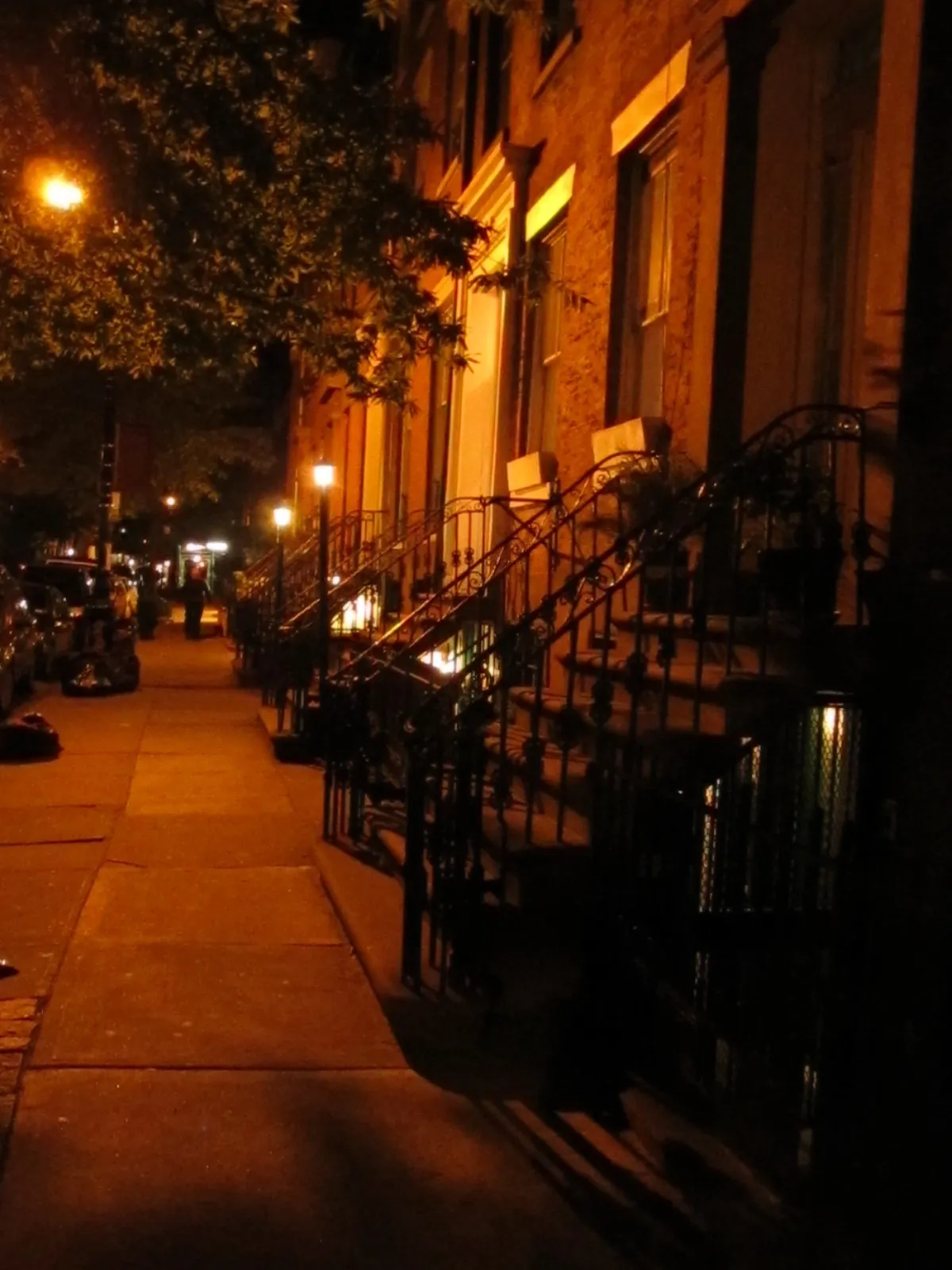
Travelers who want a residential rhythm: walking without a landmark checklist, sitting in a café or park square, and accepting that “seeing the Village” means quality of time—not maximum storefront coverage. It suits couples, solo walkers, and visitors who already handled Midtown or museum mornings and need a softer afternoon.
Who should pick another area
Skip the West Village as a default if you need flat, wide sidewalks for a stroller marathon, want big-ticket sights only, or are optimizing for the fastest subway connections across Manhattan. Pick SoHo if cast-iron architecture and gallery stops are the real goal, or Lower Manhattan if harbor geography and Financial District history anchor the day.
Thinking about staying in West Village?
Use the where-to-stay chooser to compare this neighborhood with other Manhattan bases using your trip anchor, noise tolerance, budget, kids, transport priority, and trip length. Then use How to Choose Where to Stay in Manhattan to check the exact hotel door, final payable room total, cancellation terms, and the route you will repeat most.
How much time is realistic
A slow half day (three to four hours) is the sweet spot: one coffee or pastry stop, one loop of residential streets, and a park bench finish at Washington Square or along the Hudson if energy remains. A “quick stop” through the Village usually disappoints—you need time for the pace to matter.
The West Village is often sold as “charming” without explaining what that charm costs: slower foot traffic, smaller sidewalks, and the temptation to treat every brownstone block as interchangeable. The neighborhood earns its reputation when you arrive wanting pace—not when you are trying to compress ten famous corners into ninety minutes before a Broadway curtain.
What the West Village is actually good at
The durable strength here is residential scale. Streets like Perry, Charles, and Grove feel human-sized compared with Midtown avenues. Washington Square Park gives you a natural midpoint: benches, people-watching, and a clear decision point to turn toward the river or loop back north.
Food and drink work as punctuation, not the main plot. A coffee-and-pastry stop, a single slice at Joe’s if the line cooperates, or a glass of wine at a zinc bar later in the day fits the Village when it is spaced between walks—not when it becomes a multi-restaurant crawl.
Compared with SoHo, the West Village trades loft architecture for tree-lined blocks and irregular street angles. You come here when you want to wander without a product in mind. You go to SoHo when you want cast-iron lessons and gallery anchors. Both can sit in one trip only if you protect time boxes for each.
When a slow afternoon is worth it
A slow Village afternoon makes sense when you have already handled the high-intensity parts of your trip—museum morning, Midtown meeting, or airport-day logistics—and need a neighborhood that forgives detours. It also works as a first-date or solo reset: low commitment, many exit ramps, plenty of public seating.
- Worth it: you want walking, sitting, and one intentional food stop—not three attractions.
- Worth it: you are pairing the afternoon with a show or dinner elsewhere and need a calm buffer zone.
- Shrink the plan: you only have an hour and feel obligated to “see” Carrie Bradshaw corners.
- Shrink the plan: you are hungry now and the only plan is a famous pizza line on a Saturday night.
Season shapes the feel. Spring and fall bring the best walking light on residential streets. Summer weekends crowd brunch strips; winter rewards shorter loops with indoor café anchors. Rain narrows sidewalks further—carry a simpler route when wet.
How to structure an unhurried half day
The failure mode is treating the Village like a scavenger hunt: Washington Square, then Bleecker, then a random bar because the line looked fun. A better frame is start, spine, seat—then stop.
1. Start with a beverage anchor
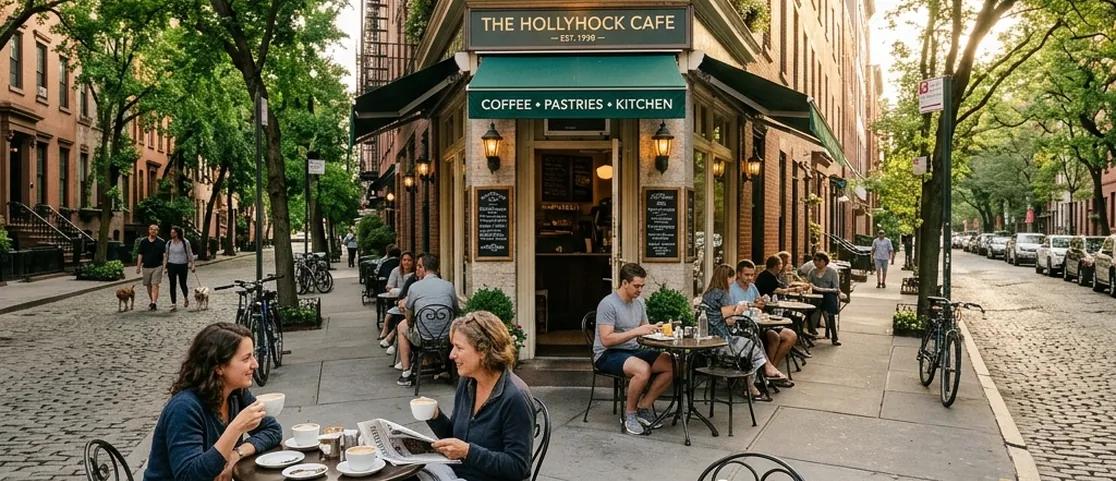
Begin at a café or bakery with a clear exit time. Our coffee-and-pastry walk orders roasters and pastry cases so you are not wandering hungry. Drink standing or sitting, then walk—do not settle into laptop hours unless that is the actual goal.
2. Walk one residential spine
Pick a short north–south or east–west loop through named blocks—Grove Court’s tucked lane, Perry Street’s stoops, or a Hudson Street segment toward the river. The point is repetition of scale: low-rise facades, shade, and corners that invite turning without a map notification.
Jefferson Market Library’s clock tower is a useful orientation landmark at Sixth Avenue and West 10th Street—a civic anchor that is not a ticketed museum. Use it to decide whether you are drifting too far east toward Union Square energy or staying inside the Village grid.
3. End at a seat, not a store
Finish at Washington Square, Father Demo Square after a slice, or a Hudson River Park bench if you extended west. The afternoon succeeds when you sit down once without guilt—not when you exit with shopping bags you did not plan to carry.
Joe’s Pizza and the fame-line question
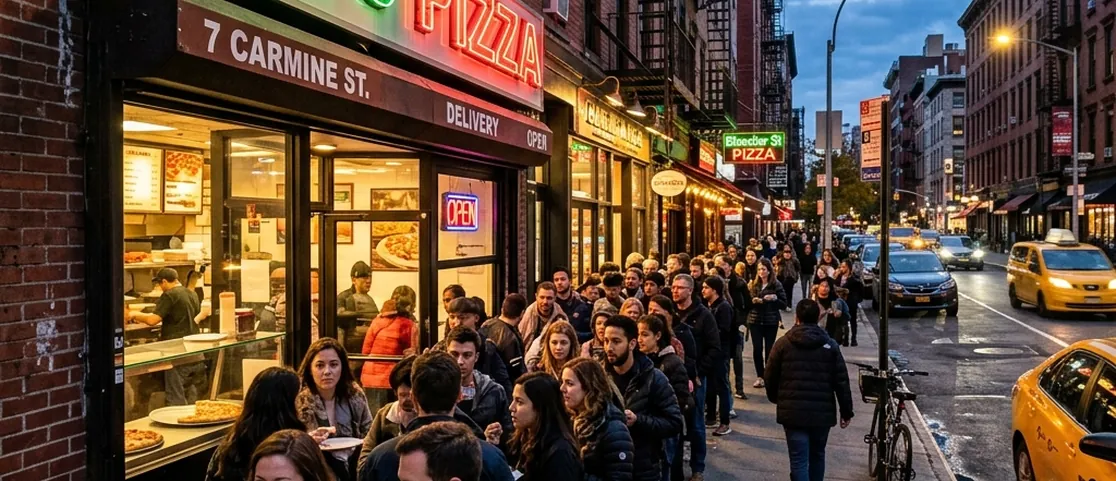
Joe’s on Carmine Street appears on almost every visitor list. It can be a fine plain-slice reference if you are already in the neighborhood on a weekday off-peak hour. On a packed Saturday night the sidewalk queue becomes the experience—and that is only worth it if waiting is honestly part of what you came for.
Read our Joe’s decision guide for line expectations and alternatives. The hub does not send you there by default; it acknowledges the stop when your walk naturally passes Carmine Street and your patience matches the hour.
What to read next on WhyManhattan
Use the linked guides as the executable plans. The half-day walk is the step-by-step route; the coffee-and-pastry piece sequences stops with pacing; the Joe’s article answers whether the line is reasonable today. This hub orients—you still need one of those pieces to walk with confidence.
Compared with nearby neighborhoods
Greenwich Village branding bleeds into the East Village and Meatpacking on maps. You do not need to “complete” all three names. If your afternoon feels full after Washington Square and a westward loop, you are done. Meatpacking’s pier playgrounds and nightlife are a different trip intent; the East Village’s louder strips fight the slow pace you came for.
If you are building a two-neighborhood day, pair the Village with SoHo only when each half has its own anchor—architecture and shopping downtown, then residential quiet here. Trying to walk both grids in one rushed afternoon usually means neither neighborhood gets the pace it requires.
SoHo or West Village? Choose by pace before you choose by proximity
These neighborhoods are close enough to tempt a combined afternoon, but they solve different problems. Choose the West Village when the value is residential scale, irregular streets, a café or bench pause, and time that does not need a shopping or gallery objective. Choose SoHo when cast-iron architecture, a design or cultural anchor, and selective retail energy are what make the stop worthwhile.
If the architecture-and-shopping side of that fork is stronger, switch to the SoHo hub. Protect a separate time box instead of rushing both grids as one neighborhood.
Central Greenwich Village is a different decision
If Washington Square, the NYU street edge, MacDougal/Bleecker food, or one small comedy/jazz anchor is the point, switch to the Greenwich Village hub. Keep this West Village page for the quieter Perry/Grove/Commerce residential pace.
The decision in one line
Choose the West Village when an unhurried walk with one food stop and a park bench finish sounds like relief—not when you are chasing fame addresses or trying to shop your way through the afternoon. Protect the pace, pick one spine, and leave before the neighborhood becomes another crowded checklist.
What this hub will not do
This hub is not a celebrity-tour of every famous address, a bar crawl list, or a ranking of every bakery on Bleecker Street. We do not treat the West Village as a backdrop for photos without a walk plan.
Practical caveats
Streets are narrow; weekend afternoons bring brunch crowds and pedestrian bottlenecks near Washington Square. Cobblestone patches and curb cuts vary—wheels can be awkward on MacDougal and some side lanes. Subway access is good (West 4th St, Christopher St, 14th St), but weekend service changes happen—check MTA before pairing with a timed reservation elsewhere. Joe’s Pizza on Carmine can build a long sidewalk queue on peak nights; treat it as an optional slice stop, not the reason for the whole afternoon.
The West Village for a Slow Afternoon: A Walkable Half-Day Plan
A slow half-day walking plan for Manhattan’s West Village: tree-lined townhouse blocks, independent bookshops, hidden courtyards, classic pizza slices, and dusk wine bars.
Coffee and Pastry in the West Village: A Walkable Shortlist
A decision-led West Village coffee and pastry guide: pick one coffee anchor, one optional second stop, and a route that fits your seating, crowd, caffeine, and breakfast priorities.
Joe's Pizza on Carmine Street: Is It Worth the Line?
An honest editorial review of Joe's Pizza at 7 Carmine Street in Greenwich Village. Discover how to beat the line, the plain slice benchmark, and top alternatives.
Our recommendations are handpicked independently. No paid placement, no sponsored rankings. How we choose