
Harlem for Food, Music, and Culture: A First-Visit Guide
A structured, respectful first-visit guide to Central and West Harlem. Explore authentic soul food institutions, historic jazz speakeasies, 125th Street, and Striver’s Row architecture.

⚡ At a Glance Overview
Why We Chose This
Rather than recommending superficial tour bus stops, this guide builds a walkable Central Harlem itinerary highlighting legendary local institutions, architectural landmarks, and intimate jazz venues.
Editorial Notes & Caveats
Avoid treating Sunday church services as tourist attractions. If attending a gospel service, wear respectful attire, refrain from photography during worship, and stay for the full service.
Harlem occupies a singular position in the cultural imagination of New York City. Spanning Upper Manhattan from 110th Street north to 155th Street, it is not merely a geographic neighborhood; it is a global capital of Black art, literature, music, political thought, and culinary innovation. From the explosion of the Harlem Renaissance in the 1920s to the birth of bebop jazz and hip-hop, Harlem has repeatedly redefined American culture.
For first-time visitors, the challenge is experiencing Harlem with depth and respect, rather than treating it as a brief window-shopping stop on a commercial tour bus. The most rewarding way to explore Central and West Harlem is on foot along a coherent corridor—combining the historic commercial artery of 125th Street, classic soul food institutions, quiet brownstone residential blocks, and intimate live music spaces.
125th Street and the Legacy of the Apollo Theater
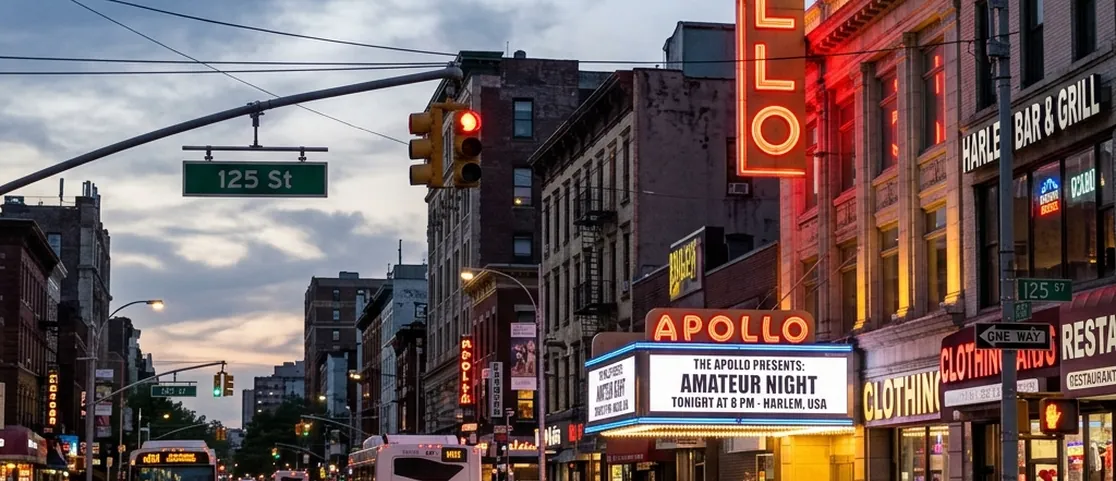
West 125th Street (officially co-named Martin Luther King Jr. Boulevard) serves as Harlem’s main street. Stepping out of the subway station at 125th Street immediately immerses you in the neighborhood’s vibrant daily energy: street vendors selling books and art, music playing from storefronts, and architectural landmarks dating back to the late 19th century.
The centerpiece of 125th Street is the Apollo Theater at 253 West 125th Street. Opened originally in 1914 and shifting to Black entertainment in 1934, the Apollo launched the careers of Ella Fitzgerald, Billie Holiday, James Brown, Stevie Wonder, and Lauryn Hill. Its iconic red neon marquee remains one of the most photographed sights in Upper Manhattan.
If possible, coordinate your visit with a Wednesday evening performance of "Amateur Night at the Apollo." Running continuously for nine decades, this legendary talent competition allows the audience to cheer or boos performers off the stage, offering an electric, authentic community experience.
Architectural Heritage: Striver’s Row and Historic Brownstones
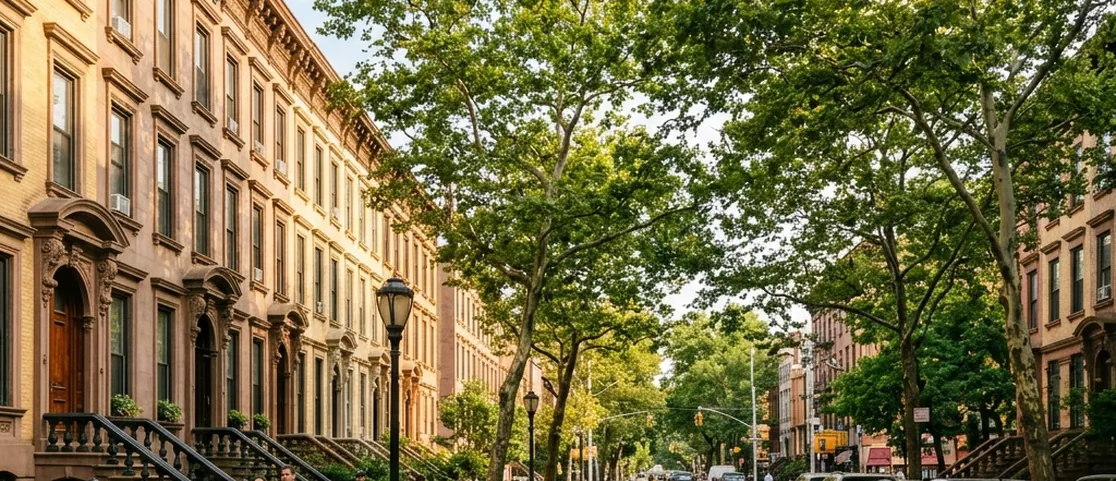
Moving north from 125th Street into residential Central Harlem reveals some of the finest 19th-century residential architecture in New York City. While Midtown is dominated by glass skyscrapers, Harlem’s side streets feature row upon row of restored sandstone and brick townhouses.
The crowning jewel of Harlem architecture is Striver’s Row, located on West 138th and West 139th Streets between Adam Clayton Powell Jr. Boulevard and Frederick Douglass Boulevard. Designed in the early 1890s by renowned architectural firms (including McKim, Mead & White), these Georgian and neo-Italian Renaissance townhouses feature rare private courtyard alleys behind the buildings originally designed for horses and carriages.
In the 1920s and 1930s, these blocks became home to prominent African American professionals, musicians, and leaders—hence the name "Striver’s Row." Walking these leafy, quiet streets provides a stark, peaceful contrast to the bustling commercial traffic of 125th Street.
Soul Food Pillars: Sylvia’s and Amy Ruth’s
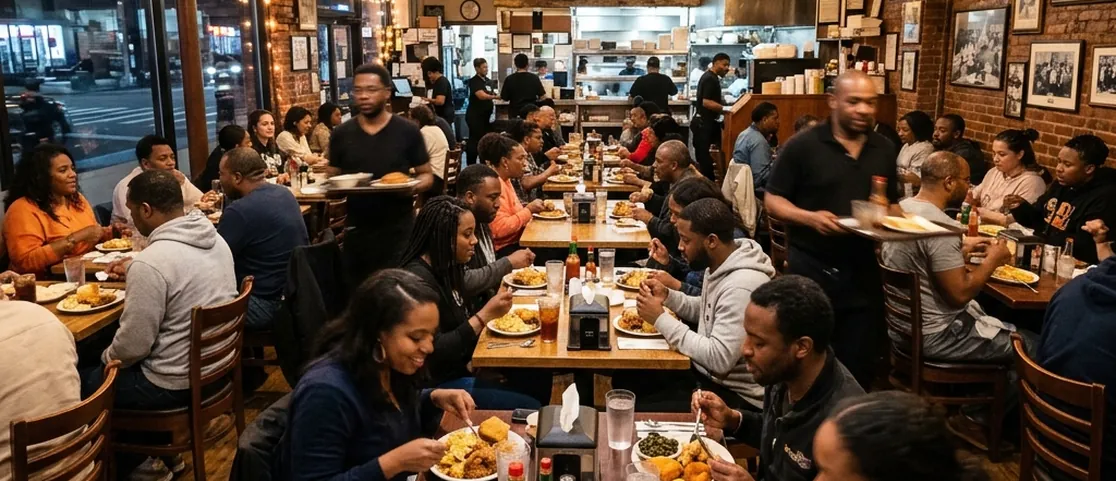
Food in Harlem is deeply intertwined with history. During the Great Migration of the early 20th century, millions of African Americans moving from the rural South brought their culinary traditions to Upper Manhattan, creating a distinct soul food dining culture that remains a cornerstone of the neighborhood.
Sylvia’s Restaurant, founded by Sylvia Woods in 1962 at 328 Malcolm X Boulevard, is widely known as the "Queen of Soul Food." Generations of locals, civil rights leaders, and international visitors have dined here on smothered pork chops, fried chicken, collard greens, candied yams, and cornbread. While weekend afternoons can attract heavy crowds, a weekday dinner offers a warm, hospitable atmosphere.
A few blocks south, Amy Ruth’s (113 West 116th Street) provides an equally legendary alternative. Named after founder Carl Redding’s grandmother, Amy Ruth’s is famous for its chicken and waffles—where dish names honor prominent Black figures like Reverend Al Sharpton and President Barack Obama. The waffles are light and crispy, the chicken is seasoned to perfection, and the portions are exceptionally generous.
Living Music: Swing Street Speakeasies and Bebop Birthplaces
No visit to Harlem is complete without experiencing live music in an intimate venue. While large concert halls exist across Midtown, Harlem’s jazz heritage lives in small, neighborhood spaces where you sit just feet away from master musicians.
Bill’s Place (133 West 133rd Street) offers one of the most authentic music experiences in New York City. Located on West 133rd Street—a block known during Prohibition as "Swing Street" for its dozens of subterranean speakeasies—this venue is run by saxophonist Bill Saxton. It operates in a genuine former speakeasy where a teenage Billie Holiday sang. There are no amplification systems, no alcohol sales (it is strictly BYOB), and fewer than 40 seats. The acoustic jazz here is raw, immediate, and world-class.
For a more formal jazz dining experience, Minton’s Playhouse (206 West 118th Street) is steeped in history. Founded in 1938 by saxophonist Henry Minton, its late-night jam sessions in the 1940s were the breeding ground where Thelonious Monk, Charlie Parker, and Dizzy Gillespie invented bebop. Today, Minton’s offers upscale dining alongside live jazz sets in a historic, atmospheric room.
Harlem is not a bolt-on after the UWS museums; the Upper West Side family day is a different pace.
A solo dinner after a cultural afternoon can use comfortable solo dining.
Live-music venues and restaurants still follow local tipping practice.
Suggested Route & Mini Plan
1. Arrive at 125th Street via 2/3 or A/D express trains by 3:30 PM.
2. Walk West 125th Street to see the Apollo Theater marquee and local street markets.
3. Head north along Malcolm X Boulevard (Lenox Ave) for dinner at Sylvia’s or Amy Ruth’s.
4. Stroll through the historic brownstones of Striver’s Row (West 138th & 139th Streets).
5. Finish your night with live unamplified jazz at Bill’s Place or Minton’s Playhouse.
Curated Alternatives
East Harlem (El Barrio) Cultural Walk
If you want to explore Latinx culture, street murals, and authentic Puerto Rican & Mexican dining, explore 116th Street and Park Avenue in East Harlem.
Hamilton Heights Historic District
If you prefer quiet residential architecture and historic houses over music venues, walk north to Alexander Hamilton’s Grange mansion in St. Nicholas Park.
Frequently Asked Questions
How do I get to Harlem from Midtown Manhattan?
Take the 2 or 3 express subway lines along 7th Ave/Lenox Ave directly to 125th Street (approx. 15 minutes from Times Square), or take the A or D express trains to 125th Street and St. Nicholas Avenue.
Do I need tickets in advance for jazz clubs in Harlem?
Yes. Intimate venues like Bill’s Place have limited seating (under 40 seats) and book out days in advance. Larger venues like Minton’s Playhouse or Red Rooster’s Ginny’s Supper Club also require advance reservations.
What is the best way to explore Harlem without taking a commercial tour bus?
Walk the Central Harlem spine: start on 125th Street near the Apollo, head north along Malcolm X Boulevard (Lenox Ave) for soul food, and stroll West 138th Street to see Striver’s Row architecture.
Our recommendations are handpicked independently. No paid placement, no sponsored rankings. How we choose