
Midtown East After Work: What Is Actually Worth Your Time
A practical Midtown East evening guide built around three compact lanes near Grand Central, East 39th Street, and the 50s—without fake rush-hour hacks or cross-neighborhood backtracking.

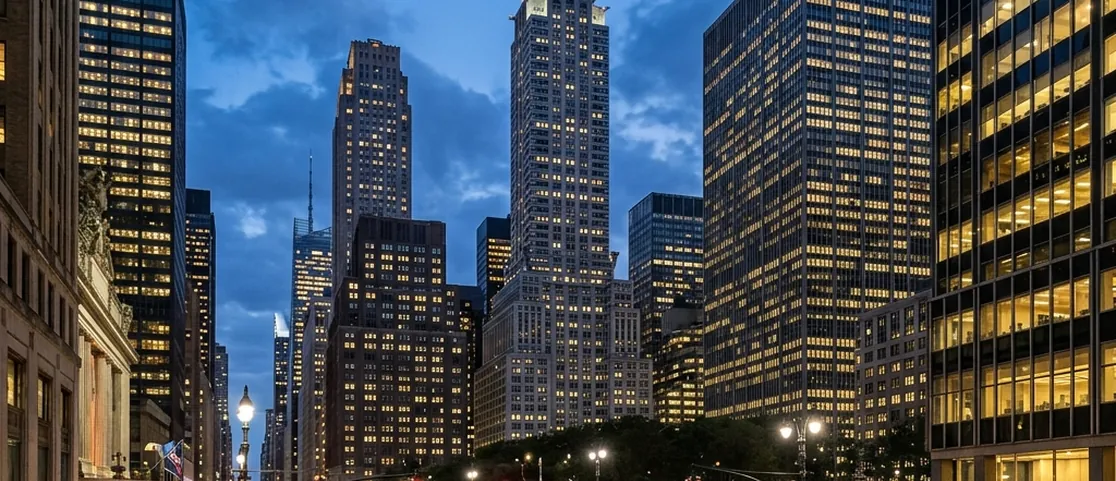
⚡ At a Glance Overview
Why We Chose This
The refreshed guide treats Midtown East as three compact evening lanes rather than a checklist. Grand Central, East 39th Street, and the low-50s/Third Avenue each offer a coherent after-work plan; the right choice depends on where the day ends, whether you want quiet, drinks, or dinner, and how much walking remains desirable.
Editorial Notes & Caveats
Hours and policies vary by venue and season. Greenacre Park is seasonal and has no restroom. The Campbell publishes its own dinner dress restrictions; those rules should not be generalized to every Midtown East bar. Reservations, private events, and office-district demand can also change availability on a given night.
Midtown East after work is useful for one simple reason: the neighborhood can absorb the transition from office or meeting to evening without requiring another subway ride. That advantage disappears when an itinerary makes you zigzag from 39th Street to 55th Street, back to Grand Central, then downtown for dinner. The goal is not to prove that Midtown East has hidden gems. It is to choose one nearby evening that is worth staying for.
The old version of this guide treated the area as a fixed four-stop sequence and promised a narrow commuter-rush window, guaranteed early seats, universal dress rules, precise cocktail and dinner prices, and a fifteen-minute walk across a very large corridor. Those claims are too brittle for a working neighborhood. Office schedules, private events, weather, reservation demand, and train patterns all change the evening.
Use geography first. Midtown East is easier after work when you choose one lane: Grand Central and East 43rd Street; East 39th Street near Park and Madison; or the low-50s between Lexington, Third, and Second Avenues. Each lane can support a complete evening without requiring the others.
First decision: are you staying because it is convenient or because you want it?
Convenience is a valid reason to stay. If your office, hotel, meeting, or train is already near Grand Central, one nearby drink or dinner can save an hour of transit and decision-making. But convenience should not become obligation. If you have wanted to spend the evening in the West Village, Lower East Side, or near a Broadway show, leave. Midtown East is not improved by forcing yourself to remain there.
The useful middle ground is one worthwhile stop before you go home, return to the hotel, or catch a train. Choose whether you need quiet, conversation, food, or architecture. That determines the lane.
Lane A: 42nd–43rd Street — stay close to Grand Central
Choose this lane when the terminal is part of the evening: you have a Metro-North or LIRR train later, your hotel is nearby, or your workday ends around Park, Lexington, or Third Avenue in the low 40s. Grand Central Terminal’s current official site lists the building open daily from early morning until 2 a.m., while individual shops and restaurants keep their own hours. Treat the terminal as the geographic anchor, not as proof that every tenant will be open late.
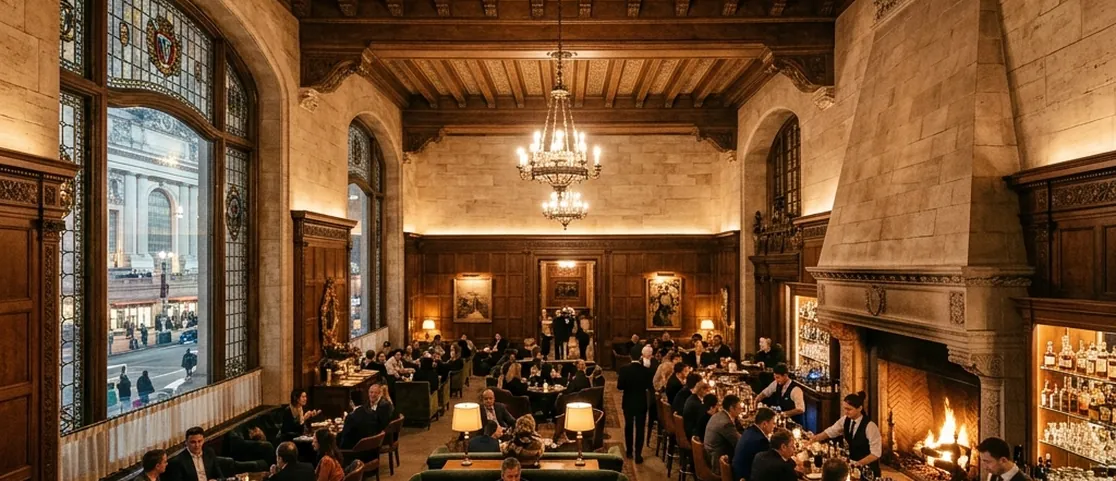
The Campbell: architecture and a drink without leaving the terminal zone
The Campbell currently operates at 15 Vanderbilt Avenue between 42nd and 43rd Streets. Its official page lists daily service from noon to 2 a.m. and gives clear directions from both Vanderbilt Avenue and Grand Central’s Main Concourse. That makes it a practical after-work option when you want a real cocktail bar but do not want to add a separate neighborhood transfer.
The key constraint is venue policy, not an invented 5:15 p.m. arrival hack. The Campbell describes its atmosphere as refined and publishes dinner-specific restrictions on shorts, flip-flops, athletic wear, and several other items. If you came from an office, that may be easy. If you spent the day sightseeing in casual summer clothing, read the current policy before making it the plan.
Do not assume arriving at one exact time guarantees a seat. Reservations, events, and ordinary demand matter. If a guaranteed table is important, use the venue’s reservation system. If the drink is optional, keep Grand Central itself or a nearby restaurant as the fallback and move on if the room is full.
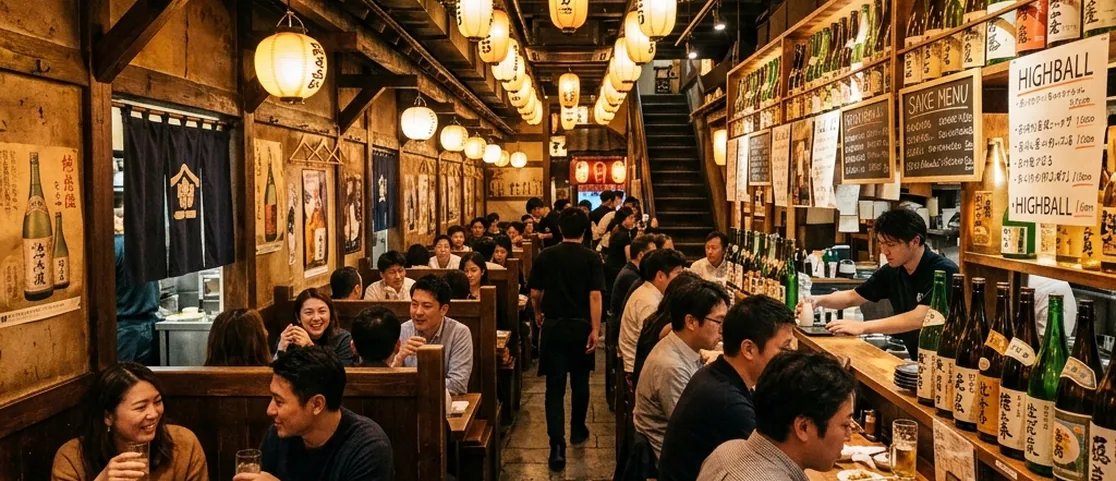
Sakagura: make dinner the point
Sakagura remains a current Midtown dinner option at 211 East 43rd Street, basement level. Its restaurant group describes it as a pioneer in bringing sake culture to New York. That is enough to define the decision: choose it when Japanese food and sake are the evening, not because a “secret basement” sounds like an attraction you must collect.
The old guide leaned on a large sake-count claim and exact dish promises. Menus change, so those details are not the durable value. The durable value is the format: a sit-down Japanese dinner within a short walk of Grand Central. Check the current menu and reservation situation for the date you actually plan to go.
The Campbell plus Sakagura can work as a two-stop evening because they share the same general 42nd–43rd Street geography. But you do not need both. If dinner is the priority, go directly to dinner. If you only want one drink before a train, skip the full meal.
Lane B: East 39th Street — conversation-first cocktails
Choose the 39th Street lane when your office or hotel sits south of Grand Central, or when you want a quieter cocktail setting without entering the terminal. Raines Law Room at The William currently operates at 24 East 39th Street between Park and Madison Avenues. Its official site positions the Midtown location as conversation-friendly and close to Grand Central and Bryant Park.
This is a better fit for a date, one-on-one colleague drink, or small conversation than an itinerary built around seeing several landmarks. The current venue page lists evening service and reservations. If you are coming from a business meeting, the geography works especially well because you can finish the drink and still reach Grand Central on foot without adding another destination.
Do not pair this lane automatically with Greenacre Park or P.J. Clarke’s. Those are a meaningful walk north. If the evening is already working at 39th Street, keep it there. A two-stop itinerary should solve two different needs, not simply increase the count.
Lane C: 51st–56th Street — quiet first, then Third Avenue
Choose the north lane when your office, hotel, or meeting ends around the 50s. This is where Midtown East can feel most different from the Grand Central corridor: a small park can provide the transition, then Third Avenue gives you a straightforward dinner/bar option.
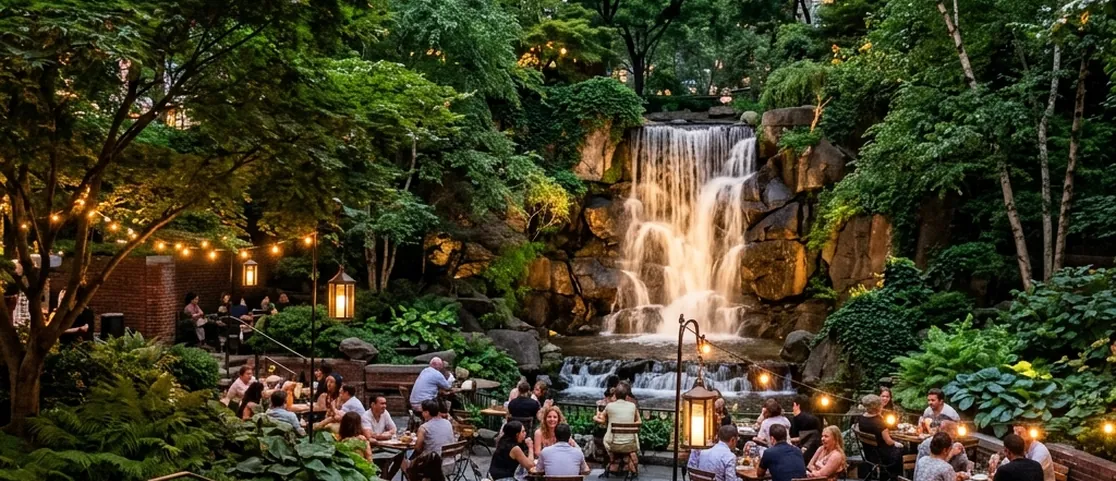
Greenacre Park: a seasonal pause, not a dusk guarantee
Greenacre Park is at 217 East 51st Street between Second and Third Avenues. Its current official site describes the waterfall park as open daily from April through December with seasonal hours. On a September evening, check that day’s posted closing time before walking over; do not rely on a generic “visit at dusk” instruction from an old guide.
The park works because it is a bounded, low-commitment stop. Sit, talk, read, or have a small snack, then leave when you are ready. The official FAQ also matters: there is no restroom, alcohol is not permitted, pets are not allowed, and audio sources are restricted to preserve the atmosphere. Those details determine whether it fits your group better than a bar.
The waterfall can soften the feeling of street noise, but there is no need to claim it “completely” erases Midtown traffic. The practical value is simpler: you get a small outdoor pause without traveling to Central Park or the river.
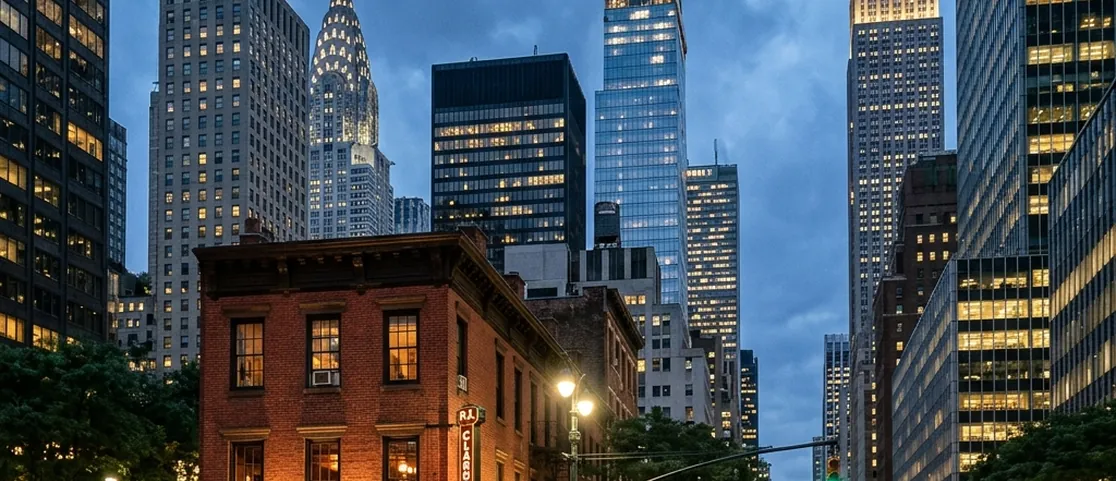
P.J. Clarke’s: classic dinner and bar on the north end
P.J. Clarke’s Third Avenue currently operates at 915 Third Avenue between East 55th and East 56th Streets. Its official page lists reservations, current hours, a full bar, raw-bar items, burgers, steaks, seafood, and other classic American fare. Choose it when you want an old-New-York bar-and-meal format rather than a cocktail lounge or destination Japanese dinner.
The building’s long history is part of the atmosphere, but celebrity anecdotes do not need to drive the decision. What matters for the evening is that it can function as both the drink and the meal. If you have already used Greenacre Park as the decompression stop, P.J. Clarke’s can be the only paid anchor afterward.
Greenacre to Third Avenue is a coherent north-lane pairing. Grand Central to Greenacre to P.J. Clarke’s is a different proposition: more walking, more time, and a reason to ask whether you are building a neighborhood evening or simply collecting recommended stops.
Do not use “wait out rush hour” as the reason to stay
The old guide framed the evening around avoiding a precise commuter surge and promised a smoother ride after a certain time. Transit demand is not that predictable, and Grand Central now serves multiple rail systems in addition to subway traffic. A later departure may still be busy, disrupted, or simply inconvenient for your route.
Stay because the park, drink, or dinner is worth the time. If you would rather be home, at the hotel, or in another neighborhood, leave when you are ready. The best after-work plan should improve the evening even if the train is just as crowded afterward.
Dress code is a venue rule, not a neighborhood rule
Midtown East contains hotel bars, restaurants, pubs, cocktail rooms, and casual counters. They do not share one dress code. The Campbell is a useful example precisely because it publishes specific dinner restrictions. That does not mean every Third Avenue restaurant bans the same clothing.
If your workday included formal clothes, you probably have more options. If you are a traveler in sneakers, shorts, or sightseeing gear, check the exact venue before walking there. When dress policy feels like too much friction, choose a place whose format matches what you are already wearing rather than changing the entire evening for a cocktail.
Weather changes the lane
Rain makes Greenacre Park less useful and increases the value of the Grand Central or hotel-bar lanes. A pleasant evening makes the park and a northbound walk more attractive. Extreme heat or cold is another reason to reduce the number of stops rather than treating the district as a walking challenge.
The most weather-resilient plan is one indoor anchor near the place you already need to end. Grand Central-area travelers can keep almost the whole evening around the terminal. North Midtown East travelers can skip the park and go directly to dinner. Weather should simplify the plan, not add replacement stops.
Budget by evening type
A free park pause followed by a normal dinner is not the same budget as two cocktail bars plus a destination meal. The old guide’s neighborhood-wide cocktail and dinner ranges created false precision. Menus and minimums change, and the biggest budget decision is how many paid anchors you choose.
For one drink, check the current bar menu. For dinner, check the current restaurant menu and reservation terms. For a business-travel evening, it can be useful to choose the one expense that matters—client drink, dinner, or neither—and let the rest stay free and walkable.
Four versions of the evening
Version A: twenty to forty-five minutes before a train
Stay at or next to Grand Central. Walk the terminal, have one drink or quick meal only if timing allows, and keep enough margin for the train. Do not turn a layover into a 55th Street excursion.
Version B: one good drink after a meeting
Choose The Campbell when Grand Central architecture and location are the appeal, or Raines at The William when you are already south/west and want conversation. Pick one. Neither requires a second cocktail stop to make the evening count.
Version C: quiet plus dinner in the 50s
Check Greenacre Park’s current hours, use it for a short pause, then walk to a Third Avenue dinner such as P.J. Clarke’s. This is the most coherent north-Midtown East route because both stops fit the same geography.
Version D: dinner is the entire evening
Go directly to Sakagura or another restaurant that fits the group. Skip the park and cocktail ritual. A good after-work dinner already solves the need to transition out of the workday.
The decision in one line
Stay in Midtown East only when a nearby park, drink, or dinner is genuinely worth doing; choose one compact lane, verify the exact venue rules, and let geography reduce friction instead of chasing a fixed rush-hour or four-stop formula.
Suggested Route & Mini Plan
1. Start with geography: 42nd–43rd, East 39th, or the low-50s/Third Avenue. Do not cross the district just to complete a list.
2. Pick one first anchor: Greenacre Park for quiet, The Campbell or Raines for drinks, Sakagura for Japanese dinner, or P.J. Clarke’s for a classic bar-and-meal stop.
3. Check current hours, reservations, dress rules, and seasonal park access before leaving the office or hotel.
4. Add a second stop only when it is on the same walking line and still improves the evening.
5. Leave Midtown East when another neighborhood is genuinely the destination; do not “wait out rush hour” as an end in itself.
Curated Alternatives
Go downtown instead
Leave Midtown East immediately when your real priority is a specific downtown restaurant, live-music room, Village walk, or nightlife plan. Staying nearby is valuable only when the nearby option itself appeals to you.
Grand Central as the whole stop
If you have twenty to forty-five minutes before a train, keep the evening inside or immediately around Grand Central rather than turning a short layover into a bar-and-dinner itinerary.
Frequently Asked Questions
Should I stay in Midtown East after work or go downtown?
Stay when your day ends near Grand Central, Lexington Avenue, or the 50s and one nearby option genuinely fits what you want. Go downtown when the neighborhood itself is the evening goal. The best reason to stay is low transfer friction, not a promise that Midtown East is secretly empty after 5 p.m.
Where can I sit outside quietly in Midtown East after work?
Greenacre Park at 217 East 51st Street is a strong current option when it is open. Its official site lists seasonal hours and park rules, and its FAQ notes that there is no restroom. Check the day’s hours before walking there.
Do Midtown East bars have a strict dress code?
There is no useful neighborhood-wide rule. The Campbell currently publishes a refined smart-casual/business-professional standard with specific dinner restrictions, while other venues have their own policies. Check the exact place you plan to visit.
Our recommendations are handpicked independently. No paid placement, no sponsored rankings. How we choose