
Neighborhood hub
Chelsea for Art, Walking, and an Easy Food Stop
Chelsea combines free gallery blocks, the High Line’s elevated walk, and indoor food halls—if you route it north to south instead of zig-zagging. This hub helps you decide whether that mix fits your afternoon and which WhyManhattan plan to run.
Reader question: Does Chelsea fit an art, walk, and easy food afternoon?
Who it fits
Visitors who want culture without a museum ticket, comfortable walking on wide avenues and an elevated park, and a reliable indoor lunch option when weather turns. Chelsea suits art-curious travelers, casual food explorers, and anyone who already did Midtown sights and wants a west-side afternoon with clear geography.
Who should pick another area
Skip Chelsea as a default if you dislike walking, need a single iconic landmark, or only have an hour before a timed reservation elsewhere. Pick the West Village for residential pace, SoHo for cast-iron shopping architecture, or Midtown East after-work routes if you are literally leaving an office and need a short post-meeting plan—not a half-day gallery loop.
Thinking about staying in Chelsea?
Use the where-to-stay chooser to compare this neighborhood with other Manhattan bases using your trip anchor, noise tolerance, budget, kids, transport priority, and trip length. Then use How to Choose Where to Stay in Manhattan to check the exact hotel door, final payable room total, cancellation terms, and the route you will repeat most.
How much time is realistic
A structured half day to full day (four to six hours) works best: gallery blocks in the late morning, High Line segment mid-afternoon, Chelsea Market or a nearby counter lunch when hunger hits. Trying to “do Chelsea” in ninety minutes usually means backtracking and skipping the art entirely.
Chelsea is often reduced to “the High Line and Chelsea Market,” which is incomplete and backwards. The neighborhood’s strength is layering: contemporary art you can browse for free, an elevated walk with Hudson views, and food halls that rescue rainy afternoons—all on a grid wide enough to walk without Village-style bottlenecks. The failure mode is treating those pieces as three separate errands instead of one routed afternoon.
What Chelsea is actually good at
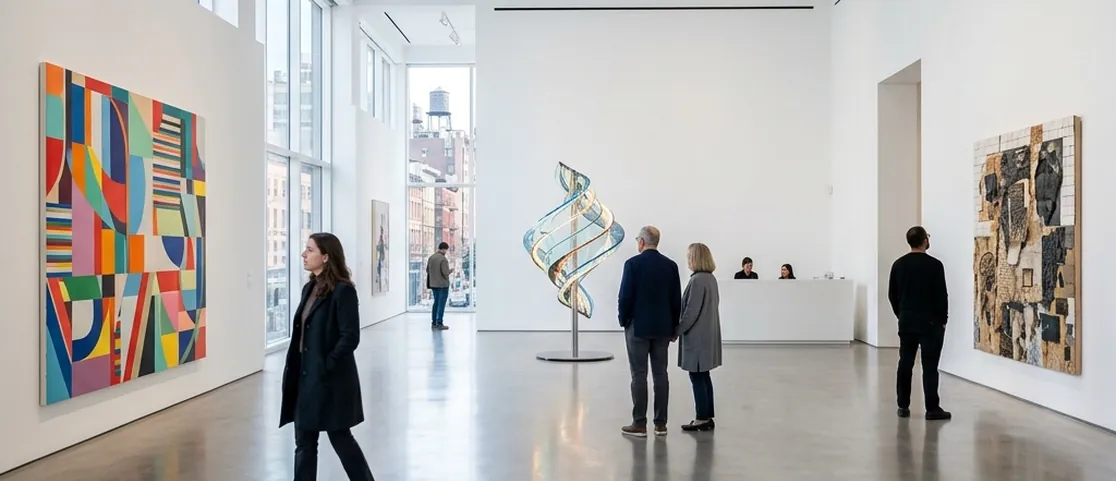
West Chelsea’s gallery blocks—roughly in the high teens and twenties between Tenth and Eleventh Avenues—let you sample current art without admission fees. Shows turn over; the point is not to “complete” a museum checklist but to walk a spine of white-cube spaces and stop where the door is open.
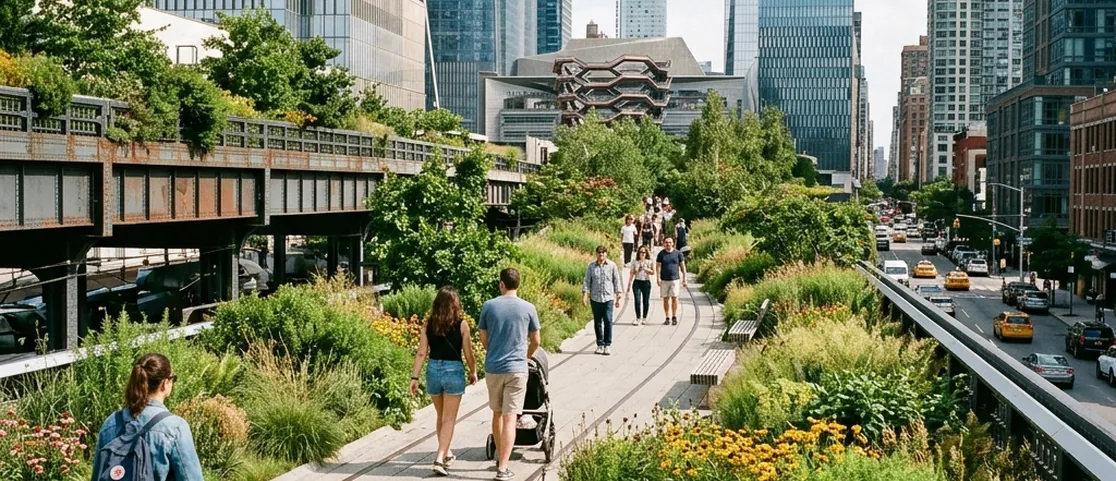
The High Line adds vertical separation from traffic: planted beds, industrial rail history, and views toward the river. It is a walk with design intent, not a cherry-blossom destination or a substitute for Central Park. Pair it with ground-level galleries rather than treating the deck as the whole neighborhood.
Food works as a practical anchor. Chelsea Market’s concourse handles lunch when you need indoor seating and variety; street-level counters along Ninth and Tenth fill gaps without a reservation culture. Budget bands vary widely—gallery afternoons can stay free while lunch lands anywhere from a quick taco to a sit-down splurge.
When this mix is worth the trip
Chelsea rewards readers who treat art and food as connected—not as separate Instagram stops. The neighborhood fails when you High Line first, get hungry, then try to backtrack to galleries that are already closing.
- Worth it: you want walking plus culture without a timed museum entry.
- Worth it: weather might turn and you need an indoor food backup on the same route.
- Worth it: you are already on the west side after Hudson Yards or Meatpacking and want one disciplined loop.
- Shrink the plan: you only care about one Instagram corner and hate walking between avenues.
- Shrink the plan: you are museum-focused and the Whitney is your only goal—plan that ticket separately; this hub is about the neighborhood route, not a single museum interior.
Season shifts the feel. Spring and fall are ideal for gallery hopping plus High Line time. Summer heat pushes you toward shaded market halls midday. Winter rewards shorter gallery loops with indoor food anchors—see our rainy-day pieces if storms are forecast.
How to structure the afternoon
The Chelsea art-and-food walk on WhyManhattan is the executable route. This hub explains why that shape exists: north-to-south (or south-to-north) discipline prevents the exhaustion of crossing Eleventh Avenue repeatedly without purpose.
1. Pick a gallery spine first
Start when galleries open late morning. Choose a cluster—often West 20s between Tenth and Eleventh—and commit to two or three stops with open doors rather than twenty addresses on a list. If a show does not hold you after thirty seconds, walk on; Chelsea rewards movement.
2. Move to the High Line with one entry in mind
Ascend at an entrance that matches your route—Gansevoort or 23rd Street are common bookends. Walk one segment, not the entire line, unless distance is the goal. The deck is best as a connector between gallery blocks and lunch, not as a standalone tourist checkbox.
We discuss the High Line here because it shapes Chelsea pacing; we do not treat it as a nature park or skyline-only attraction divorced from the art blocks below.
3. Finish with one easy food stop
Chelsea Market works when you want choice under one roof; a single counter on Ninth works when lines at the market feel too long. Either way, decide lunch before you are starving—hunger turns the market into a random queue lottery.
If you are traveling with someone who does not care about galleries, the food hall alone can anchor their patience while you take a shorter art loop— but do not ask them to wait through eleven avenue crossings without a stated finish time.
Midtown East as a contrast
If you are stuck near Grand Central after work, Chelsea is usually the wrong same-day add: cross-town time and gallery hours fight a short evening window. Our Midtown East after-work guide covers the “stay or leave?” decision near the office corridor. Chelsea belongs in a west-side afternoon you planned—not as a detour from east-side meetings unless you honestly have half a day free.
What to read next on WhyManhattan
Run the Chelsea art-and-food walk for step-by-step routing. Use the Midtown East piece only as a contrast when your trip anchor is work in east Midtown, not when you are building a gallery day. The High Line comparison article routes park vs elevated walk vs Fort Tryon—use it before you treat the rail deck as a default afternoon.
Compared with nearby neighborhoods
Meatpacking at Chelsea’s south edge brings nightlife and pier access; Hudson Yards brings mall scale and observation decks. You do not need to “complete” all three brands in one afternoon. If galleries and one High Line segment filled your time, stop—do not chase Vessel tickets by default.
The West Village offers slower residential wandering; Chelsea offers wider blocks and institutional art. SoHo offers cast-iron retail energy. Pick Chelsea when free galleries and an elevated walk are the point, not when you wanted brownstone quiet or shopping density.
The decision in one line
Choose Chelsea when you want a routed west-side afternoon—gallery spine, High Line segment, one reliable food stop—and you will walk enough to connect them without backtracking. Skip it when you need one landmark only, hate avenue crossings, or only have an hour between timed bookings elsewhere.
What this hub will not do
This hub is not a gallery directory, a Whitney Museum ticket guide, or a ranking of every restaurant on Tenth Avenue. We do not pretend you can see every show on one pass or treat Chelsea Market as the only reason the neighborhood exists.
Practical caveats
Gallery hours cluster Tuesday–Saturday daytime; many close by 6 PM. The High Line gets crowded on sunny weekends—go earlier or accept slower pacing. Chelsea Market is busy at lunch; lines at popular stalls are real. Subway access is strong (A/C/E/L at 14th, 1 at 23rd/28th, 7 extension at Hudson Yards), but cross-town trips eat time. Wheelchair access on the High Line exists at select entrances—check NYC Parks for lift locations before you commit to a single stair-only entry.
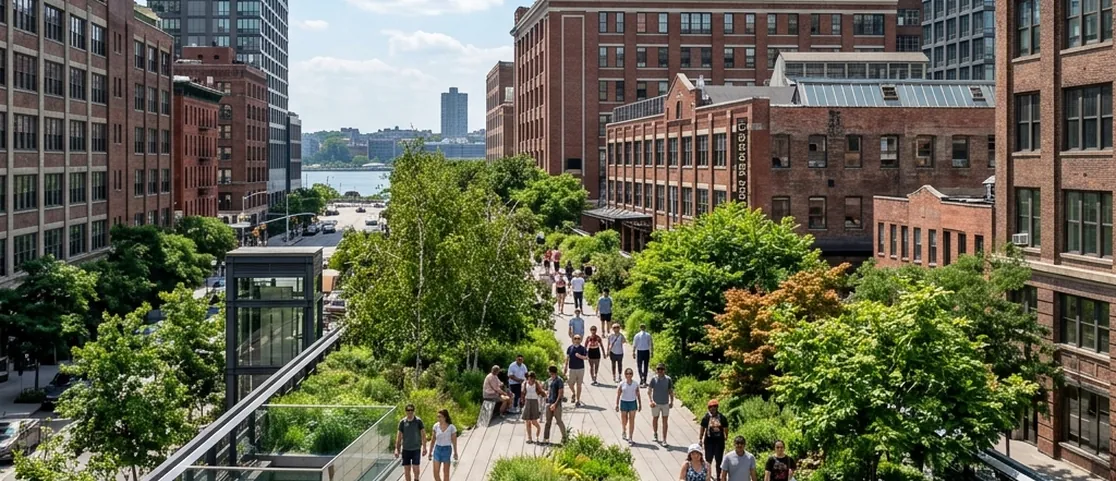
Chelsea for Art, Food, and a Long Walk
A practical route through Chelsea combining world-class contemporary art galleries, indoor food options, and the elevated High Line park.
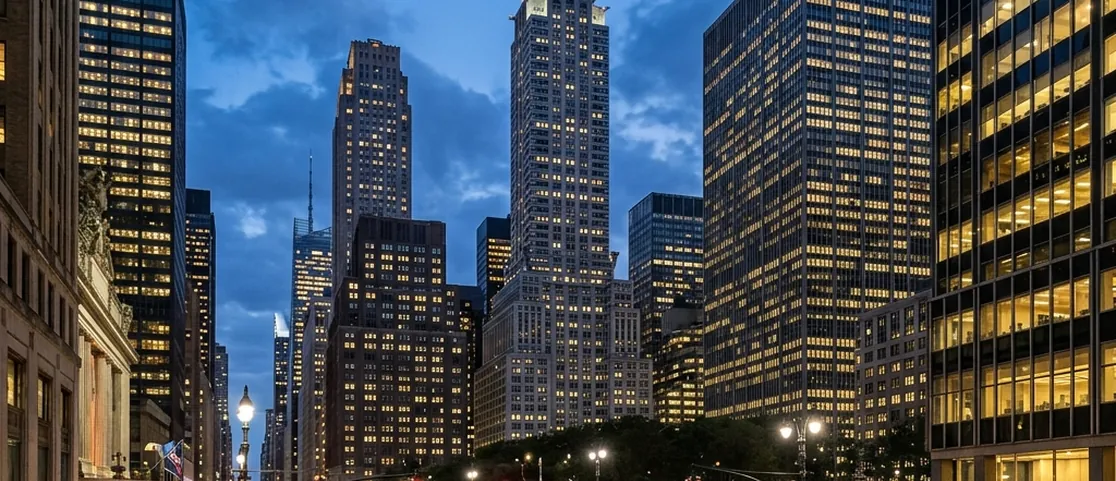
Midtown East After Work: What Is Actually Worth Your Time
A practical Midtown East evening guide built around three compact lanes near Grand Central, East 39th Street, and the 50s—without fake rush-hour hacks or cross-neighborhood backtracking.
Our recommendations are handpicked independently. No paid placement, no sponsored rankings. How we choose