
Coffee and Pastry in the West Village: A Walkable Shortlist
A decision-led West Village coffee and pastry guide: pick one coffee anchor, one optional second stop, and a route that fits your seating, crowd, caffeine, and breakfast priorities.

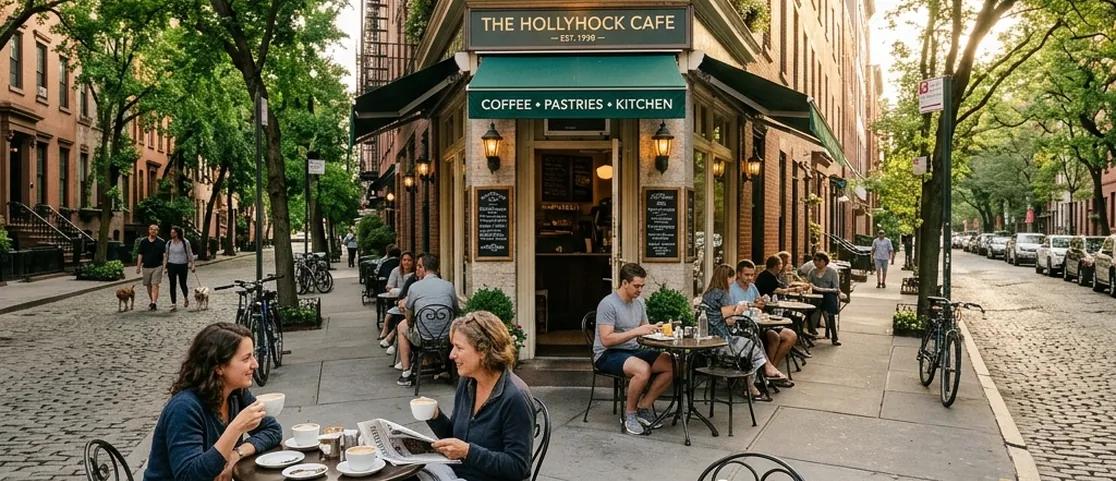
⚡ At a Glance Overview
Why We Chose This
The refreshed guide replaces a brittle four-stop completion route with a decision tree: coffee-first, Italian-bar, seated Milanese breakfast, traditional pastry, or optional second coffee. Current venue status and geography matter more than a fixed walking distance or social-media ranking.
Editorial Notes & Caveats
Cafe hours, seating, menus, and line length change. One currently listed West Village bakery in the old route—Aux Merveilleux de Fred—shows closed status on its own official location page, so this guide no longer treats it as an active stop. Verify the venue you actually plan to use before crossing the neighborhood for it.
The West Village is one of the easiest Manhattan neighborhoods to over-plan around coffee. Search results can make the morning feel like a scavenger hunt: one famous espresso, one laminated pastry, one Italian counter, one matcha, one viral dessert. The problem is not that any of those ideas are bad. It is that four compulsory food stops can turn a pleasant neighborhood walk into a sequence of lines, bathroom calculations, caffeine management, and unfinished pastries.
A better West Village coffee morning starts with one question: what do you actually want from the first stop? The answer may be a strong coffee, a pastry worth walking for, an Italian bar atmosphere, a real seated breakfast, or simply somewhere convenient before you wander the side streets. Choose that first. The second stop is optional.
This refresh also removes several brittle promises from the old route. There is no universal 8:30-to-10:00 sweet spot when every bakery is calm, no guarantee that pastries come out at one fixed hour, and no useful citywide price range that stays accurate for long. More importantly, one bakery in the previous route currently shows closed status on its own official West Village page. Current status beats an old itinerary.
Choose the morning by priority, not by ranking
If coffee is the main event, begin with a coffee-focused shop. If pastry matters more, go to the bakery first and treat coffee as accompaniment. If you want to sit for breakfast, start at a restaurant or cafe built for a longer stay. If you want a quick European-style standing espresso, choose that format deliberately instead of arriving at a tiny counter and becoming frustrated that there is no table.
This sounds obvious, but it changes the route. A coffee enthusiast should not spend the first forty minutes waiting for a pastry they did not particularly want. A family that needs seats should not build breakfast around a handful of stools. A couple that wants to linger should not optimize for the fastest counter. The “best” shop is the one that solves the first decision of your morning.
Coffee-first branch: Joe or Partners, then walk
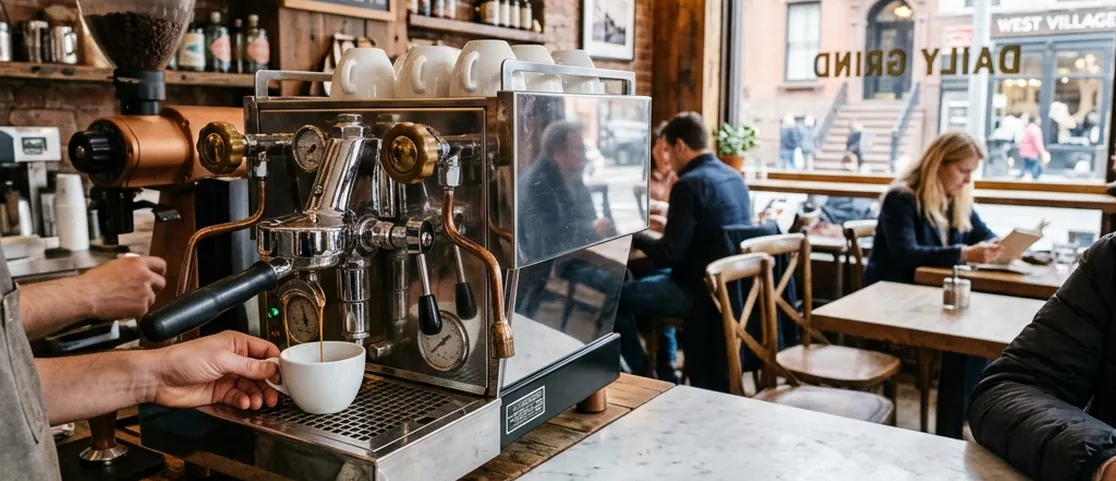
Joe Coffee’s current West Village location is at 141 Waverly Place. Its own page describes the cafe as small, with only a handful of indoor seats plus a small patio and two benches. That makes it a useful coffee-first anchor when you are comfortable taking the drink into the neighborhood, but a poor choice when five people need a guaranteed table for breakfast.
Partners Coffee currently lists a West Village cafe at 44 Charles Street. For a visitor, the important distinction is not which brand wins a citywide coffee contest. It is whether Waverly Place or Charles Street fits the rest of your walk. If you are already heading toward the western residential blocks, Charles Street can make more geographic sense. If you are nearer Washington Square or central Village streets, Waverly Place may be easier.
Do not automatically visit both. A second coffee is worthwhile when tasting coffee is the point of the outing or you genuinely want another drink later. Otherwise, one coffee plus a long residential walk produces a better West Village morning than a forced two-roaster comparison.
Italian-bar branch: Bar Pisellino for a short stop
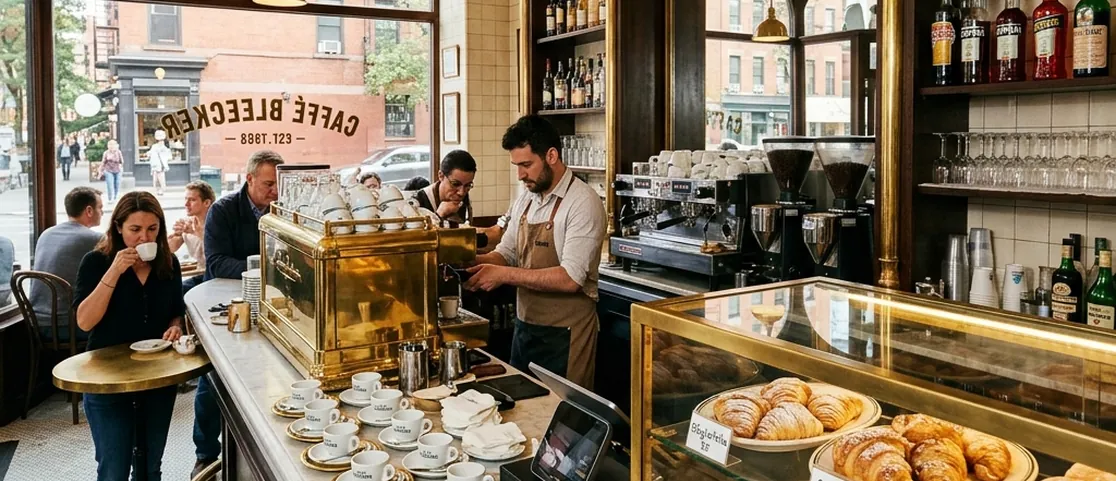
Bar Pisellino currently operates at 52 Grove Street and 92 Seventh Avenue. Its official site describes a morning-to-late Italian bar with espresso and bomboloni at the curved marble bar, outdoor cafe seating, and no reservations. That makes the format clear before you arrive: it works well when you want a compact espresso-and-pastry stop with street energy rather than a formal breakfast reservation.
Standing at the bar can be efficient, but it is not automatically “more authentic” or better. If your group wants to sit, ask what is available or choose a different venue. If someone is carrying luggage, using mobility equipment, traveling with a stroller, or simply wants an unhurried breakfast, a standing-counter ideal can become unnecessary friction.
Bar Pisellino is especially useful as a bridge between coffee and the walk because Christopher Street, Grove Street, Bedford Street, and West 10th Street all sit nearby. Finish the drink, then let the streets become the itinerary. There is no need to immediately queue for another beverage.
Seated Milanese branch: Sant Ambroeus when breakfast matters
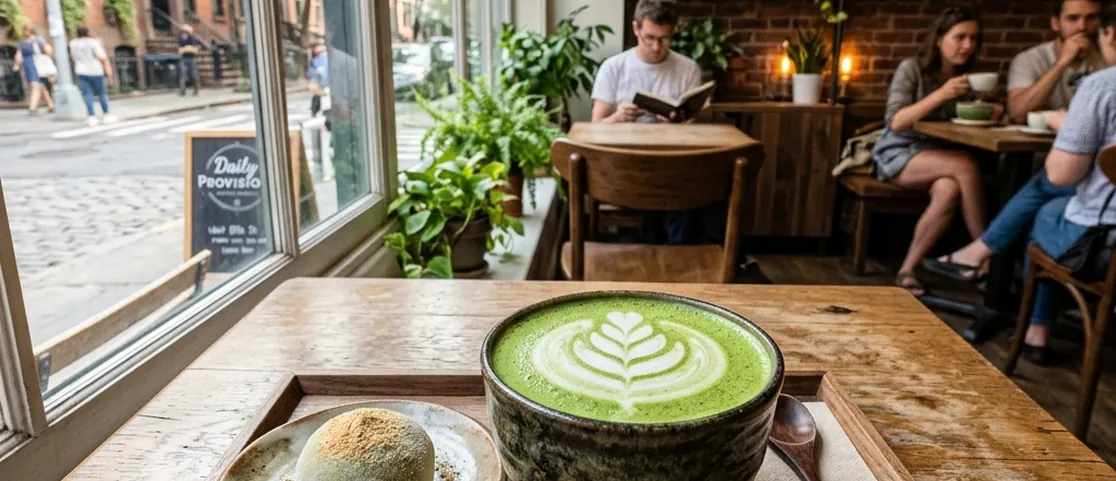
Sant Ambroeus West Village currently lists its address as 259 West 4th Street, at the West 4th/Perry corner. The restaurant serves breakfast as well as later meals, takes reservations, and its current ordering menu includes espresso drinks and multiple cornetti. This is a different product from a tiny coffee counter: choose it when sitting, eating, and having a real breakfast matters more than moving quickly.
Treat Sant Ambroeus as a seated Milanese breakfast choice, not as a mandatory standing-espresso ritual. The decision should be based on the restaurant experience you want rather than a romanticized rule about how Italians drink coffee.
A seated breakfast also changes the rest of the route. If you have already ordered coffee and a cornetto at a table, you may not need another pastry ten minutes later. Walk toward Bleecker, Hudson, or the river and save the next food stop for when appetite returns.
Traditional pastry branch: Pasticceria Rocco
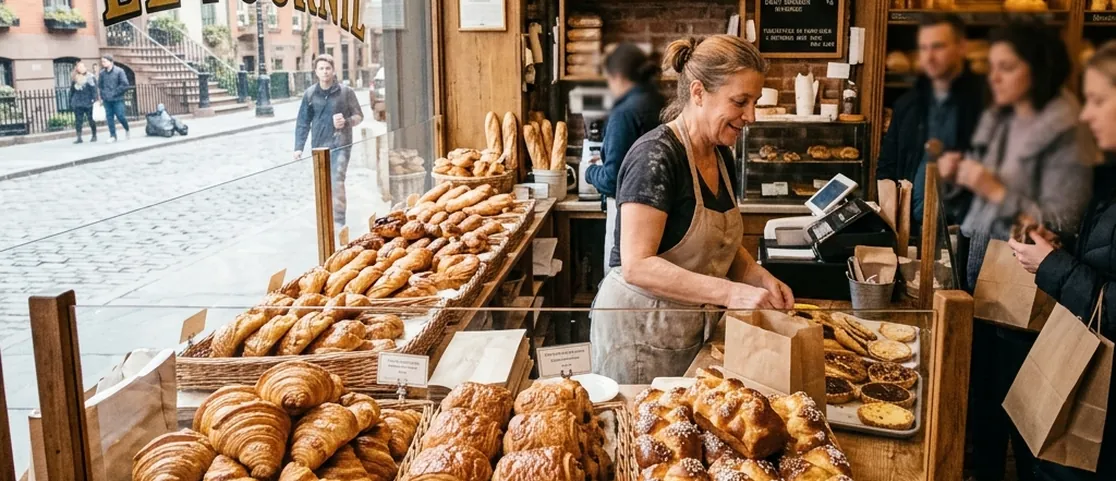
Pasticceria Rocco’s current ordering site lists the bakery at 243 Bleecker Street. Use it when the pastry or dessert case is more important than specialty-coffee technique. That can be the first stop for a pastry-focused morning or a later stop after coffee somewhere else.
This branch is particularly useful for groups with different caffeine preferences. One person can prioritize espresso elsewhere, while the group shares a pastry stop later. The morning does not need to force every traveler into the same coffee order at every location.
Avoid building the route around a specific item unless the current menu confirms it and you would still enjoy the stop if that item sold out. Pastry cases change. The resilient decision is “traditional pastry stop on Bleecker,” not “the morning fails if one exact pastry is gone.”
Why Aux Merveilleux is no longer an active route stop
The previous guide sent readers to Aux Merveilleux de Fred at 37 Eighth Avenue and Jane Street. The company’s current official West Village location page still shows the address but lists the shop as closed every day. That may change, but a current guide should not route visitors there as if normal service were confirmed.
This is a good example of why a cafe guide should be built around categories and fallback choices instead of one permanent four-shop chain. If a bakery closes, changes hours, or becomes too crowded, the morning should still work. Choose another pastry branch and keep walking.
Build the walk around streets, not consumption
Once the first stop is finished, use the neighborhood itself as the second act. Waverly Place, Gay Street, Grove Street, Bedford Street, Perry Street, Charles Street, and West 10th Street create several compact loops. You do not need a precise distance promise because construction, detours, shopping, photos, and spontaneous turns all change the walk.
A useful rule is to walk until another purchase sounds appealing rather than scheduled. If you are still full, keep walking. If the first cafe had no seats and you now want to sit, make seating the criterion for stop two. If it starts raining, shorten the route and choose the nearest indoor option. If the day is beautiful, the neighborhood may be more memorable than the second pastry.
Seating is a route decision
West Village cafe seating is uneven. Some coffee-focused spaces are intentionally small. Restaurants and larger cafes are better when you need a table, but they may involve a different pace and price point. Decide before entering whether the stop is for a drink or for a break.
For solo travelers, limited seating may be easy because one stool or bench is enough. For four adults, a stroller, luggage, or anyone who needs reliable seating, the same shop can be a poor fit. Do not let a “must-try” recommendation override the physical setup your group needs.
Public outdoor space can be a backup when weather cooperates, but do not assume every pastry or drink should be carried to a park. A hot drink on a cold windy morning is not improved by a bench simply because the bench is free. Use outdoor seating as an option, not a virtue.
Crowd tolerance matters more than a universal best time
Earlier often feels calmer, but exact crowd patterns change by weekday, weather, school schedule, holidays, and social-media attention. A current guide cannot honestly promise that arriving before ten means no line. Instead, decide how much waiting you are willing to tolerate before you arrive.
Set a personal cutoff. If the line is longer than the experience is worth, move to the next category-fit option. The West Village has enough coffee and pastry choices that a twenty-minute detour for a “backup” is often worse than simply using a nearby shop that meets the same need.
This is especially important on a first Manhattan morning. If you have a timed museum, ferry, brunch, or checkout deadline later, the coffee route should absorb uncertainty rather than create it. A famous pastry is not worth missing the commitment that actually matters.
Budget by stop count, not by outdated price ranges
The old guide gave one fixed coffee range, one pastry range, and a total per-person budget. Boutique menus change too quickly for those numbers to be a durable planning tool. The more useful budget lever is the number and type of stops.
One takeaway coffee plus one pastry is a different morning from a seated restaurant breakfast plus a second bakery plus another specialty drink. Decide whether you are buying breakfast, tasting coffee, or walking the neighborhood. When the purpose is clear, the budget follows naturally.
If you care about price, check the current menu before entering the highest-commitment stop—the seated breakfast or specialty purchase. You do not need to calculate every espresso in advance. Avoiding one unnecessary stop usually saves more than optimizing a small price difference between two nearby coffees.
Three versions of the morning
Version A: coffee-first, almost no planning
Pick Joe or Partners based on geography, get one coffee, and spend the next hour walking. Add a pastry only when you pass somewhere that still sounds appealing. This is the best version for travelers who want the neighborhood more than a food checklist.
Version B: Italian morning
Choose Bar Pisellino for the shorter bar experience or Sant Ambroeus for the more seated breakfast. Afterward, walk Grove, Perry, Bedford, and West 10th rather than adding another coffee immediately. Add Pasticceria Rocco only if pastry is still the priority.
Version C: pastry-first
Start with Pasticceria Rocco or another currently open bakery that fits your route, then choose coffee based on where you are headed next. This prevents a strong coffee preference from dictating the entire morning for a group that mainly wanted something baked.
The decision in one line
Choose one West Village coffee or breakfast anchor that matches your real priority, add at most one second stop when appetite and crowd conditions justify it, and let the neighborhood walk—not four compulsory purchases—be the thing that connects the morning.
If you need a sit-down table, use quiet breakfasts.
Do not add a Carmine Street line unless you read Joe's Pizza first.
In leaf season, zoom out to fall coffee-and-walk routes.
Suggested Route & Mini Plan
1. Pick your priority: coffee quality, pastry, Italian-bar atmosphere, or a seated breakfast.
2. Choose one anchor near the streets you already want to walk; do not start with a four-stop checklist.
3. Add one second stop only if the crowd, weather, caffeine level, and appetite still make it enjoyable.
4. If seating is the priority, choose a place designed for a longer sit rather than hoping a tiny coffee bar has an empty table.
5. End the cafe portion when the next stop feels like completion for its own sake; continue with the Village walk instead.
Curated Alternatives
Quiet breakfast instead of a cafe walk
Choose a seated breakfast when conversation, a restroom, and a predictable table matter more than comparing coffee styles. A cafe crawl is a poor fit when everyone in the group wants a full meal.
One pastry stop after another activity
Choose a single bakery on the route to the High Line, Hudson River Park, or a Village walk when coffee is secondary. You do not need a dedicated food itinerary to justify one good pastry.
Frequently Asked Questions
How many coffee and pastry stops should I do in the West Village?
Usually one or two. Start with the shop that best matches your main priority, then add a second stop only if the walk itself is enjoyable and you still want another coffee, pastry, or style. Four drinks and pastries are not a quality metric.
Where should I go if coffee matters more than pastry?
Joe Coffee at 141 Waverly Place is a current coffee-first anchor with very limited indoor seating, while Partners Coffee currently operates at 44 Charles Street. Choose whichever fits the blocks you are already walking rather than crossing the Village to collect both.
What is a good Italian-style coffee-and-pastry option?
Bar Pisellino currently serves espresso and bomboloni from its Grove Street/Seventh Avenue corner with no reservations, while Sant Ambroeus West Village offers a more seated Milanese restaurant experience at West 4th and Perry. Pick bar energy versus sit-down breakfast first.
Our recommendations are handpicked independently. No paid placement, no sponsored rankings. How we choose