
Manhattan Museums with Kids: How to Choose by Age and Attention Span
A practical guide to choosing the right NYC museum based on your child's age, interests, and attention span, ensuring a meltdown-free experience.

⚡ At a Glance Overview
Why We Chose This
The useful choice is not which Manhattan museum is “best,” but which museum can deliver one strong family visit without exhausting the child or turning the rest of the day into recovery time.
Editorial Notes & Caveats
Timed-entry practices, exhibit access, stroller rules, sensory accommodations, and gallery closures can change. Check the museum’s official visitor and accessibility pages shortly before the visit, especially when an elevator or a specific exhibit is essential to the plan.
Manhattan boasts some of the greatest museums in the world, but visiting them with children requires a completely different strategy than going alone or with adults. The biggest mistake parents make is treating a museum visit like a checklist.
When you try to see everything, exhaustion sets in quickly, leading to meltdowns. Instead, the secret to a successful museum day in NYC is choosing the right museum for your child’s specific age and attention span, and leaving while everyone is still having fun.
For Toddlers and Preschoolers (Ages 2-5)
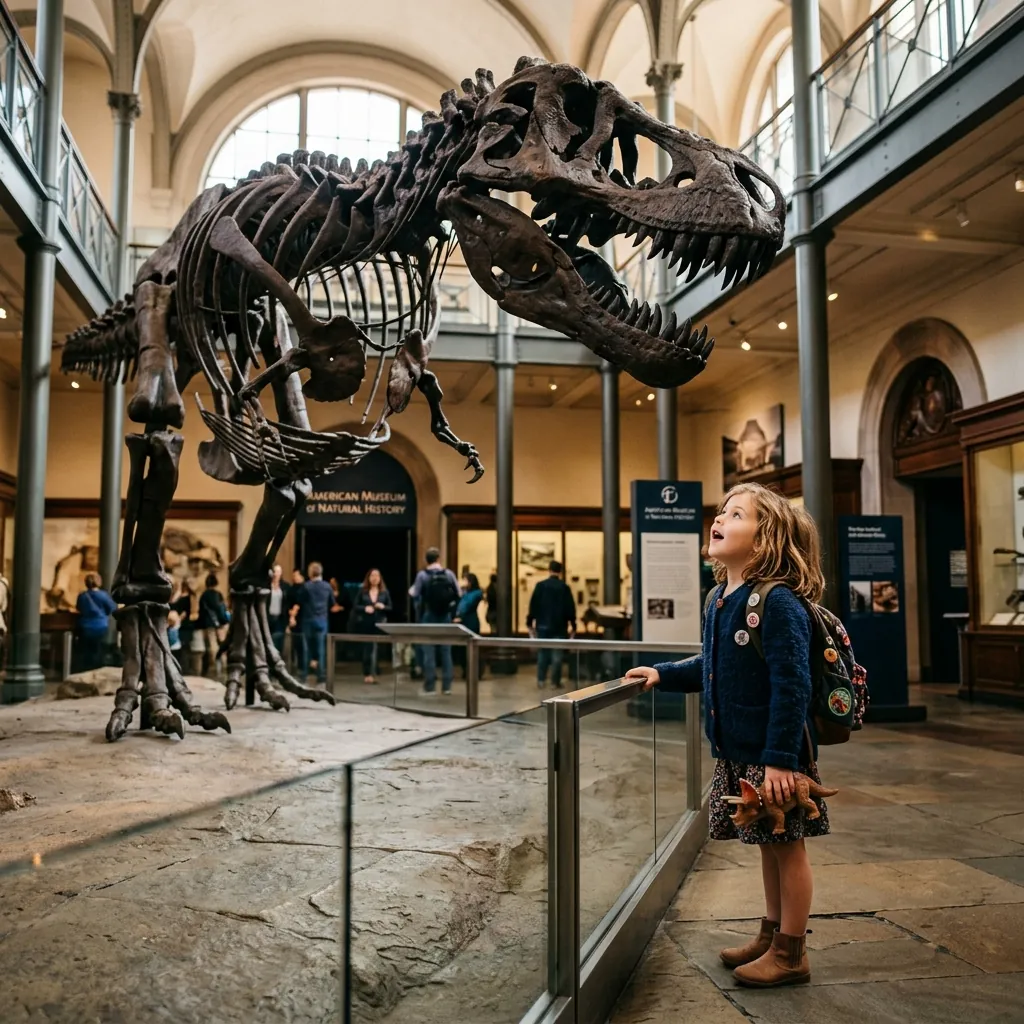
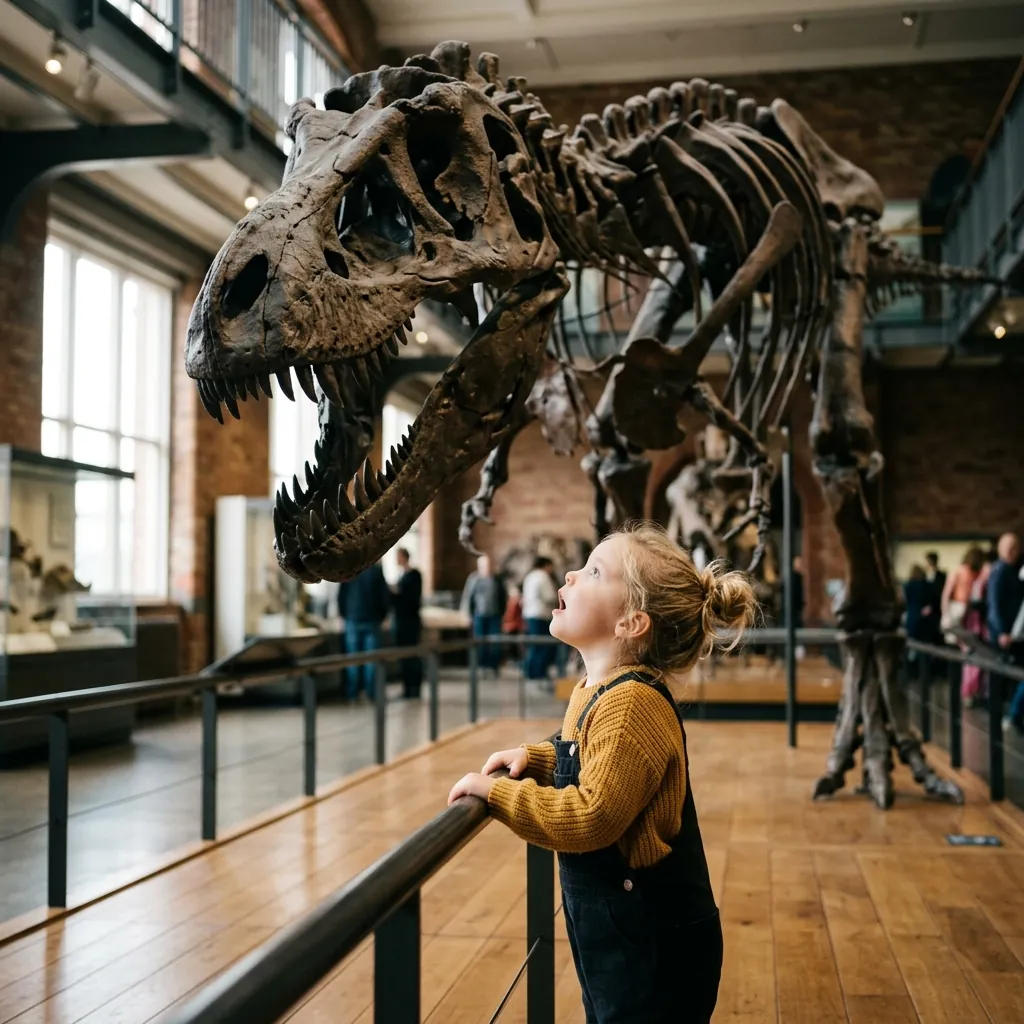
At this age, kids need tactile experiences and the freedom to move. The American Museum of Natural History (AMNH) is ideal. They don’t need to read the plaques; just seeing the massive T-Rex skeleton in the fossil halls or the life-sized Blue Whale model is enough to spark wonder. Keep the visit under two hours.
For Elementary Schoolers (Ages 6-10)
This group can handle more structure but still needs engagement. The Intrepid Sea, Air & Space Museum is fantastic because they can walk on a real aircraft carrier and see a space shuttle. The Met can work well if you treat it like a scavenger hunt—focus on the Egyptian mummies (Temple of Dendur) and the Arms and Armor hall, then head out to Central Park.
For Middle and High Schoolers (Ages 11+)
Older kids have more defined interests. If they are into art, MoMA or the Whitney are manageable and culturally relevant. If they like history or science, the 9/11 Memorial & Museum (for mature teens) or SPYSCAPE (an interactive espionage museum) offer highly engaging, mature experiences.
Golden Rules for Museum Visits with Kids
- Buy tickets in advance to skip the entry line.
- Plan for a maximum of 2 to 3 hours.
- Eat before you go in, or plan a hard stop for a snack break.
- Ask the child what they want to see and make that the priority.
- Locate the restrooms as soon as you arrive.
AMNH sits inside an Upper West Side family day.
Weather can cancel the outdoor half; keep indoor options by age.
A smaller, quieter collection for older kids is the Morgan.
Choose by attention span before you choose by age
Age is a useful clue, but attention span is the better planning tool. A six-year-old who can spend an hour naming dinosaurs may have a better American Museum of Natural History visit than a ten-year-old who dislikes dark halls and wants to touch everything. An older child who draws, photographs, or notices clothes and faces may get more from a small set of Met galleries than from a supposedly more “kid-friendly” attraction.
Before booking, ask one question: what kind of looking can this child happily do for forty-five minutes? Big animals and objects, art and stories, machines and engineering, or interactive environments each point toward a different museum. The goal is to create one memorable anchor, not to prove that the family extracted maximum value from the admission price.
Use museum scale as part of the decision
Large museums create a hidden cost: the walk between the things you came to see. At AMNH or The Met, the distance from entrance to restroom to a specific hall can be a meaningful part of the visit for a young child. A family that arrives without a short target list often spends its best energy navigating corridors, then reaches the favorite gallery when everyone is already hungry or tired.
Treat a major museum like a neighborhood. Pick one zone, one secondary zone, and an exit. If the child is still engaged after those two anchors, add something nearby. If not, leave while the visit still feels successful. A two-hour museum day with energy left for the park is usually better than a four-hour museum marathon followed by a difficult afternoon.
AMNH, The Met, MoMA, or Intrepid?
AMNH is the easiest default when the child is motivated by animals, dinosaurs, space, geology, or large physical objects. It also pairs naturally with an Upper West Side family day, so the museum does not need to carry the entire itinerary. The Met is stronger when the family can choose a story—armor, ancient Egypt, decorative rooms, paintings—rather than wandering through “art” as one giant category.
MoMA works best for a shorter visit with children or teens who respond to recognizable modern images, design, photography, or a compact set of famous works. Intrepid is the clearer choice for aircraft, ships, engineering, and military or space hardware. None is universally superior. The right museum is the one whose strongest object category already matches the child’s curiosity before you enter the building.
Build the exit strategy before the visit begins
Families usually plan the entrance and forget the exit. Decide where food, a bench, a playground, or the hotel sits after the museum. If the next step requires two subway transfers and another timed ticket, the museum becomes more stressful because there is no graceful way to stop early. A nearby park, easy meal, or direct ride creates permission to leave when attention drops.
Also decide what counts as a successful visit before you arrive. It might be “dinosaurs plus one space hall,” “Egypt plus armor,” or “the flight deck plus one indoor section.” Once that promise is fulfilled, everything else is optional. This changes the adult behavior inside the museum: you stop pulling the child through rooms to justify the ticket and start protecting the part they actually came to see.
Plan for strollers, sensory load, and mixed-age groups
A stroller can solve tired legs while creating elevator dependence. If step-free circulation is essential, read the current accessibility map and choose an entrance and gallery sequence that does not rely on improvising between floors. For children who are sensitive to noise, darkness, crowds, or projection effects, identify a quieter lobby, cafe, courtyard, or outdoor reset point before the first overload happens.
Mixed-age groups need a shared anchor and separate expectations. A toddler does not need to appreciate the same gallery as a twelve-year-old for the trip to work. Give the older child one specific choice and the younger child one movement-friendly or object-heavy stop. If the age gap is large, a shorter museum plus park time is often more democratic than trying to find a single institution that perfectly satisfies everyone for half a day.
Before you give The Met another hour, use the Met time-box guide for the adult visit-length decision, then keep this page for age and attention-span choices with kids.
Before you give MoMA a first-trip attraction slot, use the MoMA first-trip fit guide for the adult attraction-slot decision, then keep this page for age and attention-span choices with kids.
Suggested Route & Mini Plan
1. Choose ONE museum based on your child's current obsession (dinosaurs, space, art, etc.).
2. Book tickets online for the opening time (usually 10:00 a.m.).
3. Identify 2 or 3 specific exhibits you want to see before you arrive.
4. Visit those exhibits first while energy levels are high.
5. Leave by lunchtime and grab food outside the museum.
Curated Alternatives
Children's Museum of Manhattan (UWS)
For high-energy toddlers who need to run and touch everything.
Museum of Modern Art (MoMA)
For teenagers interested in modern art and digital media without the overwhelming scale of the Met.
Central Park Zoo & Playgrounds
If you want a free, low-stress outdoor alternative where kids can explore safely.
Frequently Asked Questions
Are strollers allowed in major Manhattan museums?
Yes, both the American Museum of Natural History and The Met allow strollers, though some special exhibitions may restrict them. However, navigating crowds with a large stroller can be difficult, so an umbrella stroller or baby carrier is recommended.
Can we bring our own snacks?
You can usually bring water bottles and small snacks for young children, but you are generally not allowed to eat inside the galleries. You must use designated café areas or step outside.
Our recommendations are handpicked independently. No paid placement, no sponsored rankings. How we choose