
Indoor Manhattan with Kids: Low-Stress Options by Age
A practical indoor Manhattan guide for families: choose one anchor by age and interest, understand stroller and ticketing rules, and keep one nearby low-commitment backup instead of stacking two full attractions.

⚡ At a Glance Overview
Why We Chose This
The refreshed guide replaces rigid age bands and universal timed-entry/stroller rules with a friction-based decision model: child interest, ticketing, stroller and bag constraints, sensory tolerance, weather transfer, and one-anchor-plus-backup geography.
Editorial Notes & Caveats
Hours, exhibit closures, ticket windows, stroller rules, age restrictions, and accessibility conditions can change. Check the official venue page on the day. This guide does not promise that a venue will be quiet simply because you arrive early, and it does not assume every child in the same age band has the same sensory or mobility needs.
Bad weather changes Manhattan family planning because the difficult part is not simply getting indoors. It is getting indoors without creating a new kind of stress: sold-out add-ons, wet stroller transfers, long security lines, a giant museum that takes four hours to cross, or a child who was excited for twenty minutes and is now done.
The old version of this guide assigned one attraction to each age band, told families to book every major venue in advance, treated 9:30 AM as a universal quiet slot, and simplified stroller access into yes-or-no rules. Current venue policies are more nuanced. Some museums allow walk-up admission, some ticketed add-ons require separate times, and a stroller that works in the main museum may be prohibited in a submarine, theater, or small gallery.
A lower-stress indoor plan uses one major anchor and one nearby fallback. Match the anchor to the child, then reduce friction around it. The goal is not to “win” a rainy day by doing two museums. The goal is to keep the family dry, fed, interested, and able to leave without feeling that prepaid tickets are being wasted.
Start with the friction question, not only the age question
Age still matters, but it is only one variable. Ask four questions: Does the child want hands-on play or objects to look at? Can the family handle a large building and long indoor walking? Is a stroller essential between exhibits? Does anyone need a low-sensory exit, frequent restroom access, or a predictable meal break? These answers can change the best choice even for two children who are both six.
Also consider the weather transfer. A venue may be fully indoors after entry but require a ten-minute exposed walk from the subway. On a day of heavy rain, strong wind, or extreme heat, a slightly less exciting option closer to the hotel can be the better family decision.
Ages 0–6: CMOM when hands-on play is the point

The Children’s Museum of Manhattan is the clearest current branch for toddlers, preschoolers, and younger elementary children because CMOM itself says the museum is designed especially for ages 0–6. The experience is built around hands-on play, making, movement, and changing public programs rather than quiet object viewing.
The stroller rule is important. CMOM currently provides complimentary stroller check and does not allow strollers in exhibit areas. That can be easy for a walking preschooler and much harder for a baby who normally naps in the stroller. Decide whether a carrier or more frequent sitting breaks will make the visit workable before you arrive.
Ticketing is also less rigid than the old guide suggested. CMOM currently sells advance tickets and says walk-up tickets are available, while advance booking helps ensure a spot. Seasonal operating days change: the current visitor guidelines distinguish July–September from October–June. Check the current day instead of assuming daily opening year-round.
Do not schedule another major attraction immediately afterward. Young children can use a surprising amount of energy in a hands-on museum. A nearby lunch, hotel return, or short neighborhood walk is a better default second act than another prepaid indoor ticket.
Broad age range: AMNH when interests are mixed

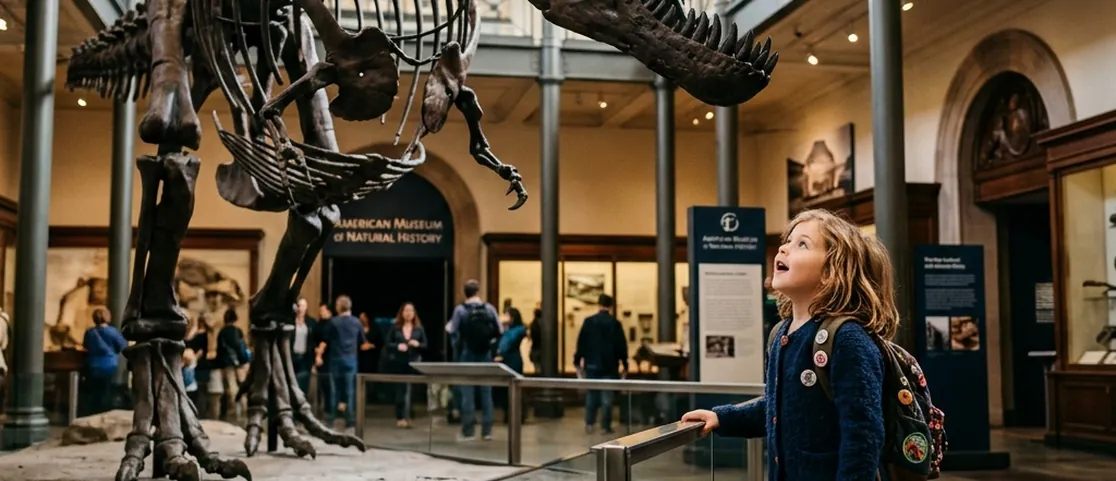
The American Museum of Natural History works for the widest age range because one building can support very different interests: dinosaurs, animals, earth and space, the Gilder Center, insects, butterflies, and more. That flexibility is also the risk. Families often turn a useful two-hour visit into an exhausting attempt to “see the museum.”
Choose two targets before entering. A younger child might want one animal hall and the dinosaurs. An older child might prefer Gilder plus space. If the Butterfly Vivarium matters, remember that it is a separate ticketed exhibition with an entry time. AMNH recommends advance tickets for faster entry, but general admission and timed add-ons are not the same booking problem.
Stroller access is relatively strong. AMNH currently welcomes strollers through most of the museum, with dedicated stroller parking at theaters and some restrictions for double strollers in ticketed exhibition galleries. The Rose Center and Gilder entrances are recommended accessible stroller entrances. If a stroller is central to the day, enter where the museum itself recommends rather than carrying it up the Central Park West steps.
AMNH also publishes accessibility and sensory resources, including a sensory room and programs for neurodivergent children. That makes it a better fit for some families than a simple age chart would suggest. Check the current accessibility page and same-day closure notices, especially when a specific Gilder or ticketed experience is the reason for going.
Older kids and tweens: Intrepid when machines are the interest

The Intrepid Museum is strongest when the child is genuinely interested in aircraft, ships, space, or engineering. The carrier itself, Space Shuttle Pavilion, and Growler submarine can make the visit feel more concrete than a conventional museum. But the operational constraints are part of the decision, especially for families with strollers, large bags, or younger siblings.
Intrepid currently uses date and time-window tickets and says tickets are non-refundable and non-transferable. It also publishes day-specific exhibition closures because special events and operations can affect access. If one specific area—such as the Space Shuttle Pavilion—is the reason you are going, check the current closure list before paying.
Strollers are allowed in many museum galleries but are not permitted in the submarine or Concorde. The museum does not offer bag or coat check, so belongings stay with you. Growler also has a current minimum height of 40 inches and requires visitors to pass through a replica hatch without assistance. Those constraints matter more than a generic recommendation that Intrepid is “best for ages 9–12.”
If an older child loves aircraft but a younger sibling cannot use the submarine, split the visit expectation before arriving. One adult may do the restricted area with the older child while another stays with the stroller, or the whole family may skip the submarine. A good family plan allows one exhibit to be optional.
Chelsea fallback: Pier 57 when you need something lighter
Pier 57 can be useful when the family is already near Chelsea, the High Line, Little Island, or the west-side waterfront and suddenly needs an indoor break. Hudson River Park’s Discovery Tank has an indoor gallery at Pier 57 and publishes current programming on the Pier 57 site.
Treat it as a low-commitment branch rather than a guaranteed all-day attraction. The Discovery Tank schedule and guided-gallery programming can change, and Market 57 keeps its own hours. Check the current program page if the Discovery Tank itself is the reason for going. If the family mainly needs lunch and weather protection, the building can still serve as a transition without pretending it replaces a full museum.
Lower Manhattan fallback: use a public atrium as a reset, not an attraction
In Lower Manhattan, a public indoor atrium such as Brookfield Place can be valuable when the family needs to sit, eat, reorganize bags, or wait out weather. The point is not to market an atrium as a children’s attraction. The point is to give the day a low-cost, low-commitment place where nobody has to make the next decision immediately.
This distinction matters on rainy days because families often overreact to a canceled playground by buying another ticket. A free indoor break can be the better substitute. If energy returns, continue. If it does not, go back to the hotel.
Do not buy two major indoor attractions before the day starts
A common rainy-day mistake is to prepay for a morning museum and an afternoon museum because the forecast looks bad. That creates pressure to leave the first place before the child is ready or to drag everyone into the second place after they are tired. Unless the second ticket is genuinely difficult to obtain and the family knows it can handle the schedule, keep the afternoon flexible.
The one-anchor rule also protects the budget. Paid museums often have add-on experiences, food, gift shops, transit, and coat or locker decisions. One major admission plus a free indoor fallback is easier to absorb than paying twice for attractions the family only partially uses.
Use opening time as a preference, not a promise
Earlier visits can be useful because the family starts with more energy and some venues may feel calmer. But “arrive at 9:30 and everything is quiet” is not a reliable Manhattan rule. CMOM and Intrepid currently open at 10 on standard schedules, AMNH opens at 10, school groups can arrive early in the day, and weather itself can push many families indoors at once.
Choose the first slot that fits the actual venue and your child’s sleep schedule. A rested child at 11 can have a better museum visit than an exhausted child forced into an early departure from the hotel. When a specific timed add-on matters, let that time anchor the day and keep everything else flexible.
Stroller strategy: plan for the most restrictive part of the visit
The useful question is not “Are strollers allowed?” It is “Where will the stroller stop being useful?” At CMOM, the stroller is checked before exhibit areas. At AMNH, it works across most halls but not all theater/ticketed spaces. At Intrepid, the submarine and Concorde have stricter restrictions. That is enough variation to change what you carry.
If you need a carrier, snacks, rain cover, spare clothes, or a compact bag after the stroller is parked, organize those items before entering. Intrepid’s lack of bag/coat check is especially relevant because you cannot assume the museum will store what the restricted exhibit refuses.
Sensory load: leave before the meltdown, not after
Museums create layered sensory demand: security lines, crowds, echoes, elevators, screens, dark galleries, bright displays, gift shops, and food smells. The child does not have to dislike museums to become overloaded. Build an exit point into the plan before the family reaches that point.
At AMNH, this may mean two target halls and lunch. At CMOM, it may mean one active play block followed by a quiet meal outside the museum. At Intrepid, it may mean choosing either the submarine or the shuttle as the special experience instead of treating both as mandatory. A shorter successful visit is more useful than completing an attraction list.
Four practical versions of an indoor day
Version A: toddler / preschooler
CMOM as the single paid anchor, followed by lunch and either a hotel break or a short Upper West Side indoor stop. Plan for stroller check and do not stack AMNH on the same half-day simply because it is nearby.
Version B: mixed ages
AMNH with two agreed target areas and, only if everyone wants it, one ticketed add-on. Use the accessible stroller entrance when needed and leave before the museum’s size becomes the problem.
Version C: aircraft / space obsessed older child
Intrepid as the anchor. Check the day’s closure list, understand the Growler height/hatch rules, and decide in advance what happens to the stroller or younger sibling during restricted spaces.
Version D: weather interruption, not a full museum day
Use Pier 57 current programming, a public atrium, a market, or another nearby indoor common space. This is the right version when the family needs ninety dry minutes, not a new three-hour attraction.
The decision in one line
Choose one indoor anchor that fits the child’s interest and the family’s stroller, sensory, ticketing, and weather constraints; keep one nearby low-commitment backup, and leave when the family is done rather than when the itinerary says the day is complete.
Suggested Route & Mini Plan
1. Pick one anchor based on age and interest: hands-on play, natural history, ships/space, or a free low-commitment indoor stop.
2. Read the exact ticket, stroller, bag, age/height, and closure rules for that venue before leaving the hotel.
3. Choose only one major attraction for the half-day; identify a nearby food/rest backup instead of buying a second museum ticket in advance.
4. Inside the venue, choose two or three target areas rather than attempting every floor or gallery.
5. Leave when the child’s energy drops. The backup can be lunch, a public atrium, or the hotel—not another compulsory attraction.
Curated Alternatives
Hotel-reset afternoon
Choose a hotel break instead of a second attraction when the child is already overloaded, soaked, cold, hot, hungry, or fighting a nap. A successful indoor day does not have to fill every hour.
One free indoor public-space break
Choose a public atrium, market, library, or other current indoor common space when the family mainly needs seats, food, bathrooms, and weather protection rather than another ticketed experience.
Frequently Asked Questions
What is the best indoor Manhattan option for toddlers and preschoolers?
CMOM is the clearest current toddler/young-child branch because the museum says it is designed especially for ages 0–6. Strollers are checked rather than used in exhibit areas, so families who rely heavily on a stroller should plan for that transition.
Do I need timed tickets for every indoor family attraction?
No. Ticketing differs by venue and even by exhibit. AMNH recommends advance tickets for faster entry, while certain add-on exhibitions require selected entry times. Intrepid uses date/time-window tickets, while CMOM also allows walk-up admission subject to availability.
Which museum is easiest with a stroller?
AMNH allows strollers through most of the museum and recommends accessible entrances at the Rose Center and Gilder Center, although theaters and some ticketed galleries have restrictions. Intrepid allows strollers in many galleries but not in the submarine or Concorde. CMOM checks strollers before exhibit areas.
Our recommendations are handpicked independently. No paid placement, no sponsored rankings. How we choose