
Where to Eat with a Group in Manhattan Without Making Planning Miserable
A practical Manhattan group-dining guide for choosing the right reservation channel, shared-food format, neighborhood, payment plan, and fallback before six people become sixteen.

⚡ At a Glance Overview
Why We Chose This
The refreshed guide routes groups by final headcount, reservation channel, sharing style, geography, dietary constraints, and exact payment/cancellation terms. Current venue examples show different operational models without pretending one gratuity, card-split, price, or table-time rule applies across Manhattan.
Editorial Notes & Caveats
Group policies vary by venue and can change by party size, day, service, and room. Never assume automatic gratuity, separate checks, a specific number of cards, a two-hour limit, allergy accommodation, or a refundable deposit. Read the exact confirmation and ask the restaurant directly when any of those terms matter.
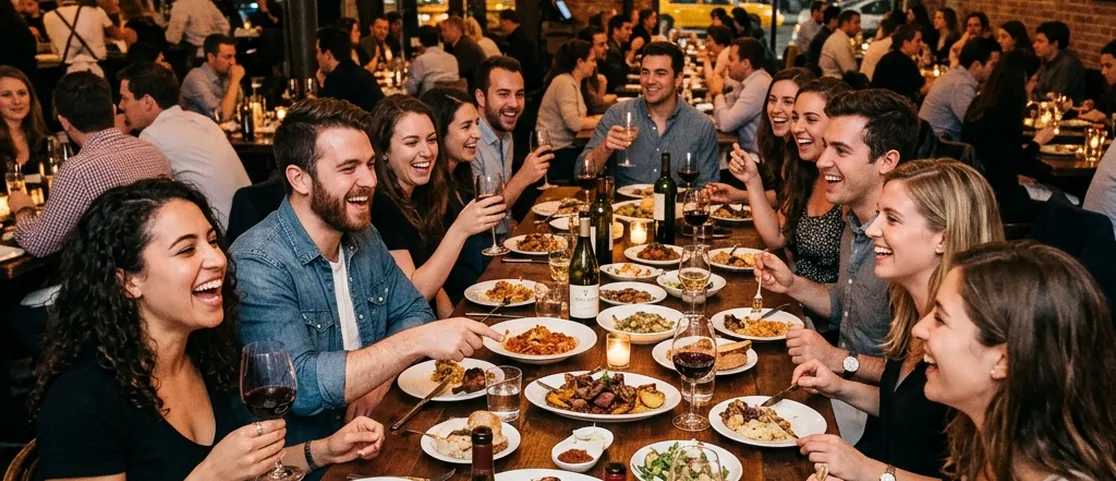
Group dining in Manhattan becomes difficult when the organizer starts with a restaurant name instead of a headcount. Six people may fit into a normal reservation system. Twelve can trigger a different table layout or group menu. Twenty may require direct contact or an event team. The same restaurant can therefore be easy for one group and administratively heavy for another.
The old version of this guide tried to simplify that complexity with universal rules: book a certain number of days ahead, expect one price band by cuisine, assume automatic gratuity, nominate one credit card, and use beer halls or food halls when you want supposedly friction-free planning. Those shortcuts are attractive, but current venue policies show why they fail. Group rules are venue-specific and often change exactly when the party crosses a size threshold.
The better planning sequence is: headcount, booking channel, dining format, geography, dietary/accessibility needs, and then payment and cancellation terms. Once those are solved, the restaurant shortlist becomes much smaller and the group chat becomes much quieter.
Step 1: headcount determines the booking channel
Start with the number of people who are actually likely to attend, not the number in the group chat. Ask for a firm yes/no by a clear deadline. If three people are still “maybe,” tell the venue the realistic range and ask what happens if the final count moves. A restaurant that can seat ten may not be able to add two chairs on the night.
Current Jongro BBQ policy demonstrates the size threshold clearly. The restaurant currently directs parties of 7–18 to Resy and parties of 19 or more to contact the restaurant directly. That is not a rule for all Korean BBQ restaurants; it is evidence that the booking channel can change before the cuisine does.
Mercado Little Spain uses another model. La Barra currently promotes direct group dining for parties of 9–20 with multiple tapas-style courses, while larger or more customized events can move into the venue’s private-event process. A party of twelve looking for a casual dinner therefore needs to compare the group menu and event terms, not just search for an ordinary table for twelve.
Step 2: choose a sharing format that fits the group
Shared-food formats can reduce ordering friction, but they solve different problems. Korean BBQ gives the group a central cooking experience. Dim sum and Cantonese banquet-style dining make many dishes easy to share. Tapas group menus can turn a large party into a structured sequence. Beer halls trade table service for looser social energy. Food halls maximize individual choice but may weaken the shared-table experience.
The right format depends on what the group is trying to do. A birthday with speeches needs different acoustics and seating from a reunion that wants loud conversation. A work team may value one invoice and a predictable end time. A family group may care more about children, accessibility, and dietary needs than cocktail quality.
Koreatown: K-BBQ when the shared activity is the point
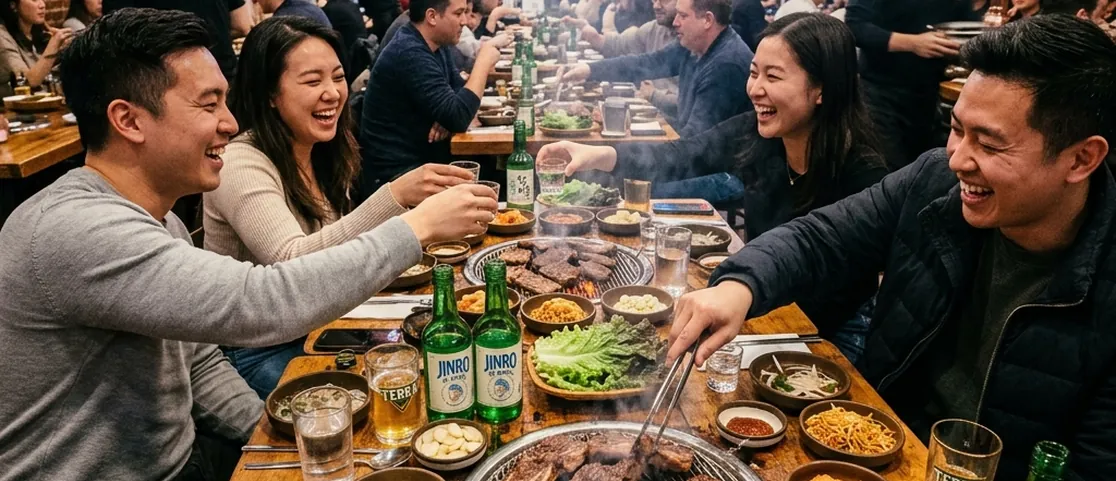
Jongro BBQ currently operates at 22 West 32nd Street on the second floor. Its group policy is unusually useful for planning because it publishes the booking thresholds and currently limits reservations to a maximum of two hours. If your group wants a long, unhurried three-hour reunion, that time rule matters as much as the menu.
K-BBQ works best when everyone is comfortable with a high-energy meal built around shared grills and coordinated ordering. It is less ideal when several guests do not want the same cooking format, when conversation needs to stay quiet, or when the group expects to linger well beyond the reservation window.
Do not treat “Koreatown” as a single group policy. The verified Jongro rules belong to Jongro. If another restaurant is the favorite, read its current party-size and reservation terms instead of importing the same two-hour limit or booking channel.
Chinatown: dim sum and banquet dining need timing flexibility
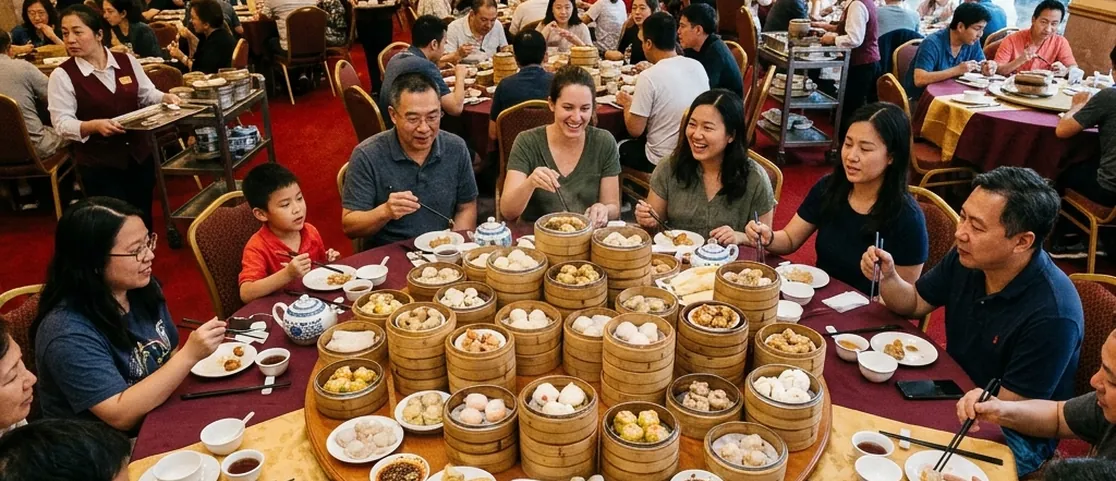
Golden Unicorn currently operates at 18 East Broadway. Its current policy shows why a large dining room does not automatically mean effortless reservations: the restaurant says it does not take regular reservations during weekend and holiday dim sum hours, and its private-dining page uses separate processes for larger parties and events.
That makes Chinatown dim sum a strong format for groups that like shared dishes and can tolerate a less rigid arrival process, especially at peak weekend service. It is a weaker choice when twelve people need a guaranteed exact start time before a show, ferry, or other timed commitment.
A banquet-style restaurant can still be excellent for larger family meals because round tables and shared dishes match the group naturally. The organizer just needs to confirm the current reservation path, final party size, and whether a set menu, deposit, or event contact is required for the date.
Hudson Yards: group menu when structure is helpful
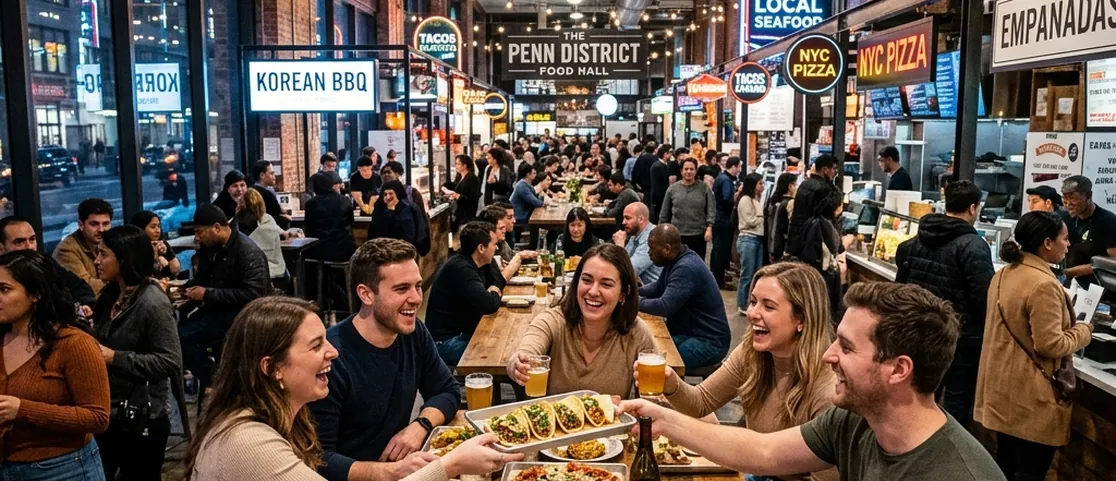
La Barra at Mercado Little Spain currently offers a direct group-dining option for 9–20 people. This is useful when the organizer wants a clear shared-food format without negotiating every dish at the table. It also illustrates an important distinction: a venue can contain a market, kiosks, bars, and full-service restaurants, but the best group solution may be a dedicated group reservation rather than simply telling everyone to find food and reconvene.
Choose the structured group format when the group wants one table, coordinated courses, and a predictable experience. Choose the broader Mercado or another food-hall style only when independent ordering is more important than sitting together continuously. At busy times, communal seating should never be treated as guaranteed for a large party.
Hudson Yards also makes sense when the High Line, Javits Center, or west-side activities are already part of the day. Geography is a real group cost: moving fourteen people across Manhattan creates late arrivals, separate taxis, and fragmented check-ins. A slightly less fashionable restaurant near the group’s next activity can be the better decision.
Meatpacking: beer hall when flexibility matters—but still read the rules
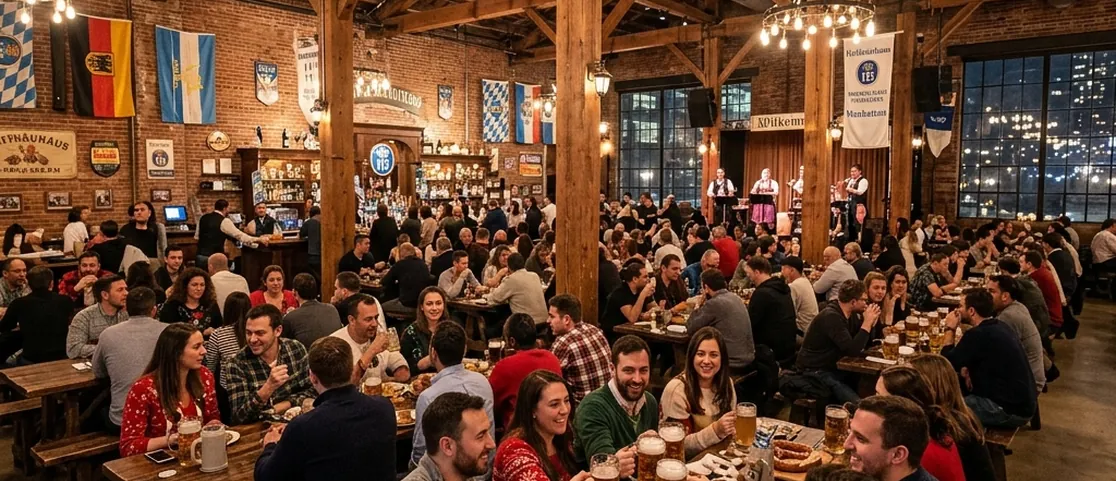
The Standard Biergarten currently describes itself as group-friendly and provides both a general booking path and separate contact for Stammtisch reservations and private events. That is different from the old assumption that beer halls are automatically walk-up spaces with no booking commitment.
The venue also publishes child-entry restrictions that change by day and time. That matters for mixed-age family groups and is exactly why “casual” should not be confused with “policy-free.” If children are part of the party, verify the current rule before sending everyone to the Meatpacking District.
A beer hall can still reduce friction when the group wants a social, less formal environment and does not need a long seated dinner. Just make the decision based on the actual booking and age policy rather than the idea that everyone can arrive whenever they want and maintain separate tabs.
Step 3: geography is part of the reservation
For groups, the restaurant address is not a minor detail. A party of two can change neighborhoods quickly. A party of fourteen has different walking speeds, different subway confidence, and different arrival times. Choose the dining zone around the fixed activity that precedes or follows the meal.
Koreatown is strong after Empire State Building, Penn Station, or Midtown plans. Chinatown works when the day is already downtown. Hudson Yards and Meatpacking pair naturally with the High Line or Javits Center. If the group is seeing Broadway, there is little value in a far-downtown dinner unless the restaurant itself is the main event.
Send one exact address and one arrival time. “Meet in Chinatown” is not a plan for twelve people. If the restaurant is upstairs, downstairs, inside a market, or inside a hotel complex, include that detail in the group message so people do not spend the first fifteen minutes finding one another.
Step 4: dietary and accessibility needs must be confirmed, not assumed
Food halls can increase choice, but they do not automatically solve allergies, celiac disease, cross-contact concerns, or mobility needs. Shared grills and shared plates can also complicate dietary separation. Ask the venue directly when a guest has a requirement that changes what can safely be ordered or how the table needs to be configured.
Do this before paying a deposit or accepting a fixed group menu. “There is something vegetarian on the menu” is not the same as confirming that a structured group menu works for all guests. For accessibility, check the actual entrance, elevator, restroom, and table setup if those details matter to someone attending.
One organizer should collect these needs once and communicate them to the venue. Making every guest independently call the restaurant creates conflicting answers and increases the chance that an important request is lost.
Step 5: read the confirmation like a contract
The confirmation email is where group-dining surprises usually live. Look for cancellation deadline, deposit, minimum spend, fixed menu, table duration, final-headcount deadline, service charge or gratuity, and payment rules. If any item is unclear, ask before the cancellation window closes.
Do not assume every large table has an automatic gratuity, and do not assume it does not. Do not assume the restaurant will split the check by seat, item, or card. Some groups prefer one payer; others need several cards or one corporate invoice. The only safe rule is to ask the venue and decide internally before dinner.
The same applies to payment apps. Peer-to-peer payment apps may work for some friends, but international travelers may not use the same services and corporate groups may need a receipt or reimbursement trail. The article should not choose the financial workflow for the group.
The organizer’s five-line message
A good group dinner needs less discussion than most group chats create. Once the reservation is confirmed, send one short message with: restaurant name and exact address; arrival time; final headcount deadline; any payment expectation already agreed by the group; and the organizer’s phone number. Add dietary or accessibility instructions only for the people who need them.
Do not send five restaurant alternatives after the reservation is booked. Decision reopening is one of the fastest ways to make group planning miserable. The organizer’s job is to create clarity, not continuous democracy.
Four practical group formats
Six to eight people: normal reservation first
Start with the normal booking system. Ask whether the restaurant can seat the party together and whether the standard menu applies. Do not volunteer for a private-event process unless the venue requires it or the occasion needs more structure.
Nine to twenty: compare group menu with normal dining
This is the range where many venues change workflow. La Barra’s current 9–20 group format and Jongro’s 7–18 Resy policy show two different approaches. Compare menu structure, cancellation terms, seating, and duration before choosing.
Twenty-plus: direct contact usually becomes more important
A large party may need event staff, a private or semi-private area, a set menu, or a minimum spend. Start with venues that publish a clear group or event channel instead of trying to force twenty people through a consumer booking widget.
Unstable headcount: choose flexibility over prestige
When people are still joining or dropping out, avoid the highest-penalty reservation unless the organizer is willing to absorb the risk. A flexible casual format can be better than a famous restaurant with strict per-person cancellation terms.
The decision in one line
Freeze the best possible headcount, use the venue’s real group-booking channel, choose a sharing format and neighborhood that fit the group, confirm dietary and payment terms in writing, and let one organizer protect the reservation from endless replanning.
A birthday overlay is how to choose a birthday restaurant.
Large-party auto-gratuity is in tipping.
Suggested Route & Mini Plan
1. Freeze the best available headcount and note whether it could still move by one or two people.
2. Match the headcount to the venue’s real booking channel: normal reservation, group-dining menu, or private-event inquiry.
3. Choose one geography near the activity before or after dinner; do not make twelve people cross Manhattan for a format available closer.
4. Confirm dietary/accessibility needs, deposit or cancellation terms, table-time limits, gratuity/service charges, and payment rules in writing.
5. Give the group one arrival time, one address, one organizer contact, and one payment expectation before the day of the meal.
Curated Alternatives
Private or semi-private event
Choose an event or private-dining inquiry when the headcount is large, speeches or presentations matter, the table must be guaranteed, or the restaurant’s normal reservation system no longer accepts the party size.
Food-hall fallback
Choose a food hall when individual ordering flexibility matters more than one shared table and coordinated service. It reduces menu compromise, but it does not guarantee that a large group will find adjacent seats at peak times.
Frequently Asked Questions
When does a group become too large for a normal reservation?
There is no Manhattan-wide cutoff. Current examples show why: Jongro BBQ routes parties of 7–18 through Resy and parties of 19+ to direct contact, while La Barra at Mercado Little Spain offers a specific group-dining format for 9–20. Use the venue’s own party-size workflow.
Should one person pay the whole group bill?
Only if the group agrees and the organizer is comfortable doing it. Restaurants differ on split checks and number of cards, and international visitors may not use the same payment apps. Ask the venue before dinner and agree on a group payment plan rather than assuming one universal method.
Is automatic gratuity always added for large groups?
No universal rule should be assumed. Some restaurants add service or gratuity for certain party sizes or event formats; others do not. Read the reservation terms and final bill so the group understands what is already included before adding anything extra.
Our recommendations are handpicked independently. No paid placement, no sponsored rankings. How we choose