
Manhattan Rooftop Season: How to Plan Without Overpaying
A practical way to choose Manhattan rooftop drinks by commitment, weather, view, and current venue policy—without assuming every reservation, walk-in, or dress code works the same way.


⚡ At a Glance Overview
Verified facts that can change
Rooftop recommendations go stale quickly because weather access, age rules and venue closures are operational facts, not timeless opinions.
The Met currently says the Cantor Roof Garden Bar is closed for construction of the Tang Wing; the old “museum rooftop drinks” recommendation is not a current option.
May change: The Tang Wing project and future roof-garden reopening timeline can change; use The Met’s current dining/project pages for future visits.
Backup: Visit The Met for the museum itself, then choose a current rooftop or observation option that fits the rest of your evening.
Archer Hotel currently describes Spyglass as year-round because portions are fully covered; evening service is 21+, while weekend brunch is open to all ages.
May change: Hours, reservations and outdoor access can change with weather, events and operations. Recheck the venue page on the day you go.
Backup: If age, weather or a rooftop reservation does not fit, use a nearby indoor bar/restaurant rather than chasing another roof across Manhattan.
Why We Chose This
This guide separates rooftop decisions by commitment, weather resilience, view, age policy, and reservation economics. Current venues are examples of different policy models, not a ranked list of every roof in Manhattan.
Editorial Notes & Caveats
Rooftop policies are unusually volatile: weather, private events, capacity, age restrictions, attire, reservation minimums, and outdoor access can change the same week. Verify the venue’s own page on the day you go and keep a nearby indoor fallback.
A Manhattan rooftop is a good plan only when the roof fits the evening you already have. The expensive mistake is not ordering one costly cocktail. It is building dinner, transit, dress, timing, and a reservation around a terrace whose weather, capacity, minimum spend, or age policy you never checked.
There is no universal rooftop-season calendar and no universal walk-in trick. Some roofs operate year-round with covered or indoor space. Others depend more heavily on warm weather. Some welcome walk-ins when capacity allows; some attach a food-and-beverage minimum to reservations. The useful question is not “What is the best rooftop?” It is “Which level of commitment am I willing to buy tonight?”
This guide uses a few current Manhattan venues to show the policy differences. It is not a permanent top-ten list. Two famous examples from older lists demonstrate why that matters: The Met’s Cantor Roof Garden Bar is currently closed for Tang Wing construction, and Gallow Green is no longer a current option because the McKittrick Hotel has closed.
Start with the commitment: seat, drink, or full evening
If you need a guaranteed seat for a birthday, proposal, client drink, or tightly scheduled night, a reservation can be worth paying for. Read every term before confirming: minimum spend, cancellation window, party-size rule, seating location, and whether the reservation actually guarantees outdoor space. “Rooftop reservation” does not always mean “front-row outdoor table.”
If you only want one drink and a skyline, flexibility is more valuable. Look for a venue that explicitly accepts walk-ins, then keep an indoor fallback nearby. Do not assume the walk-in will avoid a minimum or secure a railing spot. Current Overstory policy is a useful example: reservations carry a stated food-and-beverage minimum, while walk-ins are accepted only when availability permits. That is one venue’s rule, not a citywide formula.
If the rooftop is dinner, treat it like dinner. Choose the food and service first and the view second. A table you dislike because you only wanted the skyline is an expensive way to learn that a rooftop restaurant is not an observation deck.
The old Met rooftop bargain no longer works

The Cantor Roof Garden at The Metropolitan Museum of Art used to be an easy recommendation for visitors who wanted Central Park and skyline views without committing to a separate nightlife venue. That advice is now stale. The Met says the Cantor Roof Garden Bar is closed for construction of the Tang Wing for Modern and Contemporary Art, and the museum’s roof-garden commission paused after the 2025 season.
Do not buy museum admission in 2026 because an old article promised rooftop drinks. Visit The Met for the museum. If you want a rooftop afterward, choose a current venue based on the rest of your evening. This is exactly why rooftop guides need seasonal maintenance: a recommendation can disappear even while the building, neighborhood, and old search results remain.
Lower Manhattan: destination cocktails mean reading the terms
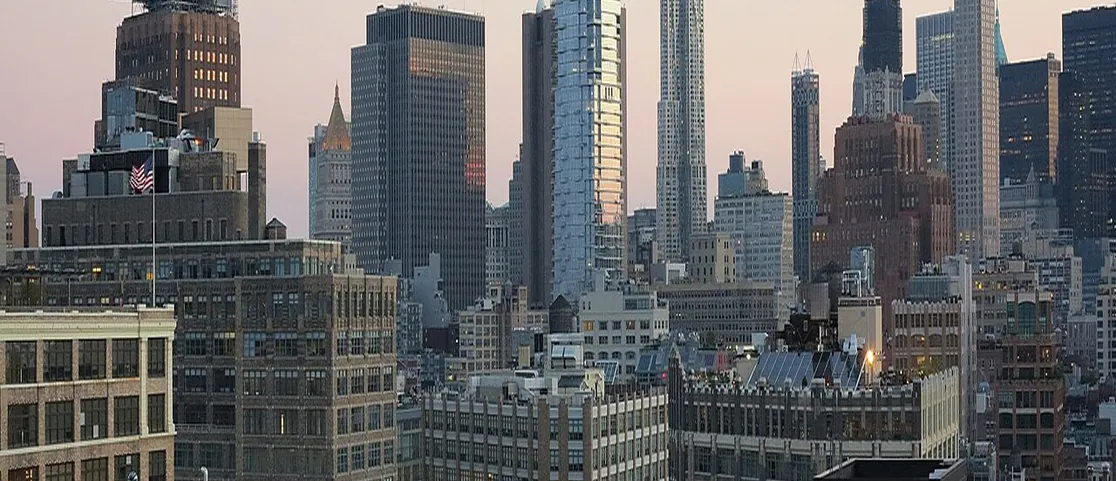
Overstory at 70 Pine Street is the clearest example of a destination rooftop where the reservation itself changes the economics. Its current official policy says the bar is 21+, takes reservations throughout the night, accepts walk-ins subject to availability, and applies a $75-per-person food-and-beverage minimum to reservations. Walk-in groups larger than six are not accepted.
That does not make the venue “too expensive” or “cheap if you walk in.” It gives you a clean fork. Reserve when the seat and occasion justify the commitment. Try a walk-in only when you can tolerate being turned away or waiting. If your evening cannot absorb that uncertainty, pick a different format rather than treating availability as a loophole.
Lower Manhattan rooftops make the most sense when you are already downtown for dinner, the harbor, the Financial District, or a Lower Manhattan walk. Crossing from the Upper West Side for one cocktail adds enough transit friction that the view has to be the point, not an accidental extra.
Midtown: choose weather resilience or a specific skyline angle
Midtown has an advantage: a rooftop can attach naturally to Broadway, Bryant Park, Grand Central, or a hotel-based evening. It also has a failure mode: you can pay a premium for a view you already saw from the sidewalk or from another paid deck. Decide whether the bar itself adds something.
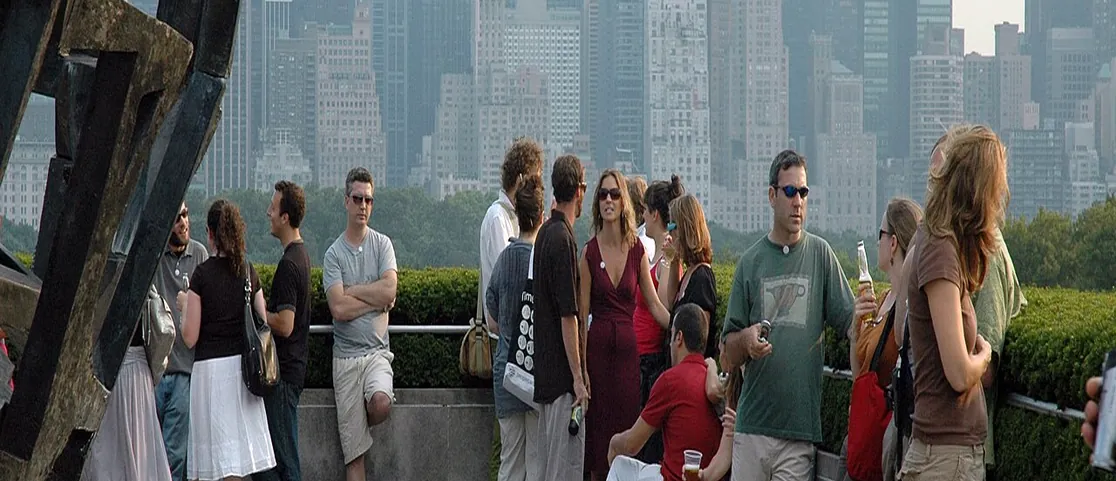
Spyglass at Archer Hotel is useful when weather resilience matters. Archer’s current page says portions of the rooftop are fully covered, describes it as year-round, and recommends reservations. Its age rule also shows why generic rooftop advice fails: evening service is 21+, while weekend brunch can admit all ages. Check the service period you actually plan to use.
Dear Irving on Hudson is another different product: a 21+ cocktail bar on the 40th and 41st floors of the Aliz Hotel with reservations available. Choose it because a high Midtown/Hudson cocktail setting fits your night, not because every Times Square-area visitor needs a rooftop after a show.
If Broadway is the fixed commitment, do not reserve a far rooftop so tightly that a long curtain call or post-show crowd creates panic. The roof should absorb delay, not make the theater night brittle.
SoHo and Hudson Square: check which roof and which policy
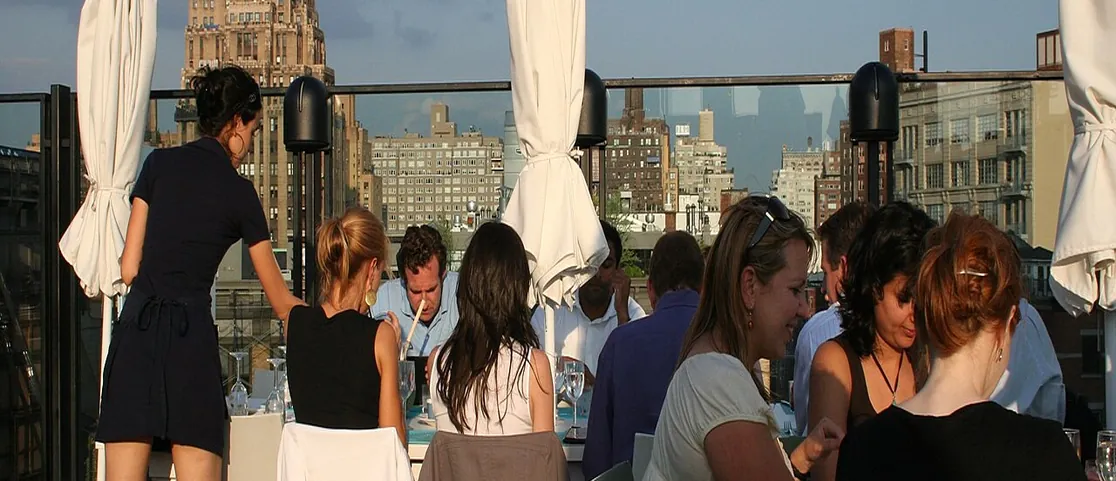
JIMMY at ModernHaus is a year-round SoHo rooftop with an indoor conversation area and a roof deck that becomes more important in warm weather. Its own site describes the venue as upscale but casual and says door personnel retain admission discretion, particularly when capacity is tight. That is a venue-specific rule worth reading before you arrive; it is not evidence that every Manhattan roof bans the same shoes or shirts.
Hotel Hugo currently operates both Bar Hugo and Azul on the Rooftop. The hotel says Bar Hugo reopened after renovation in June 2026 and offers reservations for both rooftop concepts. The useful decision is not to collect both. Pick the one whose view, menu, and atmosphere fit your dinner or drinks, verify the current reservation page, and keep the rest of SoHo or Hudson Square walkable.
This part of downtown is especially good for a flexible plan because you can leave the rooftop idea behind without losing the night. If weather turns, move to an indoor restaurant or bar in SoHo, Hudson Square, or the Village instead of spending another thirty minutes chasing a second roof.
Sunset timing: use the date, not a copied clock time
The old “arrive at 4:30 PM” rule is not a strategy. Sunset shifts substantially across spring, summer, and fall, and venues open at different times. In September, a fixed May or July arrival rule is already wrong. Check sunset for the actual date, then compare it with the venue’s opening time and reservation window.
If you care about the daylight-to-night transition, aim to be settled before sunset with enough margin for elevator lines and check-in. If you only care about city lights, later can be simpler. If you hate crowds, a daytime or early service may beat the sunset slot entirely. There is no prize for being at the railing at the exact minute the sun disappears.
Weather is the first cancellation policy
Wind matters as much as rain. A clear evening can still make an exposed terrace unpleasant. Before leaving the hotel, check whether the venue has covered or indoor space and whether that space preserves the experience you are paying for. “Open in bad weather” can mean the bar is operating indoors while the outdoor section you wanted is closed.
Do not build a non-refundable sequence around outdoor space when thunderstorms or strong wind are plausible. Put the rooftop before a flexible dinner, or choose a hotel rooftop with a viable indoor component. The goal is not to defeat the weather; it is to keep one weather change from destroying the evening.
Dress and age rules are venue rules
There is no useful universal list of rooftop clothing bans. Read the current venue language. JIMMY, for example, describes an upscale-but-casual standard and reserves door discretion. Other hotel rooftops are less club-like. A clean, intentional outfit is a safer default than athletic or beachwear, but the venue’s own policy is the authority.
Age restrictions vary too. Overstory and Dear Irving on Hudson are 21+. Spyglass distinguishes evening service from weekend brunch. Hotel Hugo’s current FAQ says children may be brought to the roof with adult supervision. If anyone in the group is under 21, verify the exact service and time before you promise a rooftop stop.
The no-overpay checklist
Before paying anything, answer six questions: Is the reservation minimum acceptable? Does the cancellation rule fit your schedule? Is the outdoor area actually expected to be open? Is everyone old enough for that service period? Does the attire policy fit what you will already be wearing? Is there an indoor fallback within a short walk?
Then ask the harder question: would you still want this venue if the view were only good, not perfect? If the answer is no, you may want a ticketed observation deck instead. A deck sells the view directly. A rooftop bar sells hospitality with a view attached, and the economics make more sense when you actually want both.
The decision in one line
Choose the rooftop that fits your existing geography and commitment level, verify its current reservation, age, attire, and weather rules, use the day’s real sunset instead of a fixed arrival hack, and keep one nearby indoor fallback so the skyline never controls the whole night.
Suggested Route & Mini Plan
1. Decide what you are buying: a guaranteed seat, one drink with a view, or a full rooftop dinner.
2. Pick the geography that already fits your evening; do not cross Manhattan only for a famous railing.
3. Check the venue’s current reservation minimum, walk-in policy, age rule, attire note, hours, and weather backup.
4. Check sunset for that date, then arrive according to the venue’s real opening time—not a universal 4:30 PM rule.
5. Keep one nearby indoor bar, restaurant, or hotel lounge as the fallback if wind, rain, capacity, or a private event changes the plan.
Curated Alternatives
Which Manhattan View Is Worth the Ticket?
Choose a ticketed observation deck when the skyline itself is the priority and you would rather pay a known admission price than navigate bar seating, age rules, and food-and-beverage terms.
A Romantic Manhattan Day Without the Tourist Rush
Choose the romantic-day guide when a rooftop is only one optional finish and you want the rest of the day to work even if weather or capacity kills the roof plan.
Frequently Asked Questions
Do you need a reservation for a Manhattan rooftop bar?
It depends on the venue and what you want. Some rooftops accept both reservations and walk-ins subject to availability; some reservations carry food-and-beverage minimums. If a guaranteed seat or a fixed celebration matters, read the reservation terms. If flexibility matters more, confirm whether walk-ins are accepted before relying on them.
Is The Met rooftop bar open in 2026?
No. The Met says the Cantor Roof Garden Bar is closed for construction of the Tang Wing for Modern and Contemporary Art. Older rooftop lists that still present it as a current low-cost option are stale.
What should you wear to a Manhattan rooftop bar?
Check the specific venue. There is no reliable citywide dress-code rule. Some places describe themselves as upscale casual and retain door discretion; others operate more like hotel bars. Dress for the venue you chose, not for a generic “NYC rooftop” stereotype.
Our recommendations are handpicked independently. No paid placement, no sponsored rankings. How we choose