
Manhattan with a Stroller: Neighborhoods, Transit, and Rest Stops
A practical local guide to navigating Manhattan with a stroller. Discover elevator-accessible subway hubs, wide paved promenades, step-free dining halls, and reliable family diaper-changing restrooms.


⚡ At a Glance Overview
Make the Decision Fast
Reduce transfers, choose a compact neighborhood plan, identify accessible stations and rest stops, and keep one easy exit when the child or caregiver is done.
You are traveling with a stroller and want Manhattan days built around access, practical pauses, and fewer avoidable stairs.
Do not assume every nearby subway entrance is accessible or that a route with fewer minutes on the map creates less stroller friction.
Why We Chose This
Stroller planning in Manhattan is mostly about reducing forced stairs, unnecessary transfers, narrow sidewalks, and long gaps between places where a family can stop. The repair focuses on route resilience rather than a list of “stroller-friendly” places.
Editorial Notes & Caveats
Elevator availability and station access can change without much notice. Check live MTA accessibility status before each important subway leg and keep a bus, walking, or taxi/rideshare fallback for any journey where stairs would be a serious problem.
Navigating Manhattan with a baby stroller can quickly transform an enjoyable day into an exhausting obstacle course. Out-of-service subway elevators, narrow cast-iron doorways, steep curb drops, and cobblestone streets present constant challenges for parents and caregivers.
However, with strategic planning, Manhattan offers world-class accessible promenades, modern elevator transit hubs, and spacious step-free rest stops.
To enjoy a smooth, low-stress day with a stroller, structure your itinerary around five core accessibility principles.
1. Stroller-Friendly Neighborhoods vs. Obstacle Zones
Not all Manhattan neighborhoods are created equal when pushing a stroller.
**Paved & Wide Corridors**: The gold standard is **Battery Park City**, featuring miles of vehicle-free, wide paved waterfront esplanades with continuous curb ramps. Similarly, the **Upper West Side** (along Central Park West and Broadway) and **Hudson River Park** (Piers 26 through 84) offer spacious sidewalks and smooth pavement.
**Obstacle Zones**: Avoid pushing strollers through historic cobblestone districts like **SoHo** (Greene and Wooster Streets), the **Meatpacking District**, or cramped Chinatown market sidewalks where narrow pavement forces strollers into street traffic.
2. Navigating the Subway: ADA Elevator Hubs
Fewer than 30% of NYC subway stations feature elevators. Attempting to carry a loaded stroller down three flights of stairs during peak hours is unsafe.
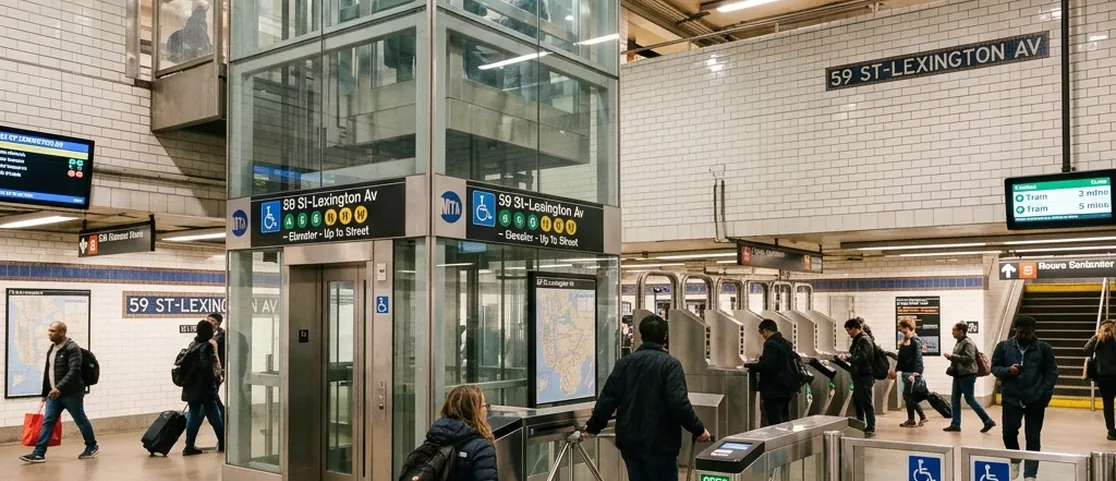
Rely on major accessible hubs equipped with street-to-platform glass elevators: **Fulton Center** (Financial District), **59th St-Columbus Circle** (A/C/B/D/1), **72nd St** (Q/1/2/3), **14th St-Union Square**, and **Grand Central 42nd St**.
Always check the MTA live elevator status online before setting out, as unexpected elevator maintenance can alter your transit plans.
3. Step-Free Pit Stops and Diaper Restrooms
Small Manhattan coffee shops often feature tight aisles, narrow doorways, and step-up entrances that make stroller access impossible.

Target spacious, ground-floor food halls designed with wide aisles and accessible facilities. **Brookfield Place** (Battery Park City) and **Eataly Downtown** (3 World Trade Center) offer expansive indoor seating, high chairs, and clean ADA family restrooms with dedicated changing tables.
In Midtown, the **Plaza Food Hall** (5th Ave at 59th St) and **Moynihan Train Hall** provide spacious step-free concourses for feeding breaks.
4. Outdoor Micro-Breaks and Accessible Playgrounds
Give toddlers room to stretch outside at fully accessible park entries.
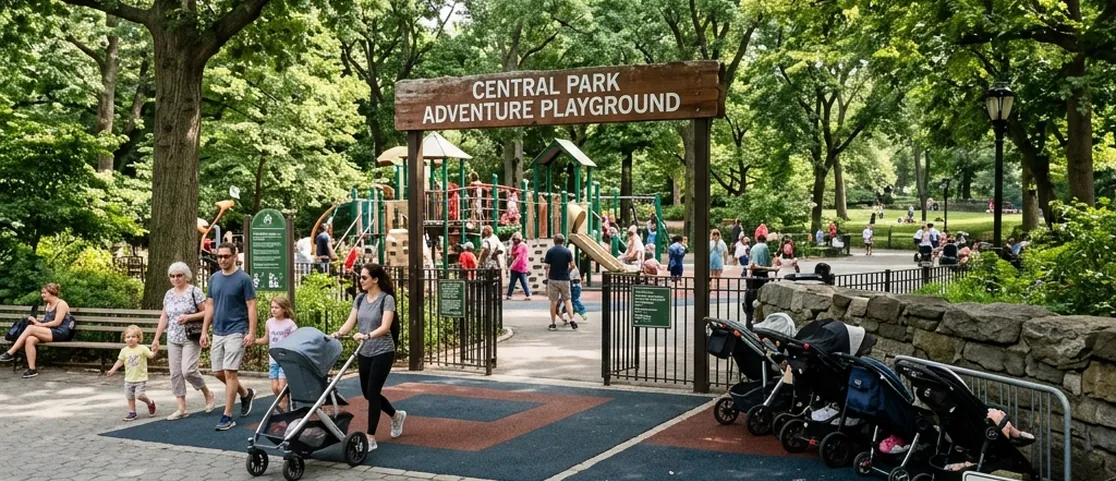
In Central Park, the **Diana Ross Playground** (81st St & Central Park West) features step-free ramp access and rubberized safety surfacing instead of loose woodchips. In Lower Manhattan, **Washington Market Park** (Tribeca) offers dedicated stroller parking areas and paved paths under shade trees.
5. Low-Floor Bus Transit: The Step-Free Alternative
When subway elevators are unavailable or broken, NYC’s **Select Bus Service (SBS)** buses offer an outstanding alternative.
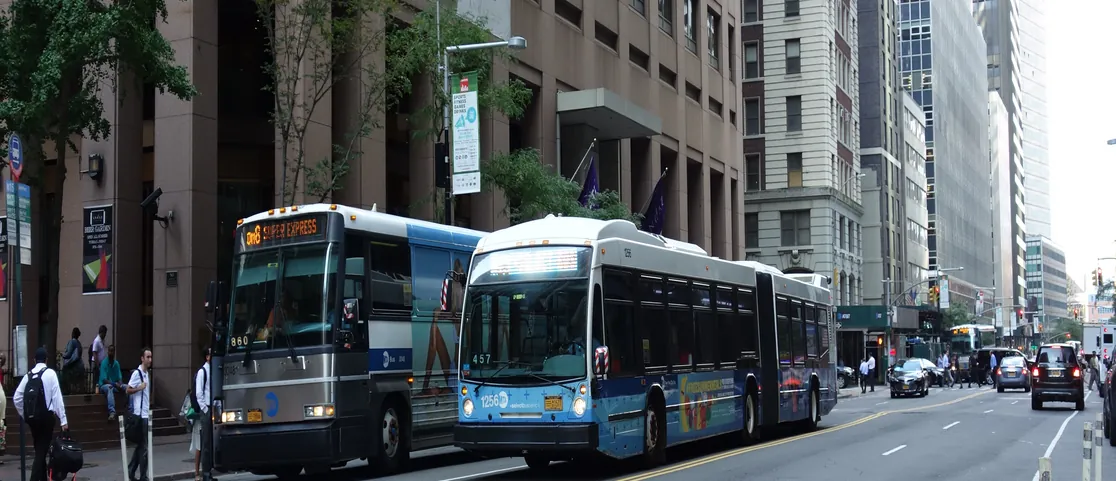
Routes like the M15-SBS (1st and 2nd Avenues) and M79-SBS (79th Street Crosstown) use low-floor kneeling buses with wide double doors. MTA rules permit open strollers on board in designated open spaces, allowing step-free city travel without folding your stroller.
Plan the route around failure, not the perfect map
The fastest transit route on a phone is not necessarily the easiest stroller route. A transfer that saves six minutes can create two elevator searches, a crowded mezzanine, and a platform change that is awkward with a sleeping child. Start by identifying the few legs where you truly need the subway. Then prefer direct rides, simple station layouts, and journeys that still work if one elevator is unavailable.
For every important ride, know the fallback before leaving the hotel: a bus along the same avenue, a walk that is realistic with the child, or a car ride when the weather or elevator status makes transit unreasonable. This is not overplanning. It prevents the family from making the hardest decision of the day while standing beside a closed elevator with bags, snacks, and a tired child.
Use buses and walking more deliberately
Visitors often think of buses as a backup for people who do not understand the subway. With a stroller, a bus can be the more rational first choice for crosstown movement or a short avenue run because it reduces vertical movement and station navigation. The tradeoff is traffic and boarding space, so it works best when time is flexible and the stroller can be managed calmly at the stop.
Walking is also easier when you choose the right corridor. Broad park edges, waterfront paths, and residential avenues can absorb a stroller better than shopping streets packed with queues and curbside delivery activity. Measure the day in comfortable walking segments, not total miles. A one-mile waterfront walk with benches can feel easier than six short blocks through dense Midtown foot traffic.
Treat cobblestones and crowd density as real route costs
SoHo and parts of Tribeca are visually attractive but can be tiring with small wheels, especially when a route repeatedly crosses rough historic paving. That does not make the neighborhoods off-limits. It means choosing a smoother avenue as the spine and using the prettiest side streets as short detours rather than the entire route.
Crowd density is a different kind of obstacle. Times Square, narrow High Line sections, busy market halls, and museum entrance queues can make a stroller feel twice its size. If one of those places matters, enter early, stay briefly, and leave before it becomes the transition point for the rest of the day. A stroller itinerary should protect the exits as carefully as the attractions.
Build a network of reset points
A practical family day needs places where nothing is expected of the child. Before leaving a neighborhood, identify a restroom, somewhere to sit indoors, somewhere to buy water or a simple snack, and a place where the stroller can stop without blocking a narrow aisle. Libraries, large public atriums, park facilities, and spacious food halls can be more valuable than another attraction because they restore the day.
Do not wait for a problem to use them. A twenty-minute reset before hunger becomes urgent can save an hour later. This is especially important around museum and theater districts, where the closest available table may be crowded or expensive. The best stroller routes have frequent exits from the plan and do not punish the family for using them.
Know when folding the stroller changes the answer
A lightweight stroller and a large travel system are not the same Manhattan problem. If the stroller can be folded quickly and one adult can carry it while the other manages the child, some stair-heavy journeys become possible. If it is bulky, loaded with bags, or being used by a sleeping child, design the day as if carrying it is not an option.
That decision should happen before the trip, not on a platform. It also affects restaurants, small shops, and older buildings where there may be little space to park a stroller. When a compact carrier or walking segment is realistic, use it selectively. When it is not, choose the neighborhood, museum entrance, and meal format that accepts the stroller you actually have.
Before you add another Manhattan walk, use the walking-load guide for the general day budget, then keep stroller-specific route choices here.
Suggested Route & Mini Plan
1. Verify your subway route against the MTA ADA Elevator Accessible Station Map before leaving.
2. Select flat, wide walking corridors: Battery Park City Esplanade or Central Park West.
3. Schedule rest breaks at spacious ground-floor food halls (Brookfield Place or Eataly Downtown).
4. Use Select Bus Service (SBS) buses as step-free alternatives when subway elevators are out of service.
Curated Alternatives
Baby Carrier / Wraps for Cobblestone Neighborhoods
If exploring SoHo, Meatpacking, or Greenwich Village cobblestones, using an ergonomic baby carrier avoids stroller curb and step friction entirely.
NYC Ferry System for Downtown Travel
NYC Ferries feature step-free gangways, wide open decks, and spacious accessible restrooms, making water travel seamlessly stroller-friendly.
Frequently Asked Questions
Are strollers allowed open on NYC buses?
Yes. MTA policy permits open strollers on low-floor buses, provided they are parked in designated open areas without blocking the center aisle.
Which Manhattan neighborhoods are easiest for strollers?
Battery Park City, the Upper West Side along Central Park West, and Hudson River Park offer the widest, flatter paved walkways with continuous curb ramps.
Where can I find clean diaper changing stations in Midtown Manhattan?
Major food halls and hubs like Brookfield Place, Oculus West End concourse, and Grand Central Terminal Dining Concourse feature dedicated ADA family restrooms.
Our recommendations are handpicked independently. No paid placement, no sponsored rankings. How we choose