
Manhattan When Stairs and Crowds Are the Real Obstacle
Plan Manhattan around verified subway elevators, bus backups, museum step-free entries, restroom timing, and honest walking limits—not the myth of a fully accessible island.

⚡ At a Glance Overview
Why We Chose This
Visitors assume Manhattan is universally walkable and that “accessible” stations stay accessible. This guide fixes elevator verification, transfer reality, bus pivots, museum entries, restroom timing, and 911 boundaries—broader than the stroller guide and tied to dated MTA checks.
Editorial Notes & Caveats
MTA elevator availability changes daily. Before you commit to any station, check the official MTA accessible-station list and live elevator status on MTA.info the morning you travel—never treat a blog, map pin, or photo as proof a station is step-free today. This article does not replace MTA accessibility policies, museum access desks, or venue security rules. It is not medical advice: for chest pain, sudden weakness, severe breathing trouble, major injury, or uncontrolled bleeding, call 911 or go to a hospital emergency room—not a pharmacy, urgent care counter, or subway station booth.
Manhattan sells itself as walkable—and much of it is, on paper. Then you meet the real obstacles: stair-only subway exits, rush-hour platform gaps, museum lines that assume you can stand for forty minutes, and sidewalks that funnel wheelchairs and slow walkers into traffic when crowds stop for photos. Stairs and crowds are not side notes; for many visitors they are the trip.
This guide is broader than stroller logistics. It is for anyone who cannot rely on stairs, who fatigues fast in shoulder-to-shoulder crowds, who travels with an older relative, or who combines a stroller with a bad knee and needs honest routing—not a fantasy that every station and every gallery is seamless.
The Manhattan with a stroller guide owns stroller-first promenades and diaper-restroom maps. This article owns elevator verification, bus pivots, museum step-free reality, restroom timing, walking limits, and when to stop pretending the subway will cooperate.
Who this mobility frame fits
Fits visitors with limited stamina who can walk flat blocks but not climb three flights twice a day. Fits cane and walker users who need elevators or ramps at every vertical change. Fits families where one adult carries bags while the other manages a stroller and nobody can safely haul gear up subway stairs at 5:30 PM.
Fits poorly when the only question is which subway line goes uptown—that is the Manhattan subway for first-time visitors guide. Fits poorly when toddlers and dinosaurs are the afternoon—the museums with kids guide sequences AMNH and hands-on rooms. Fits poorly when Fort Tryon and medieval tapestries are the goal—the Cloisters spotlight covers that A-train ride and elevator routing north.
Subway reality: verify before you ride
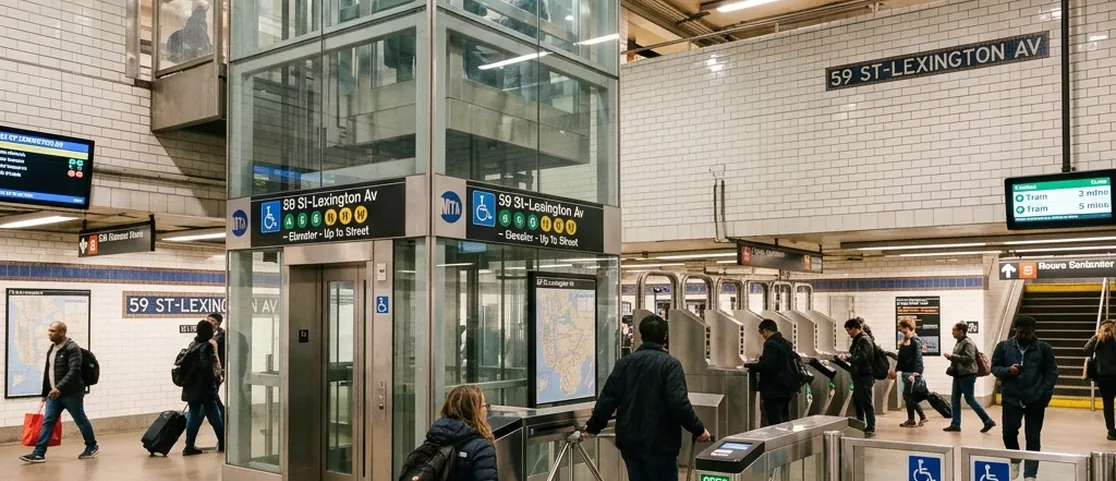
Fewer than one-third of Manhattan subway stations offer a full step-free path from street to platform. Many “accessible” stations still require a long corridor walk, a mezzanine transfer, or an elevator on only one corner of a multi-entrance complex. A station that worked on your last trip may have an elevator out of service today.
Never board assuming accessibility. Before you leave the hotel, open the MTA accessible-station list and live elevator status on MTA.info. Cross-check your origin, transfer, and destination against what is working that morning. If an elevator shows out of service, reroute immediately—do not walk to the station and hope the sign was wrong.
Major hubs that often anchor accessible trips include Fulton Street downtown, 14th Street–Union Square, Grand Central–42nd Street, 59th Street–Columbus Circle, and 72nd Street on the Upper West Side—but “often” is not “always.” Verify each one on the dated check above before you treat it as your spine.
Transfers are where plans break. Changing from an accessible Lexington Avenue line to an accessible Broadway line may still mean a long underground walk, a steep ramp, or a broken elevator at the second station. Minimize line changes when stairs and fatigue are the constraint. One longer ride on a single accessible line beats two “accessible” stations linked by a nightmare mezzanine.
The Manhattan subway for first-time visitors guide explains direction, express, and weekend service—use it for line literacy after you have confirmed which stations are step-free today.
Buses when elevators fail
NYC’s low-floor local and Select Bus Service fleets kneel at the curb and open wide doors—useful when subway elevators are out or when the last mile from the station to the museum still has curb cuts you do not want to fight.
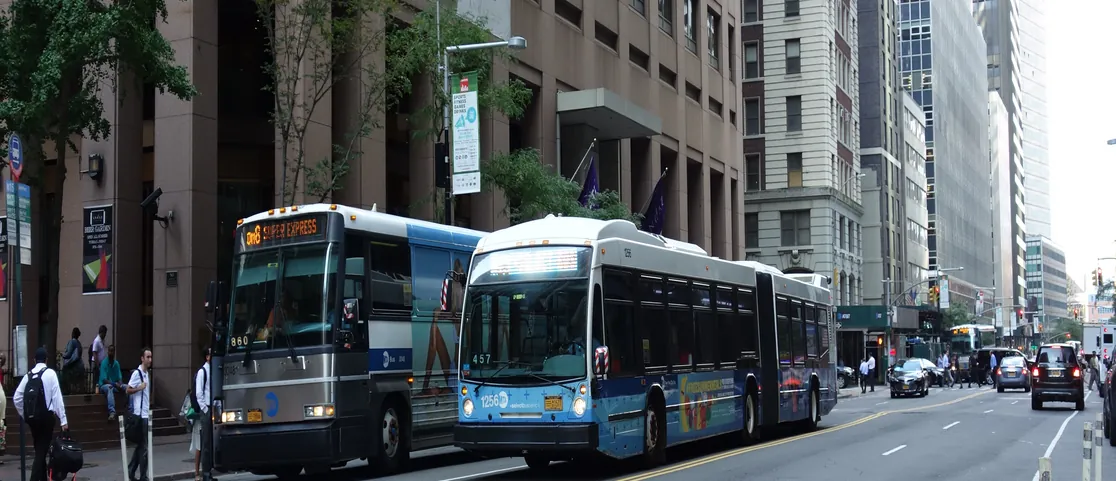
MTA policy permits wheeled mobility devices and open strollers on buses when they do not block the aisle—park in designated open areas and yield when the operator asks. Routes like the M15-SBS on First and Second Avenues and the M79-SBS crosstown on 79th Street are common step-free alternatives on the east–west axis when the subway vertical link is broken.
Buses move slower than subways in traffic. Budget time, not just fare. A cross-town bus at rush hour can take twice as long as a working subway ride—but it may be the only ride that does not start with stairs.
Museums: entries, seating, and honest time
Major Manhattan museums publish accessibility pages—elevator maps, wheelchair loan, companion ticket rules, and quiet room locations. Read them before you book, not at the security line. Timed entry reduces standing in outdoor queues; it does not guarantee a short path from the subway to the front door.
The museums with kids guide sequences family-friendly rooms and fatigue-aware pacing on the Upper West Side and Midtown. This frame adds the mobility layer: which entrance has a ramp, where the nearest elevator lands inside, and when to split the group so one person rests while another does a quick gallery pass.
Midtown museums—MoMA, the Morgan Library, SUMMIT-style ticketed rooms—often stack security and elevator lines at opening. Arrive at posted opening or book the first timed slot you can stand through. Upper West Side anchors like the American Museum of Natural History and the Met Fifth Avenue have multiple entrances; the wrong door can add blocks of uphill walking even when the building itself is accessible.
Seating inside galleries is uneven. Plan rest stops in museum cafes or designated quiet areas rather than assuming every room has benches. Fatigue is a mobility issue—sitting for twenty minutes can determine whether you can ride the bus home.
Restrooms, crowds, and pacing
Accessible family restrooms are not evenly distributed. Grand Central, Moynihan Train Hall, Brookfield Place, and major department stores anchor the public restrooms in Manhattan reliable-options guide—use it to plan stops before you enter a stair-heavy neighborhood or a long museum wing.
Crowds are an accessibility problem, not just an annoyance. Narrow platform edges, stopped escalators, and photo clusters on the High Line stairs block cane users and wheelchair routes. When sidewalks compress, slow walkers get pushed to the curb. Choose weekday mornings, book timed slots, and avoid transferring at Times Square–42nd Street at show let-out unless you enjoy being a human obstacle.
Honest walking limits: two to four flat blocks between rests is a common ceiling for older travelers and post-surgery recovery—not a failure of “being a good tourist.” Structure days around one north–south spine (Upper West Side museum morning, Midtown lunch hub, bus home) instead of three neighborhood hops that each require a vertical transit change.
The Cloisters and uptown outliers
The Cloisters in Fort Tryon Park is worth the trip for medieval architecture—but it is not a quick uptown add-on. The A train to 190th Street involves elevators that must be checked live; the alternate 181st Street plus M4 bus route is the backup when the 190th Street elevator line is long or out of service. Garden terraces are outdoor and weather-exposed; indoor galleries are the accessible core on rainy days.
The Cloisters spotlight article owns ticket math, dual-entry Fifth Avenue rules, and the full elevator note for Fort Tryon. This comparison only says: do not schedule Cloisters on the same tired afternoon as a Midtown museum march unless you have verified transit and two hours of indoor energy left.
Emergencies versus navigation stress
Distinguish transit frustration from medical emergency. Dizziness from heat on a subway platform, blister pain from wrong shoes, and anxiety in crowds are miserable—but they are not 911 calls unless symptoms match emergency severity. For severe chest pain, sudden weakness or paralysis, difficulty breathing, major head injury, or uncontrolled bleeding, call 911 or go directly to a hospital emergency room.
This article does not diagnose conditions, recommend medications, or rank clinics. When you need same-day non-emergency care—a sprain, fever, or infection—use official hospital and urgent-care channels after you stabilize; do not treat a subway booth or museum security desk as medical triage.
A step-free Manhattan mini-plan
- Morning: check MTA accessible-station list and live elevator status for every station on your route.
- Pick one accessible spine—minimize transfers; confirm museum entrance and timed slot.
- Midday: scheduled restroom and seating break at a hub from the public restrooms guide.
- Afternoon: bus pivot ready if an elevator goes out; keep contingency fare for taxi if needed.
- Evening: avoid peak transfer stations; end near your hotel elevator or a known step-free subway stop.
Two museum blocks plus one neighborhood walk is a full day for many mobility-limited visitors—not a lazy day. Adding Brooklyn, a harbor ferry, and a Midtown show on the same calendar is how knees and elevator luck break.
When to skip the subway entirely
Skip subway dependence when every station on your map shows elevator outages, when rain makes bus boarding platforms slick and you cannot risk a fall, or when your group is already at fatigue zero after one gallery. Accessible taxi and rideshare from a verified step-free hotel entrance to a museum door can cost less than the emotional price of three broken elevator hunts.
Skip dense crowd corridors—Times Square at show let-out, weekend High Line stair entrances, Chinatown market sidewalks—when your mobility plan requires continuous forward motion. You can see Manhattan without proving you survived the hardest route.
Manhattan when stairs and crowds are the real obstacle rewards dated elevator checks, short transfers, bus backups, museum entrances chosen on purpose, and rest stops timed before desperation—not a fantasy that every pin on the map is equally reachable today.
Before you add another Manhattan walk, use the walking-load guide for the general energy frame; keep this page for elevator, stairs, crowd and step-free constraints.
Suggested Route & Mini Plan
- Check MTA accessible-station list and live elevator status.
- Minimize transfers; pick one accessible subway spine.
- Book museum timed entry and confirm step-free entrance.
- Schedule restroom and seating break mid-day.
- Keep bus or taxi backup if elevators fail.
Curated Alternatives
Manhattan with a stroller guide
When the traveler is specifically pushing a stroller through flat promenades and elevator hubs, the Manhattan with a stroller guide maps stroller-first routes—not this broader mobility frame.
First-time subway orientation
When subway stairs are the only problem and you already know your lines, the Manhattan subway for first-time visitors guide teaches direction and express logic—this piece assumes stairs and crowds are the constraint.
Museums with kids checklist
When the afternoon is museum blocks with toddlers, the museums with kids guide sequences AMNH and hands-on rooms—not elevator transfer math across Midtown.
Frequently Asked Questions
How do I know if a Manhattan subway station is accessible today?
Check the official MTA accessible-station list and live elevator status on MTA.info the morning you travel. Never assume a station is step-free because it worked last year or appears on a blog map.
When should I use buses instead of the subway?
Low-floor local and Select Bus Service buses kneel at the curb with wide doors. They are slower than subways but avoid stairs when elevators are out. Verify routes on MTA maps and keep aisle space clear for mobility devices.
How is this different from the stroller guide?
The Manhattan with a stroller guide maps stroller-first promenades and family restrooms. This guide covers broader mobility—elevators, transfers, museums, crowds, and fatigue—for anyone who cannot rely on stairs.
Where should I plan restroom breaks?
Use the public restrooms in Manhattan reliable-options guide for Grand Central, Moynihan, Brookfield, and department-store backups. Plan stops before long museum wings or stair-heavy neighborhood walks.
What counts as a medical emergency versus a hard transit day?
Call 911 or go to a hospital ER for severe chest pain, sudden weakness, major injury, or uncontrolled bleeding. This guide does not provide medical advice—for non-emergency care, use official clinical channels after you stabilize.
Our recommendations are handpicked independently. No paid placement, no sponsored rankings. How we choose